Research for Next-Generation Biomanufacturing
TUM and Sartorius establish Cell Culture Biomanufacturing Lab

In brief
- Sartorius provides know-how, technologies and equipment
- Bundling biomanufacturing capabilities
- Open to students and researchers from all TUM Schools
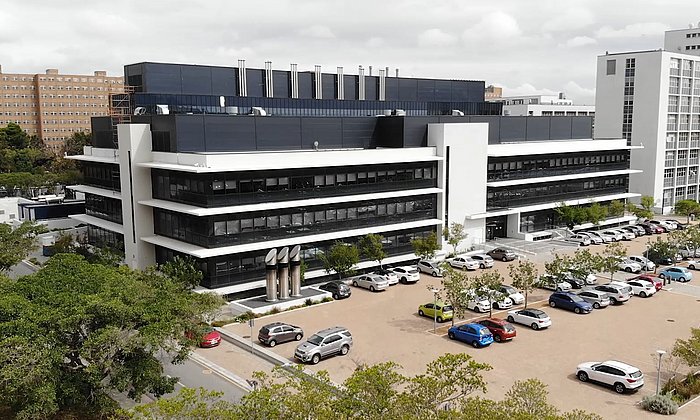
Located at the Munich Institute of Integrated Materials, Energy and Process Engineering (MEP) of the Technical University of Munich (TUM) and supported by Sartorius Stedim Biotech GmbH, the new laboratory provides researchers and students with access to state-of-the-art technologies for mammalian cell culture, bioprocess development, and biomanufacturing. As a core facility within MEP, it strengthens the research infrastructure and brings together research, teaching, and industrial collaboration under one roof.
Accelerating the future of biomanufacturing
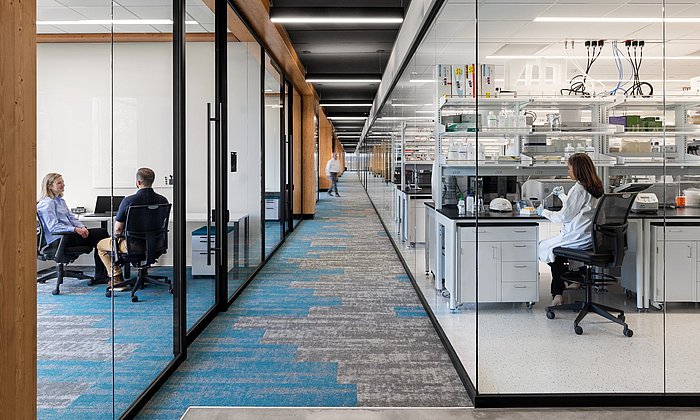
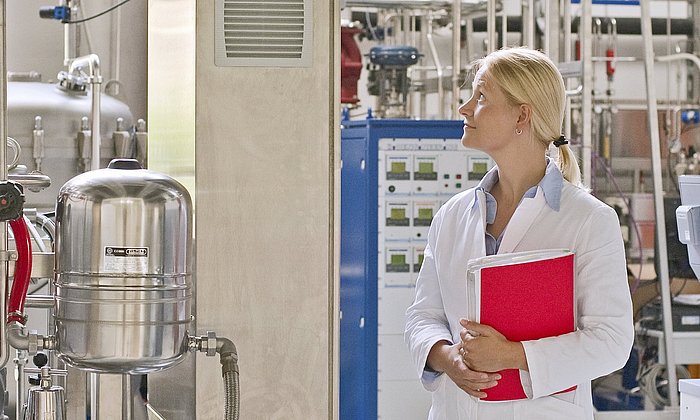
The CCBM enables researchers to develop scalable manufacturing processes for monoclonal antibodies, recombinant proteins, vaccines, and emerging cell and gene therapies. The lab covers all steps from process development and cell cultivation to downstream processing and analytical characterization – using industrially relevant technologies.
Prof. Sonja Berensmeier, Board Director of MEP and Chair of Bioseparation Engineering, says: "The facility, with its focus on interdisciplinary process development, will be a driving force in the manufacturing of biopharmaceuticals. By bringing together researchers from different disciplines, we are creating an environment where innovative ideas can be translated more rapidly into practical biomanufacturing solutions."
Peter Holl, Head of Commercial Business Development, from Sartorius Stedim Biotech emphasizes: “With the TUM Sartorius Cell Culture Biomanufacturing Lab, we are bringing advanced bioprocess technologies directly into an academic setting. By working alongside TUM researchers and students, we can support the training of future bioprocess engineers and help accelerate the translation of science into new therapies.”
Research, education, and technology transfer
Designed as an open facility, the laboratory will be accessible to researchers from all TUM Schools and interdisciplinary institutes. In addition to supporting collaborative research projects, it will provide students, doctoral researchers, and postdoctoral scientists with hands-on training using industrially relevant bioprocessing technologies. The facility will also strengthen technology transfer by enabling early validation of new manufacturing concepts together with industrial partners.
A new research infrastructure within MEP
The Cell Culture Biomanufacturing Lab is part of MEP, an interdisciplinary institute that combines expertise in materials science, biotechnology, process engineering, and sustainable manufacturing. By expanding MEP's research infrastructure, the laboratory strengthens TUM's capabilities in scalable bioprocess engineering and supports the development of future manufacturing technologies for the life sciences.
Technical University of Munich
Corporate Communications Center
- Ulrich Meyer
- presse@tum.de
- Teamwebsite
Contacts to this article:
Dr. Maliheh Vahidinasab
Head of Focus Area Process Engineering and Biomanufacturing
Technical University of Munich (TUM)
Munich Institute of Integrated Materials, Energy and Process Engineering (MEP)
+49 89 289 52718
m.vahidinasab@tum.de
www.mep.tum.de/me