<?xml version="1.0" encoding="utf-8"?>
<?xml-stylesheet type="text/css" href="/typo3conf/ext/in2template/Resources/Public/Css/rss.css" ?>


<feed xmlns="http://www.w3.org/2005/Atom">
	<title>TUM – Latest news</title>
	<link href="https://www.tum.de/en/"/>
	<link rel="self" href="https://www.tum.de/en/studies/fees-and-financial-aid/refund-of-student-union-fees-campus-straubing/news.rss"/>
	<id>https://www.tum.de/en/studies/fees-and-financial-aid/refund-of-student-union-fees-campus-straubing</id>
	<updated>2026-06-16T17:51:36+02:00</updated>
	
		
			<entry>
				<id>https://www.tum.de/en/news-42544.atom</id>
				<title>Tracing the origins of supermassive black holes</title>
				<author>
					<name>Natalie Neudert – TUM CST Communications</name>
					<email>natalie.neudert@tum.de</email>
				</author>
        <published>2026-06-12T08:47:50+02:00</published>
        <updated>2026-06-16T10:40:36+02:00</updated>
				<link rel="alternate" type="text/html" href="https://www.tum.de/en/news-and-events/all-news/press-releases/details/tracing-the-origins-of-supermassive-black-holes"/>
				<summary>TUM doctoral candidate Sarah Pappert is one of only 16 women scientists worldwide to receive the Zonta Women in STEM Award, which recognizes outstanding achievements by young women in STEM fields. In the interview, the astrophysicist talks about her research at the world’s largest telescope, the search for supermassive black holes, and how she inspires young people to pursue science.</summary>
				<content type="xhtml">
				<div xmlns="http://www.w3.org/1999/xhtml">
				   <img alt="Sarah Pappert working on components for MICADO, the first-light camera of the Extremely Large Telescope (ELT)" src="https://www.tum.de/fileadmin/user_upload_87/_processed_/6/b/csm_IMG_8449_fe64af5b8f.jpg" width="200" height="112" />
            <a title="Tracing the origins of supermassive black holes" href="https://www.tum.de/en/news-and-events/all-news/press-releases/details/tracing-the-origins-of-supermassive-black-holes">
             Tracing the origins of supermassive black holes
            </a>
           <p></p>
         </div>
				</content>
			</entry>
		
			<entry>
				<id>https://www.tum.de/en/news-42457.atom</id>
				<title>“When you&#039;re on the field, you shut everything else out”</title>
				<author>
					<name>Paul Hellmich</name>
					<email>paul.hellmich@tum.de</email>
				</author>
        <published>2026-06-11T10:00:00+02:00</published>
        <updated>2026-06-11T16:46:42+02:00</updated>
				<link rel="alternate" type="text/html" href="https://www.tum.de/en/news-and-events/all-news/press-releases/details/interview-german-national-soccer-team-physician-jochen-hahne-and-fc-bayern-physician-peter-ueblacker"/>
				<summary>Dr. Jochen Hahne and Prof. Peter Ueblacker met at TUM University Hospital 20 years ago, when Hahne was a medical student and Ueblacker was a doctor in training. Today, the two alumni serve as team physicians for FC Bayern Munich. Jochen Hahne is also a physician for the German national soccer team. Before departing for the World Cup in the United States, Canada and Mexico, the two spoke in an interview about their work as team physicians, their studies and their hopes for the tournament.</summary>
				<content type="xhtml">
				<div xmlns="http://www.w3.org/1999/xhtml">
				   <img title="The team doctors Dr. Jochen Hahne (left) and Prof. Peter Ueblacker treat both minor and major injuries sustained by FC Bayern Munich players." alt="Dr. Jochen Hahne and Prof. Peter Ueblacker" src="https://www.tum.de/fileadmin/_processed_/e/0/csm_20260507_Hahne_Ueblacker_AH_991018_f4f0e9508a.jpg" width="200" height="113" />
            <a title="“When you're on the field, you shut everything else out”" href="https://www.tum.de/en/news-and-events/all-news/press-releases/details/interview-german-national-soccer-team-physician-jochen-hahne-and-fc-bayern-physician-peter-ueblacker">
             “When you&#039;re on the field, you shut everything else out”
            </a>
           <p>You are both on the sidelines at major soccer matches, and sometimes on the field as well. What does it feel like just before kickoff?
Peter Ueblacker: At regular Bundesliga matches, a lot of things are routine. But when there’s a lot at stake in a game, I do sit down on the bench with a different feeling. You can sense the energy in the team. When the stadium is really loud, it’s a great feeling. Jochen Hahne: When you have to step in, you shut out all of this. Then it doesn’t matter what’s happening around you. You focus on that one task.
How fit do you have to be to run halfway across the field and then examine a player?
Ueblacker: So far, no one has tested us doctors for fitness. But my goal is always to get to the player before our physical therapists do (laughs).
Once you’ve reached the player, you have to make quick decisions. How does that work?
Hahne: The initial interaction with the player is crucial. It often gives us 80 percent of the information we need within the first one or two sentences to decide whether he has to stop playing or not. Ueblacker: You’re not making a full diagnosis out there. But there are examinations of joints, muscles and so on that can be done in that short amount of time. There are also criteria for whether a player can continue or not – for example, pinpointing where pressure causes pain and comparing this with other injuries where we know that continuing to play is not possible. And, of course, we exchange information with colleagues and&amp;nbsp;physiotherapists. In the end, though, experience is what helps most. When I started out, I was sometimes a bit daunted by having to make a quick decision. But it’s unavoidable, and over the years, you learn.</p>
         </div>
				</content>
			</entry>
		
			<entry>
				<id>https://www.tum.de/en/news-42513.atom</id>
				<title>Studying without borders</title>
				<author>
					<name>-</name>
					
				</author>
        <published>2026-06-09T12:41:00+02:00</published>
        <updated>2026-06-11T09:27:18+02:00</updated>
				<link rel="alternate" type="text/html" href="https://www.international.tum.de/en/global/news/news-single-view-en/article/one-in-a-million-polinas-erasmus-experience-in-rome/"/>
				<summary>Over a million students from German universities have gained international experience through Erasmus+ since the program’s launch in 1987. One of them is TUM student Polina Voitenko, who spent a semester at LUISS University in Rome last year. It was an experience that had a lasting impact on her both personally and academically.</summary>
				<content type="xhtml">
				<div xmlns="http://www.w3.org/1999/xhtml">
				   <img src="https://www.tum.de/fileadmin/user_upload_87/_processed_/b/0/csm_Bild_36322e23c1.jpeg" width="200" height="113" alt="" />
            <a title="Studying without borders" target="_blank" href="https://www.international.tum.de/en/global/news/news-single-view-en/article/one-in-a-million-polinas-erasmus-experience-in-rome/">
             Studying without borders
            </a>
           <p></p>
         </div>
				</content>
			</entry>
		
			<entry>
				<id>https://www.tum.de/en/news-42507.atom</id>
				<title>Construction work without diesel emissions and vehicle noise</title>
				<author>
					<name>Ulrich Meyer</name>
					
				</author>
        <published>2026-06-08T15:00:00+02:00</published>
        <updated>2026-06-08T17:09:16+02:00</updated>
				<link rel="alternate" type="text/html" href="https://www.tum.de/en/news-and-events/all-news/press-releases/details/construction-work-without-diesel-emissions-and-vehicle-noise"/>
				<summary>Construction sites are still characterized by noisy, polluting diesel engines. While battery-electric machines and vehicles are becoming increasingly available on the market, the major breakthrough toward locally emission-free and energy-efficient construction sites has so far been hindered primarily by the interaction of equipment and operational processes. The new research consortium ForBat@Bau, which has now commenced its work, aims to solve this challenging problem.</summary>
				<content type="xhtml">
				<div xmlns="http://www.w3.org/1999/xhtml">
				   <img title="OLYMPUS DIGITAL CAMERA" src="https://www.tum.de/fileadmin/_processed_/6/4/csm_260608_ForBat%40Bau_Gruppenfoto_klein_e181ff5d22.jpg" width="200" height="112" alt="" />
            <a title="Construction work without diesel emissions and vehicle noise" href="https://www.tum.de/en/news-and-events/all-news/press-releases/details/construction-work-without-diesel-emissions-and-vehicle-noise">
             Construction work without diesel emissions and vehicle noise
            </a>
           <p>The goal of the research project is to develop an integrated planning and operations tool for complex emission-free construction sites. In addition, the participating stakeholders will be connected and work together on holistic solution concepts. The program, led by the Technical University of Munich (TUM), is divided into four areas:
 	Precisely coordinated machine drive concepts, 	Development and deployment planning of intelligent, modular, and multifunctional battery systems, 	Software-supported planning and control of construction processes and energy flows, 	Optimal and flexible utilization of construction site grid connection capacities. </p>
         </div>
				</content>
			</entry>
		
			<entry>
				<id>https://www.tum.de/en/news-42503.atom</id>
				<title>Proteins can be selectively controlled with radio waves</title>
				<author>
					<name>Ulrich Meyer</name>
					
				</author>
        <published>2026-06-02T11:37:13+02:00</published>
        <updated>2026-06-02T14:49:55+02:00</updated>
				<link rel="alternate" type="text/html" href="https://www.tum.de/en/news-and-events/all-news/press-releases/details/proteins-can-be-selectively-controlled-with-radio-waves"/>
				<summary>A significant advance in biological quantum sensing: A research team led by the Technical University of Munich (TUM) has discovered and tested a new mechanism of action in which proteins can be controlled with radio waves. In doing so, they influence a sensitive quantum state known as spin and make it visible via light. In the future, such findings could help detect and even direct biochemical processes in cells simply from the outside using radio waves.</summary>
				<content type="xhtml">
				<div xmlns="http://www.w3.org/1999/xhtml">
				   <img src="https://www.tum.de/fileadmin/_processed_/8/2/csm_20220120_NMR_Quantensensoren_DBucher_AH_669212_ddd6ca73c6.jpg" width="200" height="133" alt="" />
            <a title="Proteins can be selectively controlled with radio waves" href="https://www.tum.de/en/news-and-events/all-news/press-releases/details/proteins-can-be-selectively-controlled-with-radio-waves">
             Proteins can be selectively controlled with radio waves
            </a>
           <p>Until now, quantum sensing has primarily been known from solid-state materials such as diamonds with deliberately introduced tiny defects. The researchers are now transferring this principle to proteins - biological molecules that can be genetically produced and specifically tailored. In the future, this could allow quantum sensors to be built directly into cells or tissue.
These protein-based sensors are potentially particularly well suited for biosensing - that is, for imaging living cells, tissues, or organs. In theory, they sit directly where measurement is needed, making them suitable for studies in organisms - unlike bulky solid-state sensors.
Dominik Bucher, Professor of Quantum Sensing at the TUM School of Natural Sciences and last author of the study published in Nature Biotechnology, explains: &quot;In contrast to established solid-state-based systems, protein-based approaches can not only serve as sensors, but also open up the prospective possibility of controlling biological processes with radio waves in a targeted manner - an extremely exciting prospect.&quot;</p>
         </div>
				</content>
			</entry>
		
			<entry>
				<id>https://www.tum.de/en/news-42453.atom</id>
				<title>6G networks will improve network utilization</title>
				<author>
					<name>Julia Rinner</name>
					<email>julia.rinner@tum.de</email>
				</author>
        <published>2026-06-02T09:40:00+02:00</published>
        <updated>2026-06-02T09:46:57+02:00</updated>
				<link rel="alternate" type="text/html" href="https://www.tum.de/en/news-and-events/all-news/press-releases/details/6g-networks-will-improve-network-utilization"/>
				<summary>Telemedicine, continuous monitoring, and remote procedures are becoming increasingly important in medicine. For these to operate seamlessly in everyday clinical practice, data must be transmitted quickly, reliably, and without interruption. Researchers at the Technical University of Munich (TUM) and TUM University Hospital have investigated how future 6G networks can manage computing power and data transmission in such a way that up to 40 percent more applications can be run simultaneously.</summary>
				<content type="xhtml">
				<div xmlns="http://www.w3.org/1999/xhtml">
				   <img title="Telemedical Examination and Patient Monitoring" alt="The patient is lying in an examination room and is being examined." src="https://www.tum.de/fileadmin/_processed_/7/1/csm_DSC02599_4502709ae0.jpg" width="200" height="113" />
            <a title="6G networks will improve network utilization" href="https://www.tum.de/en/news-and-events/all-news/press-releases/details/6g-networks-will-improve-network-utilization">
             6G networks will improve network utilization
            </a>
           <p>To date, computing power in hospitals is not always available exactly where it is needed. However, delays or interruptions in data transmission can have serious consequences for applications such as teleoperation.</p>
         </div>
				</content>
			</entry>
		
			<entry>
				<id>https://www.tum.de/en/news-42461.atom</id>
				<title>TUM among the top in European start-up ranking</title>
				<author>
					<name>-</name>
					
				</author>
        <published>2026-05-27T12:26:30+02:00</published>
        <updated>2026-05-28T13:04:06+02:00</updated>
				<link rel="alternate" type="text/html" href="https://www.tum.de/en/news-and-events/all-news/press-releases/details/tum-among-the-top-in-european-start-up-ranking"/>
				<summary>In Europe, nearly half a million additional start-ups could emerge in ten years if all universities were to harness their potential as effectively as the leaders in the field of entrepreneurship. This is shown by the new Redstone University Startup Index. TUM ranks 4th among very large universities for start-ups founded by researchers. In terms of the ratio of start-ups to university budget, it ranks 5th.
</summary>
				<content type="xhtml">
				<div xmlns="http://www.w3.org/1999/xhtml">
				   <img title="TUM gives students in all disciplines the opportunity to develop entrepreneurial skills, as seen here at HackaTUM." alt="Students at HackaTUM" src="https://www.tum.de/fileadmin/_processed_/a/0/csm_260527_Redstone_Ranking_17868dedc3.jpg" width="200" height="112" />
            <a title="TUM among the top in European start-up ranking" href="https://www.tum.de/en/news-and-events/all-news/press-releases/details/tum-among-the-top-in-european-start-up-ranking">
             TUM among the top in European start-up ranking
            </a>
           <p>Start-ups are considered a key driver of Europe’s innovative strength. However, not all universities support entrepreneurship among their researchers and students to the same extent. To highlight this potential, a research team from the venture capital firm Redstone, the think tank AlpMomentum, TUM and the University of Trier examined where founders conducted their research or pursued their studies. The study examines start-ups founded in 2025 and includes 1,000 universities and 50 public research institutions in the European Economic Area, the United Kingdom and Switzerland. To identify the start-ups and their founders, the team primarily used LinkedIn profile data, the Dealroom database and data from the European Patent Office.
Among very large universities, TUM ranks 4th in terms of start-ups founded by researchers (38 in 2025), trailing the University of Oxford, Imperial College London and the University of Cambridge. With 235 start-ups founded by current or former students, TUM ranks 8th, making it the only very large German university in Europe’s top 20.&amp;nbsp;
“Over the past few years, we have implemented numerous initiatives at TUM specifically designed to strengthen the entrepreneurial spirit in our university’s research and teaching,” says TUM President Prof. Thomas F. Hofmann. “For example, the TUM Student Clubs and the TUM Entrepreneurial Masterclass have significantly increased the number of start-ups founded by students. And since 2022, we have been supporting founders with the transparently structured TUM IP Fast Track, helping them accelerate the contract signing process to within twelve weeks.”</p>
         </div>
				</content>
			</entry>
		
			<entry>
				<id>https://www.tum.de/en/news-42439.atom</id>
				<title>TUM launches Board Academy</title>
				<author>
					<name>Klaus Becker</name>
					<email>klaus.becker@tum.de</email>
				</author>
        <published>2026-05-22T12:00:00+02:00</published>
        <updated>2026-05-22T11:58:42+02:00</updated>
				<link rel="alternate" type="text/html" href="https://www.tum.de/en/news-and-events/all-news/press-releases/details/tum-launches-board-academy"/>
				<summary>What is the current state of development of key technologies, and how do they impact the economy? TUM is launching a new qualification program for members of supervisory boards and executive boards. At the Board Academy of the TUM Institute for Lifelong Learning, participants learn about the latest research in tech labs and analyze its implications for the business world together with leading scientists. The program formats also provide ample opportunity for open discussion.</summary>
				<content type="xhtml">
				<div xmlns="http://www.w3.org/1999/xhtml">
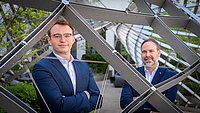
				   <img title="Open dialogue between business leaders and researchers is a key objective of the TUM Board Academy. " alt="Two business leaders talking" src="https://www.tum.de/fileadmin/_processed_/a/0/csm_260522_TUM_Board_Academy_b2a7c578c4.jpg" width="200" height="112" />
            <a title="TUM launches Board Academy" href="https://www.tum.de/en/news-and-events/all-news/press-releases/details/tum-launches-board-academy">
             TUM launches Board Academy
            </a>
           <p>The long-term strategic positioning of companies is becoming increasingly challenging, as rapid technological change, geopolitical uncertainties and their interplay require a high level of judgment regarding highly complex developments. This applies not only to executive boards but also to members of supervisory boards who want to provide responsible advice and guidance to companies.&amp;nbsp;
To this end, the TUM Institute for LifeLong Learning has launched a unique program for members of supervisory boards, executive board members and management directors. At the Board Academy, they can further their education on the latest technologies and their significance for the economy and society. “We provide a reality check and a glimpse into the future,” says Prof. Claudia Peus, Executive Vice President for Talent Management and Diversity at TUM and Director of the TUM Institute for LifeLong Learning. “How are technologies changing the competitive landscape? What does that mean for my company? What policy frameworks are needed? In our labs, participants can experience technology firsthand and simultaneously discuss its implications with executives using real-world case studies.”</p>
         </div>
				</content>
			</entry>
		
			<entry>
				<id>https://www.tum.de/en/news-42443.atom</id>
				<title>Seven projects to advance medicine</title>
				<author>
					<name>Paul Hellmich</name>
					<email>paul.hellmich@tum.de</email>
				</author>
        <published>2026-05-22T11:04:35+02:00</published>
        <updated>2026-05-22T12:49:27+02:00</updated>
				<link rel="alternate" type="text/html" href="https://www.tum.de/en/news-and-events/all-news/press-releases/details/seven-projects-for-better-medicine"/>
				<summary>The M1 Munich Medicine Alliance is awarding funding for cutting-edge translational research from Munich for the first time. Through the “Innovations for Patients” program, seven research projects will receive a total of 7.45 million euros. Five of the cross-institutional projects are coordinated by researchers at the Technical University of Munich (TUM). M1 is an alliance of TUM, TUM University Hospital, Ludwig-Maximilians-Universität München and its hospital, and Helmholtz Munich.</summary>
				<content type="xhtml">
				<div xmlns="http://www.w3.org/1999/xhtml">
				   <img title="Researchers at the presentation of the funding notifications for the M1 “Innovations for Patients” funding line" alt="Researchers at the presentation of the funding notifications for the M1 “Innovations for Patients” funding line" src="https://www.tum.de/fileadmin/_processed_/3/b/csm_KOE00961-cAxel-Koenig-StMWK-19.-Mai-2026_815e6825e4.jpg" width="200" height="112" />
            <a title="Seven projects to advance medicine" href="https://www.tum.de/en/news-and-events/all-news/press-releases/details/seven-projects-for-better-medicine">
             Seven projects to advance medicine
            </a>
           <p>The funding notifications were recently presented at the Bavarian State Ministry of Science and the Arts by Stefanie Jacobs, the ministry’s head of administration.&amp;nbsp;“Innovations for Patients” is the central scientific funding instrument of the M1 Alliance. The funding line supports projects that consistently direct excellent biomedical research toward clinical application, improved diagnostics and new therapeutic approaches. The funded projects address diseases with a high burden of illness and major relevance for patients, including cancer, cardiovascular diseases, neurodegenerative diseases and vision loss. At the same time, the program strengthens new cross-institutional collaborations in Munich. All funded projects bring together researchers from at least two of the partner organizations.
Bavarian Science Minister Markus Blume said: “Seven million euros for seven strong research projects: With the ‘Innovations for Patients’ funding line of the M1 Munich Medicine Alliance, we are strengthening scientific excellence, pooling expertise and unlocking the shared potential of Munich’s leading medical institutions. What makes M1 special is the close alliance among the partners: Shared structures and networked research create synergies, accelerate innovation and bring cutting-edge medicine to people more quickly. The fact that the projects prevailed in a highly competitive, science-driven process underscores their outstanding quality. Congratulations to all selected project partners!”
Prof. Thomas Gudermann, Chair of the Executive Board of the M1 Alliance, said: “With Innovations for Patients, we are bringing together the strengths of Munich medicine in a targeted way – for research that reaches patients faster.”</p>
         </div>
				</content>
			</entry>
		
			<entry>
				<id>https://www.tum.de/en/news-42380.atom</id>
				<title>The cowpea as a new source of protein </title>
				<author>
					<name>Eva Fritsch, Dr. Vera Spaett</name>
					
				</author>
        <published>2026-05-21T09:34:00+02:00</published>
        <updated>2026-05-21T10:20:36+02:00</updated>
				<link rel="alternate" type="text/html" href="https://www.tum.de/en/news-and-events/all-news/press-releases/details/the-cowpea-as-a-new-source-of-protein"/>
				<summary>Feeding a growing global population with healthy, safe, and affordable food is one of the key challenges of the future. Plant-based proteins can play an important role in addressing this challenge, as they offer alternatives to animal protein. Cowpea is a protein-rich legume with great potential. Doctoral candidate Victor Christian Kaharso from Indonesia is investigating how cowpea can be used as a valuable food ingredient.</summary>
				<content type="xhtml">
				<div xmlns="http://www.w3.org/1999/xhtml">
				   <img title="Victor Christian Kaharso in the lab." alt="Victor Christian Kaharso in the lab. He is examining the cowpea at various stages of germination. " src="https://www.tum.de/fileadmin/_processed_/5/8/csm_victor-christian-kaharso-science-stories_79df4839d3.jpg" width="200" height="113" />
            <a title="The cowpea as a new source of protein " href="https://www.tum.de/en/news-and-events/all-news/press-releases/details/the-cowpea-as-a-new-source-of-protein">
             The cowpea as a new source of protein 
            </a>
           <p></p>
         </div>
				</content>
			</entry>
		
			<entry>
				<id>https://www.tum.de/en/news-42408.atom</id>
				<title>How robots are becoming surgical assistants</title>
				<author>
					<name>Andreas Schmitz</name>
					<email>andreas.schmitz@tum.de</email>
				</author>
        <published>2026-05-20T08:00:00+02:00</published>
        <updated>2026-05-20T08:09:02+02:00</updated>
				<link rel="alternate" type="text/html" href="https://www.tum.de/en/news-and-events/all-news/press-releases/details/wie-roboter-zu-op-assistenten-werden"/>
				<summary>How can robots and humans work together as effectively as possible in the operating room of the future? Researchers from the Technical University of Munich (TUM) and TUM University Hospital investigated this question as part of the ForNeRo research project. Using a sensor-equipped system, they analyzed surgeons&#039; movements during procedures and collected data from simulated robot-assisted operations.</summary>
				<content type="xhtml">
				<div xmlns="http://www.w3.org/1999/xhtml">
				   <img title=" Luca Wegener (links) und Prof. Dirk Wilhelm besprechen Untersuchungsergebnisse aus dem Experimental-OP im TUM Klinikum." src="https://www.tum.de/fileadmin/_processed_/2/7/csm_20260323_MH_Prof_Wilhelm_Robotik_AE-359_a5ed24850a.jpg" width="200" height="112" alt="" />
            <a title="How robots are becoming surgical assistants" href="https://www.tum.de/en/news-and-events/all-news/press-releases/details/wie-roboter-zu-op-assistenten-werden">
             How robots are becoming surgical assistants
            </a>
           <p>Five depth cameras mounted on the ceiling of the experimental operating theater at TUM University Hospital in Munich generate a three-dimensional digital image of the room 15 times per second —a digital twin of the surgical environment. At the operating table stands Prof. Dirk Wilhelm, Head of the Chair of Medical Robotics at TUM and a surgeon and senior physician at TUM University Hospital. He is wearing a suit fitted with motion markers on the joints and head, tracked by an infrared system with ten cameras. Microphones record and spatially locate conversations within the surgical team, while additional physiological data is collected to measure stress levels among staff.
The aim of this sensor data and the digital twin is to improve surgical workflows, integrate robotic assistance systems into clinical workflows as efficiently and ergonomically as possible, and ultimately reduce the workload of medical staff. The sensor system developed by Prof. Wilhelm’s research group for minimally invasive interdisciplinary therapeutic intervention (MITI) is now being used for the first time in Germany to collect data from a real operating room environment. “In the next step, this data could help improve the use of robots in surgery,” says Prof. Wilhelm. All data collection in the operating room requires the consent of patients and all parties involved.
Testing robotic systems in routine surgical procedures</p>
         </div>
				</content>
			</entry>
		
			<entry>
				<id>https://www.tum.de/en/news-42410.atom</id>
				<title>Cancer prevention day at the TUM Campus at the Olympic Park</title>
				<author>
					<name>Paul Hellmich</name>
					<email>paul.hellmich@tum.de</email>
				</author>
        <published>2026-05-19T10:59:55+02:00</published>
        <updated>2026-05-19T13:43:47+02:00</updated>
				<link rel="alternate" type="text/html" href="https://www.tum.de/en/news-and-events/all-news/press-releases/details/cancer-prevention-campaign-day-at-the-tum-campus-in-the-olympiapark"/>
				<summary>The Bavarian Cancer Research Center (BZKF) is organizing the statewide “Wir bewegen Bayern” day on June 13, 2026. In Munich, experts from the Technical University of Munich (TUM), Ludwig-Maximilians-Universität München (LMU), and their university hospitals – TUM University Hospital and LMU University Hospital – will present a program combining medicine and sports at the TUM Campus at the Olympic Park.</summary>
				<content type="xhtml">
				<div xmlns="http://www.w3.org/1999/xhtml">
				   <img title="Four young people run on an indoor track at the TUM Campus at the Olympic Park" alt="Four young people run on an indoor track at the TUM Campus at the Olympic Park" src="https://www.tum.de/fileadmin/_processed_/4/0/csm_260519_202110_Sportfakultaet_AE_D-4006_89ccc68163.jpg" width="200" height="112" />
            <a title="Cancer prevention day at the TUM Campus at the Olympic Park" href="https://www.tum.de/en/news-and-events/all-news/press-releases/details/cancer-prevention-campaign-day-at-the-tum-campus-in-the-olympiapark">
             Cancer prevention day at the TUM Campus at the Olympic Park
            </a>
           <p>What can each of us do to lower our risk of cancer? This question is at the heart of the ”Wir bewegen Bayern“ day organized by&amp;nbsp;BZKF. The main focus is on prevention. The main focus is prevention. According to current research, physical activity in particular is an important factor in helping prevent cancer and strengthen overall health. The event will also highlight how exercise therapy can support cancer patients during treatment. Workshops and talks will provide information on skin, breast, colorectal, and prostate cancer – from prevention and early detection to modern treatment options.
The gyms and sports fields at the TUM Campus an the Olympic Park will also be open. They will offer a varied program of physical activities for children and adults to try.</p>
         </div>
				</content>
			</entry>
		
			<entry>
				<id>https://www.tum.de/en/news-42405.atom</id>
				<title>TUM opens Center for Infection Prevention</title>
				<author>
					<name>Anja Lapac</name>
					<email>presse@tum.de</email>
				</author>
        <published>2026-05-18T09:31:04+02:00</published>
        <updated>2026-05-18T15:58:17+02:00</updated>
				<link rel="alternate" type="text/html" href="https://www.tum.de/en/news-and-events/all-news/press-releases/details/tum-opens-center-for-infection-prevention"/>
				<summary>About 1.3 million people worldwide die each year from infections because treatments are no longer effective. This number could rise to up to 10 million by 2050. With the new Center for Infection Prevention (ZIP), the TUM has opened an interdisciplinary research building. Its goal is to control resistant pathogens without antibiotics and minimize their spread. The German federal government and the Free State of Bavaria have supported the construction of the ZIP with nearly 60 million Euros.</summary>
				<content type="xhtml">
				<div xmlns="http://www.w3.org/1999/xhtml">
				   <img title="TUM opens Center for Infection Prevention" alt="Ein Gebäude mit vielen Fenstern und Glasfassade ist zu sehen. Im Vordergrund stehen viele Menschentrauben vor dem Gebäude, geschart um Stehtische und junge Bäume. An der Fassade hängen die Flaggen Deutschlands, Bayerns, der TUM und der Stadt Freising." src="https://www.tum.de/fileadmin/_processed_/4/3/csm_20260518_ZIP_Freising_Einweihung_-104_1e995afd97.jpg" width="200" height="113" />
            <a title="TUM opens Center for Infection Prevention" href="https://www.tum.de/en/news-and-events/all-news/press-releases/details/tum-opens-center-for-infection-prevention">
             TUM opens Center for Infection Prevention
            </a>
           <p>“The ZIP brings together expertise from multiple disciplines, creating an environment where new prevention strategies can be developed in a targeted way and translated into practice as quickly as possible,” says Prof. Dietmar Zehn, Director of the ZIP and Professor of Animal Physiology and Immunology at TUM.
The leadership team reflects this approach: alongside Dietmar Zehn, Prof. Percy Knolle (Molecular Immunology), Prof. Li Deng (Prevention of Microbial Infectious Diseases), Prof. Bernhard Küster (Proteomics and Bioanalytics), and Prof. Benjamin Schusser (Reproductive Biotechnology) represent a broad spectrum of expertise—ranging from microbiome research and microbiology to immunology, technology, and translational research.
One example is the use of phages—viruses that exclusively infect bacteria and can be used therapeutically, especially when antibiotics no longer work. Researchers also see strong potential in personalized medicine. In the future, it may be possible to determine before treatment whether a patient carries a heightened risk of infection with multidrug-resistant organisms, allowing for more tailored therapies from the outset.
Connecting Expertise for the Benefit of Humans and Animals
Bavarian Minister-President Dr. Markus Söder says: “Bavaria is a global leader in science—and TUM one of its flagship institution. With the new research center dedicated to combating drug-resistant pathogens, we are expanding our interdisciplinary life sciences cluster. Across 2,700 square meters, innovative strategies for the prevention, control, and containment of pathogens in humans and livestock will be developed. Research in this area is a crucial field for the future: according to projections, by 2050 more people could die from drug-resistant pathogens than from cancer. That is why we are taking decisive action. The State of Bavaria is covering the lion’s share of the funding with 40 million euros for the research facility, with an additional 20 million euros coming from the federal government. Knowledge is the future: Only through technology and innovation will we secure our prosperity and provide young people with inspiration and opportunities. With the Bavarian High-Tech Agenda, we are investing a total of seven billion euros in research and science—from bio-life sciences to AI and aerospace to quantum computing.”
Prof. Thomas F. Hofmann, President of TUM, says: “With the ZIP, we are taking another step forward in our TUM Convergence4Medicine strategy. Under one roof, we bring together our outstanding expertise in medicine with the life sciences, bioinformatics, and artificial intelligence. We link animal health with human health, while also strengthening the competitiveness of our agricultural sector and public health systems.”
Prof. Martin Klingenspor, Dean of the TUM School of Life Sciences, says: “The ZIP is a striking example of the One Health strategy at the TUM School of Life Sciences. Solutions to global challenges can only emerge through interdisciplinary collaboration, as this is the only way to do justice to the complexity of living systems.”</p>
         </div>
				</content>
			</entry>
		
			<entry>
				<id>https://www.tum.de/en/news-42404.atom</id>
				<title>Sea levels rising dramatically in some areas due to land subsidence</title>
				<author>
					<name>Moritz Müller</name>
					
				</author>
        <published>2026-05-18T07:54:11+02:00</published>
        <updated>2026-05-18T10:08:02+02:00</updated>
				<link rel="alternate" type="text/html" href="https://www.tum.de/en/news-and-events/all-news/press-releases/details/dramatically-higher-sea-levels-in-some-places-due-to-sinking-land"/>
				<summary>Densely populated coastal regions in many parts of the world are particularly vulnerable to flooding. The sinking of land masses exacerbates the impacts of rising sea levels in these areas. This is shown by researchers from the Technical University of Munich (TUM) and Tulane University.</summary>
				<content type="xhtml">
				<div xmlns="http://www.w3.org/1999/xhtml">
				   <img title="Höherer Meeresspiegel durch absinkendes Land" alt="Coastal megacities such as Jakarta are particularly affected by land subsidence and the simultaneous rise in sea level." src="https://www.tum.de/fileadmin/_processed_/2/9/csm_260518_PM_Meeresspiegelanstieg_8224e8363e.jpg" width="200" height="112" />
            <a title="Sea levels rising dramatically in some areas due to land subsidence" href="https://www.tum.de/en/news-and-events/all-news/press-releases/details/dramatically-higher-sea-levels-in-some-places-due-to-sinking-land">
             Sea levels rising dramatically in some areas due to land subsidence
            </a>
           <p>Global sea‑level rise is one of the greatest challenges of climate change: more than half a billion people live in low‑lying coastal zones. A research team from the German Geodetic Research Institute at TUM (DGFI‑TUM) and Tulane University in New Orleans shows in a study published in Nature Communications that people in densely populated coastal regions experience a relative sea-level rise of about 6 millimeters per year on average. This is roughly three times the coastline-weighted global mean of 2.1 millimeters per year, which describes the average relative rise measured worldwide along coastlines. Even when compared with the climate-driven absolute sea-level rise of around 3.15 millimeters per year, the value is still nearly twice as high. This amplified rise is caused by sinking land, a process known as subsidence.</p>
         </div>
				</content>
			</entry>
		
			<entry>
				<id>https://www.tum.de/en/news-42386.atom</id>
				<title>The hidden cost of production</title>
				<author>
					<name>Undine Ziller</name>
					<email>undine.ziller@tum.de</email>
				</author>
        <published>2026-05-15T09:28:00+02:00</published>
        <updated>2026-05-15T10:18:21+02:00</updated>
				<link rel="alternate" type="text/html" href="https://www.tum.de/en/news-and-events/all-news/press-releases/details/the-hidden-cost-of-production"/>
				<summary>More and more, faster and faster, ever more interconnected – this way of producing goods comes at a high social cost. In a new episode of NewIn, management scholar Stefan Gold talks about how companies can make their supply chains more sustainable and put fair working conditions into practice.</summary>
				<content type="xhtml">
				<div xmlns="http://www.w3.org/1999/xhtml">
				   <img alt="Prof. Stefan Gold" src="https://www.tum.de/fileadmin/_processed_/7/1/csm_20250918_Gold_Stefan_AE-web130_4355065660.jpg" width="200" height="112" />
            <a title="The hidden cost of production" href="https://www.tum.de/en/news-and-events/all-news/press-releases/details/the-hidden-cost-of-production">
             The hidden cost of production
            </a>
           <p></p>
         </div>
				</content>
			</entry>
		
			<entry>
				<id>https://www.tum.de/en/news-42373.atom</id>
				<title>Improving plastics recycling from end-of-life vehicles</title>
				<author>
					<name>Anja Lapac</name>
					<email>anja.lapac@tum.de</email>
				</author>
        <published>2026-05-13T11:00:00+02:00</published>
        <updated>2026-05-13T09:19:41+02:00</updated>
				<link rel="alternate" type="text/html" href="https://www.tum.de/en/news-and-events/all-news/press-releases/details/improving-plastics-recycling-from-end-of-life-vehicles"/>
				<summary>Each year, four to six million cars are scrapped in the EU—resulting in the loss of ressources. The EU End-of-Life Vehicles Regulation is intended to ensure that these materials are recovered and reused in new vehicles in the future. Researchers at the TUM have now analyzed a process developed within the Car2Car research project that enables plastics to remain within the recycling loop. The study shows potential climate benefits as well as the possibility of meeting upcoming EU requirements.</summary>
				<content type="xhtml">
				<div xmlns="http://www.w3.org/1999/xhtml">
				   <img title="Vehicles stacked on top of each other in a scrapyard" alt="Vehicles stacked on top of each other in a scrapyard" src="https://www.tum.de/fileadmin/_processed_/3/b/csm_260512_Autorecyclingi_Stock-483028034_a73ac6625b.jpg" width="200" height="113" />
            <a title="Improving plastics recycling from end-of-life vehicles" href="https://www.tum.de/en/news-and-events/all-news/press-releases/details/improving-plastics-recycling-from-end-of-life-vehicles">
             Improving plastics recycling from end-of-life vehicles
            </a>
           <p>When a vehicle is taken out of service, it is quickly reduced to its basic components: batteries, wheels, catalytic converters, and airbags are removed, and fluids are drained. What remains is sent to a shredder. The result is a heterogeneous mix of metals, textiles, plastics, foams, and composite materials. Extracting recyclable plastics from this mixture is complex, but it is becoming increasingly important for automakers and suppliers, as the EU is currently planning a new regulation on the treatment of end-of-life vehicles. Once the regulation comes into effect, the share of recycled plastics used in new vehicles that comes from post-consumer recycling is to be gradually increased to 25 percent.  A portion of this recycled content must come from “closed‑loop recycling,” meaning recycling plastics from end‑of‑life vehicles back into new vehicles. According to the EU proposal, this share should account for at least 20 percent of the required recycled content. “At first glance, that may not sound like much, but around 200 kilograms of plastic will be generated per end‑of‑life vehicle in the future,” says Magnus Fröhling, Professor of Circular Economy and Sustainability Assessment at TUM Campus Straubing. “In addition, plastics recycling has played only a minor role in the automotive industry so far, meaning we are &amp;nbsp;still at a very early stage in this regard.”</p>
         </div>
				</content>
			</entry>
		
			<entry>
				<id>https://www.tum.de/en/news-42369.atom</id>
				<title>TUM President Hofmann to Chair the Board of Trustees</title>
				<author>
					<name>Ulrich Meyer</name>
					
				</author>
        <published>2026-05-08T09:50:30+02:00</published>
        <updated>2026-05-08T10:16:45+02:00</updated>
				<link rel="alternate" type="text/html" href="https://www.tum.de/en/news-and-events/all-news/press-releases/details/tum-president-hofmann-to-chair-the-board-of-trustees"/>
				<summary>The Deutsches Museum has a new Chair of its Board of Trustees. Prof. Thomas F. Hofmann, President of the Technical University of Munich (TUM), is taking over the leadership of the museum&#039;s highest decision-making body. He had previously served as Vice Chair of the Board of Trustees. After eight years, he succeeds Prof. Andreas Biagosch, who did not seek another term as required by the bylaws.</summary>
				<content type="xhtml">
				<div xmlns="http://www.w3.org/1999/xhtml">
				   <img src="https://www.tum.de/fileadmin/_processed_/8/b/csm_P_leitet_Kuratorium_Deutsches_Museum_a4d4af4bdb.jpg" width="200" height="133" alt="" />
            <a title="TUM President Hofmann to Chair the Board of Trustees" href="https://www.tum.de/en/news-and-events/all-news/press-releases/details/tum-president-hofmann-to-chair-the-board-of-trustees">
             TUM President Hofmann to Chair the Board of Trustees
            </a>
           <p>The Deutsches Museum is the world&#039;s largest and most significant museum of science and technology. Founded in 1903 by science and technology pioneer Oskar von Miller, it sees itself as a place where science and technology can be experienced in an entertaining way. It collects and preserves historically significant original masterworks of technology and science on behalf of the nation, and researches social change. Last year alone, the Deutsches Museum welcomed nearly 1.7 million visitors, inspiring them to explore science and try out technology hands-on.
The Board of Trustees advises the museum, participates in its strategic development, and serves as a supervisory body. Its up to 400 members serve on a voluntary basis - among them, for example, 13 Nobel laureates and, by virtue of their office, all Minister-Presidents of the German federal states. Every four years, the Board of Trustees of the Deutsches Museum elects its new leadership.</p>
         </div>
				</content>
			</entry>
		
			<entry>
				<id>https://www.tum.de/en/news-42349.atom</id>
				<title>Students Give TUM Outstanding Ratings </title>
				<author>
					<name>Ulrich Meyer</name>
					
				</author>
        <published>2026-05-07T13:07:01+02:00</published>
        <updated>2026-05-07T14:09:22+02:00</updated>
				<link rel="alternate" type="text/html" href="https://www.tum.de/en/news-and-events/all-news/press-releases/details/students-give-tum-outstanding-ratings"/>
				<summary>TUM students are exceptionally satisfied with the quality of teaching and study conditions in Business Administration and Information Systems. In the new CHE University Ranking 2026, they give their university outstanding marks. This also counts for TUM Campus Heilbronn.</summary>
				<content type="xhtml">
				<div xmlns="http://www.w3.org/1999/xhtml">
				   <img src="https://www.tum.de/fileadmin/_processed_/c/5/csm_20211011_CampusImpressionen_Gebert_002_Logos_getilgt_9d38442a3b.jpg" width="200" height="133" alt="" />
            <a title="Students Give TUM Outstanding Ratings " href="https://www.tum.de/en/news-and-events/all-news/press-releases/details/students-give-tum-outstanding-ratings">
             Students Give TUM Outstanding Ratings 
            </a>
           <p>The Center for Higher Education Development (CHE) compares individual fields of study at German-speaking universities, this time in the field of business and economics. The Ranking is primarily intended to help prospective students find their way. At its core is the input of approximately 35,000 surveyed students. Universities are rated across numerous categories on a scale of one to five stars.
In Business Administration, TUM receives at least four stars in every category. Students award four and a half stars for the “overall study experience.” They give equally high top ratings for the range of courses offered and digital teaching elements, while faculty support and academic organization are also rated very highly.
The Business Administration program at TUM Campus Heilbronn is listed separately in the CHE ranking. Here, too, students award excellent marks. TUM receives the highest number of stars for the facilities of the modern campus.
Students in Business Informatics rate the “overall study experience” four stars. They are also very satisfied with digital teaching elements, academic organization, and facilities.</p>
         </div>
				</content>
			</entry>
		
			<entry>
				<id>https://www.tum.de/en/news-42340.atom</id>
				<title>Reading Genetic Activity from Living Cells without Destroying Them</title>
				<author>
					<name>Ulrich Meyer</name>
					
				</author>
        <published>2026-05-05T07:39:54+02:00</published>
        <updated>2026-05-05T12:32:24+02:00</updated>
				<link rel="alternate" type="text/html" href="https://www.tum.de/en/news-and-events/all-news/press-releases/details/reading-genetic-activity-from-living-cells-without-destroying-them"/>
				<summary>Until now, studying the genetic processes in cells required destroying them - making it impossible to observe these processes over extended periods of time. A team from the Technical University of Munich (TUM) and Helmholtz Munich has developed a new method to repeatedly obtain up-to-date genetic information from living cells. In the future, this will enable better monitoring of stem cells for therapies or the effects of drugs within cells.</summary>
				<content type="xhtml">
				<div xmlns="http://www.w3.org/1999/xhtml">
				   <img src="https://www.tum.de/fileadmin/_processed_/3/e/csm_20190122_Translatum_AH_503608_35b9239a54.jpg" width="200" height="133" alt="" />
            <a title="Reading Genetic Activity from Living Cells without Destroying Them" href="https://www.tum.de/en/news-and-events/all-news/press-releases/details/reading-genetic-activity-from-living-cells-without-destroying-them">
             Reading Genetic Activity from Living Cells without Destroying Them
            </a>
           <p>Normally, cells must be lysed for a so-called transcriptome analysis - which reveals which genes are currently being expressed - making repeated measurements on the same cells impossible. The research team led by Gil Westmeyer, Professor of Neurobiological Engineering at TUM, uses virus-like particles for their new process, called NTVE (Non-destructive Transcriptomics via Vesicular Export). These particles shuttle messenger RNA - the active gene products - out of living cells.
The RNA is then extracted from the bubbles outside the cell and analyzed. This allows researchers to determine which genes are currently active. The results obtained through the new process show excellent concordance with comparative measurements using the conventional standard method - without the critical drawback of permanently destroying the cell being studied.
The new method therefore allows for repeated sampling over several days, for example to closely monitor the differentiation of stem cells into cardiomyocytes or germ layers. It also works in neurons and mixed cell populations, enabling analysis of cell-to-cell communication.</p>
         </div>
				</content>
			</entry>
		
			<entry>
				<id>https://www.tum.de/en/news-42334.atom</id>
				<title>“A place that inspires”</title>
				<author>
					<name>Konstantin Götschel – TUM CST Communications</name>
					<email>konstantin.goetschel@tum.de</email>
				</author>
        <published>2026-05-04T13:00:00+02:00</published>
        <updated>2026-05-04T14:53:09+02:00</updated>
				<link rel="alternate" type="text/html" href="https://www.tum.de/en/news-and-events/all-news/press-releases/details/a-place-that-inspires"/>
				<summary>Creating space for creativity, collaboration, and concentration – this is the mission of the student-managed StudiTUM Houses at the Technical University of Munich. The fourth such house was built on the grounds of the TUM University Hospital at a historic location on Trogerstraße. As of today, it is open to all TUM students.</summary>
				<content type="xhtml">
				<div xmlns="http://www.w3.org/1999/xhtml">
				   <img title="The StudiTUM House on Trogerstraße" alt="Exterior view of the StudiTUM House at Trogerstraße 12, showing a light-colored historic building with wooden-framed windows connected to a modern extension. In the foreground, a paved walkway leads to an accessible entrance with steps and a ramp, surrounded by trees and landscaped green areas." src="https://www.tum.de/fileadmin/_processed_/e/3/csm_Eroeffnung_StudiTUM_Prof._Combs-02_8a7baaad47.jpg" width="200" height="113" />
            <a title="“A place that inspires”" href="https://www.tum.de/en/news-and-events/all-news/press-releases/details/a-place-that-inspires">
             “A place that inspires”
            </a>
           <p>Trogerstraße in Munich-Haidhausen is named after an ivory carver: in the mid‑18th century, Simon Troger created sculptures for the Bavarian electoral princes that captivated his contemporaries and continue to fascinate to this day. The late‑classical building at Trogerstraße 12, now reopened, is anything but an ivory tower. From today, it serves as a StudiTUM House at TUM University Hospital and is open to all TUM students.</p>
         </div>
				</content>
			</entry>
		
			<entry>
				<id>https://www.tum.de/en/news-42321.atom</id>
				<title>TUM team wins global competition</title>
				<author>
					<name>Anja Lapac</name>
					<email>anja.lapac@tum.de</email>
				</author>
        <published>2026-04-30T12:57:23+02:00</published>
        <updated>2026-05-06T08:23:27+02:00</updated>
				<link rel="alternate" type="text/html" href="https://www.tum.de/en/news-and-events/all-news/press-releases/details/tum-team-comes-out-on-top-in-global-competition"/>
				<summary>A solar-powered cooling system for remote regions and a concept for predicting bark beetle infestation: these start-up concepts for food security and the protection of forests were each awarded first prize in their category at the Global Sustainability Challenge. They were selected from a field of more than 3,500 participants representing 91 countries. The final took place as part of the TUM Sustainability Day.</summary>
				<content type="xhtml">
				<div xmlns="http://www.w3.org/1999/xhtml">
				   <img title="Group photo of the finalist teams" alt="Group photo of the finalist teams" src="https://www.tum.de/fileadmin/_processed_/9/c/csm_20260429_TUM_Sustainability_Day_AE-2682_cc99697c0b.jpg" width="200" height="112" />
            <a title="TUM team wins global competition" href="https://www.tum.de/en/news-and-events/all-news/press-releases/details/tum-team-comes-out-on-top-in-global-competition">
             TUM team wins global competition
            </a>
           <p>Droughts in some regions, floods in others, the threat of food shortages and the increasing frequency of extreme heatwaves: The challenges posed by climate change are enormous. They can only be overcome with new technologies, a clear focus on people&#039;s needs and a deep understanding of the different conditions in the various regions of the world.
The aim of the Global Sustainability Challenge is therefore to support young, talented people around the world in developing their own ideas for sustainable solutions. At the same time, the competition provides them with the entrepreneurial foundations they need to put their ideas into practice and develop them further.
The challenge was launched by the Stanford Doerr School of Sustainability. In addition to TUM, partners include Imperial College London, Hong Kong University of Science and Technology, IIT Bombay and Zhejiang University, among others.</p>
         </div>
				</content>
			</entry>
		
			<entry>
				<id>https://www.tum.de/en/news-42319.atom</id>
				<title>Shaping sustainability together</title>
				<author>
					<name>Anja Lapac</name>
					<email>anja.lapac@tum.de</email>
				</author>
        <published>2026-04-30T11:58:15+02:00</published>
        <updated>2026-06-11T17:22:15+02:00</updated>
				<link rel="alternate" type="text/html" href="https://www.tum.de/en/news-and-events/all-news/press-releases/details/shaping-sustainability-together"/>
				<summary>In times of global crises, sustainability sometimes falls out of the public spotlight. Yet it forms the basis for future life and is considered a central technological and transformation task. At this year&#039;s TUM Sustainability Day on the Garching campus, students, researchers, TUM employees and international partners showed how sustainability can be transferred from idea to practice through concrete solutions and concepts.</summary>
				<content type="xhtml">
				<div xmlns="http://www.w3.org/1999/xhtml">
				   <img title="TUM President Thomas F. Hofmann in conversation with exhibitors" alt="TUM President Thomas F. Hofmann in conversation with exhibitors" src="https://www.tum.de/fileadmin/_processed_/4/9/csm_20260429_TUM_Sustainability_Day_AE-1608_50bef443d4.jpg" width="200" height="112" />
            <a title="Shaping sustainability together" href="https://www.tum.de/en/news-and-events/all-news/press-releases/details/shaping-sustainability-together">
             Shaping sustainability together
            </a>
           <p>More than 7,000 interested people took part in panels and workshops or used the opportunity to exchange ideas at the stands and keynote speeches. In addition to the TUM community, more than 20 international partner institutions also contributed to making the global relevance of the topic visible.</p>
         </div>
				</content>
			</entry>
		
			<entry>
				<id>https://www.tum.de/en/news-42305.atom</id>
				<title>How can honeybees and wild bees coexist in cities?</title>
				<author>
					<name>Linda Schinnenburg</name>
					
				</author>
        <published>2026-04-29T08:00:00+02:00</published>
        <updated>2026-04-29T08:47:41+02:00</updated>
				<link rel="alternate" type="text/html" href="https://www.tum.de/en/news-and-events/all-news/press-releases/details/how-can-honeybees-and-wild-bees-coexist-in-cities"/>
				<summary>The rising popularity of urban beekeeping has raised concerns about honeybee well-being and the impact they might have on wild bee populations in cities. A collaborative study of beekeepers, political stakeholders and research institutions, including researchers from the Technical University of Munich (TUM) have developed the “Urban Bee Concept” which includes measures to foster co-existence between honeybees and wild bees in cities.</summary>
				<content type="xhtml">
				<div xmlns="http://www.w3.org/1999/xhtml">
				   <img title="Urban Bee Concept – How can honeybees and wild bees coexist in cities? How can honeybees and wild bees coexist in cities?" alt="Eine weiß gekleidete Person zieht einen Rahmen aus einem Bienenstock. Bienen sind am und um den Rahmen herum, im Rahmen befinden sich gefüllte Honigwaben." src="https://www.tum.de/fileadmin/_processed_/4/b/csm_260429_Urban_Bee_Concept_01_a6450febfb.jpg" width="200" height="113" />
            <a title="How can honeybees and wild bees coexist in cities?" href="https://www.tum.de/en/news-and-events/all-news/press-releases/details/how-can-honeybees-and-wild-bees-coexist-in-cities">
             How can honeybees and wild bees coexist in cities?
            </a>
           <p>Doing good for bees – that is the idea behind urban beekeeping. However, the rapidly increasing number of urban beekeepers in many cities is alarming to urban beekeeping associations. In Berlin, it has more than tripled from 2005 to 2022, with similar increases in cities such as Zurich, Paris, and Toronto. Since the hives only house honeybees, their population in urban areas has increased just as rapidly – raising concerns about their coexistence with wild bees in urban spaces. For example, regarding potential spillover of diseases or competition for floral resources when they are insufficiently available. Both topics are currently being researched in several cities.
Vulnerable wild bees
Many people are not aware that there are different types of bees. “In contrast to honeybees, wild bees often specialize in certain plants and habitats,” says Monika Egerer, Professor of Urban Productive Ecosystems at TUM. “In addition, they usually live alone and not in large colonies. As a result, their populations recover much more slowly after disturbances such as diseases or too little resources.”
New beehives bring entire colonies with high food requirements into an existing ecosystem, as the honeybees can collect large amounts of nectar and pollen in cities. This is particularly problematic for the wild bee populations as floral resources likely have not increased at the same pace as honeybee populations have or might even have decreased due to densification.
The competition for resources is exacerbated when the hives are subjected to high temperatures such as on rooftops, as it is often the case in cities with limited space. The resulting heat stress raises the demand for floral resources to maintain colony temperature. If the surrounding areas offer less of these resources, the competition is even more aggravated.
Promoting coexistence – the “Urban Bee Concept”
The recent study addresses these concerns and proposes the “Urban Bee Concept” with measures to enable the coexistence of wild and honeybees in urban areas:
 	Enhancing floral resources, paying attention to the nutrients they provide. 	Reducing hive density and prioritizing specific urban beekeeping actors. 	Promoting honeybee well-being and bee animal rights by banning hives in unsuitable locations. 	Estimating carrying capacities as accurately as possible. 	Controlling bee health and disease dynamics. 	Promote training, education, and codes of conduct via urban beekeeping associations. 
“It is crucial to work jointly here, with researchers, conservationists, governance and beekeepers” says Joan Casanelles Abella, who is part of the research team. Especially since the community of urban beekeepers is very heterogenous, ranging from hobbyists with few hives up to large companies with plenty of them, the stakeholders need to work together. The research team points out the great potential of the urban beekeeping associations in both the design and establishment of these measures.
“Many people engage in urban beekeeping because they want to help bees,” says Monika Egerer. “With more knowledge and exchange, we can ensure that not only honeybees but also wild bees benefit.”</p>
         </div>
				</content>
			</entry>
		
			<entry>
				<id>https://www.tum.de/en/news-42308.atom</id>
				<title>Rainforests can buffer rising CO2 in the short term — but this comes at a cost</title>
				<author>
					<name>-</name>
					
				</author>
        <published>2026-04-28T10:55:00+02:00</published>
        <updated>2026-04-28T12:03:18+02:00</updated>
				<link rel="alternate" type="text/html" href="https://www.tum.de/en/news-and-events/all-news/press-releases/details/rainforests-can-buffer-rising-co2-in-the-short-term-but-this-comes-at-a-cost"/>
				<summary>Tropical forests are among the world’s most important carbon sinks. A study by the Technical University of Munich (TUM), the University of Vienna, and Brazil’s National Institute for Amazonian Research suggests that even small understory trees can temporarily store more CO₂ as atmospheric CO₂ levels rise. However, their long-term capacity to sequester carbon may be constrained by nutrient limitations, potentially reducing this ability.</summary>
				<content type="xhtml">
				<div xmlns="http://www.w3.org/1999/xhtml">
				   <img title="Foto von Unterholz im Amazonas" alt="Foto von Unterholz im Amazonas" src="https://www.tum.de/fileadmin/_processed_/9/8/csm_iStock-1373156581_3MB_d6eeef3d29.jpg" width="200" height="112" />
            <a title="Rainforests can buffer rising CO2 in the short term — but this comes at a cost" href="https://www.tum.de/en/news-and-events/all-news/press-releases/details/rainforests-can-buffer-rising-co2-in-the-short-term-but-this-comes-at-a-cost">
             Rainforests can buffer rising CO2 in the short term — but this comes at a cost
            </a>
           <p>The Amazon forest is one of the tipping elements in the global water and climate system, storing and absorbing huge amounts of CO2. Still, it is not clear to which extent trees can increase growth with more CO2 in the atmosphere. “Around 60 percent of the Amazon forest grows on old and highly weathered soils, which are already quite depleted in mineral nutrients, such as phosphorus,” says Lucia Fuchslueger, researcher at CeMESS, University of Vienna, and co-lead-author of the new study.&amp;nbsp;
“Low levels of phosphorus could make it difficult for the forest to grow even more and make use of the extra CO2 in the atmosphere”, she adds. However, Amazonian trees have developed highly efficient internal nutrient cycles that could allow them to gain access to even more nutrients. For example, they are withdrawing nutrients from their leaves before they drop them. Also, rapid organic matter decomposition on the ground provides additional nutrients, but it is not clear if this system can get any more efficient. So far, there has been no experimental evidence from in situ forest experiments.&amp;nbsp;</p>
         </div>
				</content>
			</entry>
		
			<entry>
				<id>https://www.tum.de/en/news-42290.atom</id>
				<title>The power of the mind</title>
				<author>
					<name>Paul Hellmich</name>
					<email>paul.hellmich@tum.de</email>
				</author>
        <published>2026-04-27T10:00:00+02:00</published>
        <updated>2026-04-27T17:10:15+02:00</updated>
				<link rel="alternate" type="text/html" href="https://www.tum.de/en/news-and-events/all-news/press-releases/details/the-power-of-the-mind"/>
				<summary>Michael Mehringer is paralyzed from the neck down. Together with a team of neuroscientists, neurosurgeons, robotics experts, and AI researchers, he is working to gain more autonomy through a brain-computer interface.</summary>
				<content type="xhtml">
				<div xmlns="http://www.w3.org/1999/xhtml">
				   <img title="Michael Mehringer (center) with Prof. Simon Jacob (l.) and Prof. Bernhard Meyer" alt="Michael Mehringer (Mitte) mit Prof. Simon Jacob (l.) und Prof. Bernhard Meyer" src="https://www.tum.de/fileadmin/_processed_/2/2/csm_20251125_MIRMI_Brain_Computer_interface_AE-286_6c9f004a11.jpg" width="200" height="112" />
            <a title="The power of the mind" href="https://www.tum.de/en/news-and-events/all-news/press-releases/details/the-power-of-the-mind">
             The power of the mind
            </a>
           <p>The arm on the computer screen looks like something out of a video game. The hand, joints, and arm bones are built from orange polygons. When the animation starts, the arm extends. After a few seconds, everything returns to its starting position. Michael Mehringer watches the screen intently. “Excellent! And again,” says Melissa Zavaglia. The animation starts again. Mehringer remains focused.
The 26-year-old has been paralyzed from the neck down since he was in a serious motorcycle accident about ten years ago. He can only reproduce the animated arm’s movements mentally. “Still, after the sessions, I can always feel how much work I’ve done,” Mehringer says. “My body hasn’t been through movements like that in years.” The exercises with the animated arm are part of a research project aimed at providing new insights into how the brain works. Beyond that, the researchers want to enable him to control computers—and even a robotic arm—using the power of the mind.</p>
         </div>
				</content>
			</entry>
		
			<entry>
				<id>https://www.tum.de/en/news-42289.atom</id>
				<title>TUM team won the “Best International Team Award”</title>
				<author>
					<name>Andreas Schmitz</name>
					
				</author>
        <published>2026-04-24T10:00:00+02:00</published>
        <updated>2026-04-28T10:12:31+02:00</updated>
				<link rel="alternate" type="text/html" href="https://www.tum.de/en/news-and-events/all-news/press-releases/details/tum-roboter-gewinnt-best-international-team-award"/>
				<summary>At the half-marathon race for humanoid robots in Beijing, the team from the Technical University of Munich (TUM) won the prize for best international team. The robot, entered into the race by TUM Professor Gordon Cheng, completed the 21-kilometre course in 3 hours and 35 minutes. This made it the best team from outside China, finishing in 39th place overall. Around half of the 124 participants had to withdraw.</summary>
				<content type="xhtml">
				<div xmlns="http://www.w3.org/1999/xhtml">
				   <img title="Forscher des ERC-Projektes &quot;STROLL&quot; von Professor Gordon Cheng haben den Roboter Tienkung Ultra in Peking betreut. Im Bild (von links nach rechts): Dr. Julio Rogelio Guadarrama Olivera, Simon Armleder, Prof. Gordon Cheng, Xiangyu Fu" src="https://www.tum.de/fileadmin/_processed_/8/6/csm_NEU_IMG_0827_55701cbe7e.jpg" width="200" height="113" alt="" />
            <a title="TUM team won the “Best International Team Award”" href="https://www.tum.de/en/news-and-events/all-news/press-releases/details/tum-roboter-gewinnt-best-international-team-award">
             TUM team won the “Best International Team Award”
            </a>
           <p>Running fast, but without overheating the motors or wasting too much energy: that was the balance the three-person research team led by Prof. Gordon Cheng had to strike at the 2026 Beijing Half Marathon. Even during the test runs in the nights leading up to the competition, it became clear that a speed of two metres per second (7.2 km/h) would be best to avoid overworking the robust robot from China whilst still reaching the finish line safely. Unlike the eventual winner ‘Blitz’ and many more high-performance humanoid robots, for example, the robot of TUM is not cooled with water, but solely by the air flowing past it. “How to dissipate the heat – that is the key issue,” remarks TUM researcher Simon Armleder, who sees an advantage here in the custom-built Blitz.
The TUM team adapted the code on-site</p>
         </div>
				</content>
			</entry>
		
			<entry>
				<id>https://www.tum.de/en/news-42282.atom</id>
				<title>100 Years of Water Research at TUM</title>
				<author>
					<name>Ulrich Meyer</name>
					
				</author>
        <published>2026-04-23T10:28:37+02:00</published>
        <updated>2026-04-24T08:22:40+02:00</updated>
				<link rel="alternate" type="text/html" href="https://www.tum.de/en/news-and-events/all-news/press-releases/details/100-years-of-water-research-at-tum"/>
				<summary>For 100 years, the Versuchsanstalt Obernach of the Technical University of Munich (TUM) has been dedicated to water research. Founded by science pioneer Oskar von Miller, the test facility focuses on advancing hydropower and, increasingly, on questions related to climate impact research and prevention for people and nature.</summary>
				<content type="xhtml">
				<div xmlns="http://www.w3.org/1999/xhtml">
				   <img src="https://www.tum.de/fileadmin/_processed_/5/5/csm_Obernach_Luftbild_mit_Walchensee_-_TUM_ProLehre_dc70f09ea2.jpg" width="200" height="113" alt="" />
            <a title="100 Years of Water Research at TUM" href="https://www.tum.de/en/news-and-events/all-news/press-releases/details/100-years-of-water-research-at-tum">
             100 Years of Water Research at TUM
            </a>
           <p>The Versuchsanstalt plays an important role not only in international research, but also for hydropower operators in Germany and abroad, and – more important than ever – for public water management authorities, for example in the areas of river engineering, flood protection, and dams. It has an outdoor test site with large flow rates and even enables full-scale experiments. In addition, it offers large testing halls, workshops, and its own teaching laboratory for TUM students in civil and environmental engineering.</p>
         </div>
				</content>
			</entry>
		
			<entry>
				<id>https://www.tum.de/en/news-42252.atom</id>
				<title>“One of the best decisions I ever made as a student”</title>
				<author>
					<name>Undine Ziller</name>
					<email>undine.ziller@tum.de</email>
				</author>
        <published>2026-04-22T10:00:00+02:00</published>
        <updated>2026-04-22T12:21:33+02:00</updated>
				<link rel="alternate" type="text/html" href="https://www.tum.de/en/news-and-events/all-news/press-releases/details/one-of-the-best-decisions-i-ever-made-as-a-student"/>
				<summary>At European Union Week, students discover how valuable and enriching it is to be part of the European Union. Events are held at TUM and nine partner universities.</summary>
				<content type="xhtml">
				<div xmlns="http://www.w3.org/1999/xhtml">
				   <img title="Warschau" alt="View of Warsaw" src="https://www.tum.de/fileadmin/_processed_/9/a/csm_iStock-1414497553_4490477622.jpg" width="200" height="112" />
            <a title="“One of the best decisions I ever made as a student”" href="https://www.tum.de/en/news-and-events/all-news/press-releases/details/one-of-the-best-decisions-i-ever-made-as-a-student">
             “One of the best decisions I ever made as a student”
            </a>
           <p>For Joachim Henkel, Europe Day on May 9 is a very special occasion. The incumbent of the Schöller Chair of Technology and Innovation Management explains, “It reminds us of everything the EU Member States have worked together to achieve: an age of peace and democracy, of free trade and cross-border exchange.”
Yet Henkel is concerned that the natural Europe-wide collaboration in research and teaching may now be in jeopardy as public awareness of the importance of European values and institutions dwindles. He points out, “As a university, we enjoy enormous benefits from the advantages of European unity, from the Erasmus program to funding for research projects,” and urges, “We need to communicate this European mindset more effectively to our students.”
With this in mind, in 2017 the TUM School of Management established the European Union Week. Every year around May 9, talks and discussions on EU-related topics are held in Munich and at a total of nine European partner universities.</p>
         </div>
				</content>
			</entry>
		
			<entry>
				<id>https://www.tum.de/en/news-42261.atom</id>
				<title>Teaching with expertise and personality</title>
				<author>
					<name>Konstantin Götschel – TUM CST Communications</name>
					<email>konstantin.goetschel@tum.de</email>
				</author>
        <published>2026-04-20T15:30:00+02:00</published>
        <updated>2026-04-20T15:34:15+02:00</updated>
				<link rel="alternate" type="text/html" href="https://www.tum.de/en/news-and-events/all-news/press-releases/details/teaching-with-expertise-and-personality"/>
				<summary>The unity of research and teaching is what defines universities. And it is the combination of academic excellence, didactic skill, and personal commitment that defines good teaching. This is exemplified by TUM lecturers Alisa Machner and Georgia Samaras, who have now been honored with the Bavarian State Ministry of Science and the Arts’ Prize for Excellence in Teaching.</summary>
				<content type="xhtml">
				<div xmlns="http://www.w3.org/1999/xhtml">
				   <img title="Minister of State Markus Blume with the recipients of the Prize for Excellence in Teaching" src="https://www.tum.de/fileadmin/_processed_/7/c/csm_KOE01769-cAxel-Koenig-StMWK-17.-April-2026_red_165a882250.jpg" width="200" height="112" alt="" />
            <a title="Teaching with expertise and personality" href="https://www.tum.de/en/news-and-events/all-news/press-releases/details/teaching-with-expertise-and-personality">
             Teaching with expertise and personality
            </a>
           <p>“Good teaching is the heartbeat of science,” emphasized State Minister Markus Blume at the award ceremony in Augsburg. “Where teaching is delivered with commitment and passion, curiosity, courage, and vision emerge. Excellent teaching is the foundation of excellent research – one cannot thrive without the other.” Awarded annually by the Bavarian State Ministry of Science and the Arts, the prize is endowed with EUR 5,000 per recipient and recognizes lecturers who inspire students through didactic quality, an innovative spirit and personal dedication, supporting not only academic achievement but also personal development.</p>
         </div>
				</content>
			</entry>
		
			<entry>
				<id>https://www.tum.de/en/news-42251.atom</id>
				<title>Research on the storage and disposal of radioactive waste </title>
				<author>
					<name>Ulrich Meyer</name>
					
				</author>
        <published>2026-04-17T10:14:06+02:00</published>
        <updated>2026-04-17T11:03:28+02:00</updated>
				<link rel="alternate" type="text/html" href="https://www.tum.de/en/news-and-events/all-news/press-releases/details/research-on-the-storage-and-disposal-of-radioactive-waste"/>
				<summary>The federal state-owned Gesellschaft für Zwischenlagerung (BGZ) and the Technical University of Munich (TUM) will in the future conduct joint research on the safe interim storage and disposal of radioactive waste. A corresponding &quot;Joint Lab BGZ&quot; was launched on Thursday at TUM Campus Garching.</summary>
				<content type="xhtml">
				<div xmlns="http://www.w3.org/1999/xhtml">
				   <img src="https://www.tum.de/fileadmin/_processed_/8/d/csm_2026-04-17_PM_Kooperation_BGZ_TUM_1_f54ddf113a.jpg" width="200" height="150" alt="" />
            <a title="Research on the storage and disposal of radioactive waste " href="https://www.tum.de/en/news-and-events/all-news/press-releases/details/research-on-the-storage-and-disposal-of-radioactive-waste">
             Research on the storage and disposal of radioactive waste 
            </a>
           <p>BGZ operates interim facilities in Germany for the storage of nuclear fuels and radioactive waste from the reprocessing of irradiated fuel elements, including the sites at Ahaus and Gorleben, as well as several interim storage facilities at former nuclear power plants.
By the time the current storage licenses expire (between 2034 and 2047), no final repository for irradiated fuel elements and other heat-generating radioactive waste will be available and operational. BGZ therefore published a research program in 2022 to address questions relating to extended interim storage. The federally owned company has also been represented at the campus with its own research group since 2023. BGZ and TUM will now pool their resources, infrastructure, and expertise even more closely in a research cooperation and work on joint research projects.
TUM has decades of expertise in the field of nuclear technology, including operating the FRM II research neutron source at the Garching site. Extensive radiochemical laboratories are also located there, which already hold the required licenses for handling nuclear fuels. In addition, TUM conducts research and teaching on topics such as nuclear and reactor engineering, reactor physics, nuclear chemistry, materials, simulation, and data analysis. The BGZ research group will work together with TUM scientists on various research tasks.</p>
         </div>
				</content>
			</entry>
		
	
</feed>