<?xml version="1.0" encoding="utf-8"?>
<?xml-stylesheet type="text/css" href="/typo3conf/ext/in2template/Resources/Public/Css/rss.css" ?>


<feed xmlns="http://www.w3.org/2005/Atom">
	<title>TUM – Latest news</title>
	<link href="https://www.tum.de/en/"/>
	<link rel="self" href="https://www.tum.de/en/research/news.rss"/>
	<id>https://www.tum.de/en/research</id>
	<updated>2026-05-12T17:55:18+02:00</updated>
	
		
			<entry>
				<id>https://www.tum.de/en/news-42369.atom</id>
				<title>TUM President Hofmann to Chair the Board of Trustees</title>
				<author>
					<name>Ulrich Meyer</name>
					
				</author>
        <published>2026-05-08T09:50:30+02:00</published>
        <updated>2026-05-08T10:16:45+02:00</updated>
				<link rel="alternate" type="text/html" href="https://www.tum.de/en/news-and-events/all-news/press-releases/details/tum-president-hofmann-to-chair-the-board-of-trustees"/>
				<summary>The Deutsches Museum has a new Chair of its Board of Trustees. Prof. Thomas F. Hofmann, President of the Technical University of Munich (TUM), is taking over the leadership of the museum&#039;s highest decision-making body. He had previously served as Vice Chair of the Board of Trustees. After eight years, he succeeds Prof. Andreas Biagosch, who did not seek another term as required by the bylaws.</summary>
				<content type="xhtml">
				<div xmlns="http://www.w3.org/1999/xhtml">
				   <img src="https://www.tum.de/fileadmin/_processed_/8/b/csm_P_leitet_Kuratorium_Deutsches_Museum_a4d4af4bdb.jpg" width="200" height="133" alt="" />
            <a title="TUM President Hofmann to Chair the Board of Trustees" href="https://www.tum.de/en/news-and-events/all-news/press-releases/details/tum-president-hofmann-to-chair-the-board-of-trustees">
             TUM President Hofmann to Chair the Board of Trustees
            </a>
           <p>The Deutsches Museum is the world&#039;s largest and most significant museum of science and technology. Founded in 1903 by science and technology pioneer Oskar von Miller, it sees itself as a place where science and technology can be experienced in an entertaining way. It collects and preserves historically significant original masterworks of technology and science on behalf of the nation, and researches social change. Last year alone, the Deutsches Museum welcomed nearly 1.7 million visitors, inspiring them to explore science and try out technology hands-on.
The Board of Trustees advises the museum, participates in its strategic development, and serves as a supervisory body. Its up to 400 members serve on a voluntary basis - among them, for example, 13 Nobel laureates and, by virtue of their office, all Minister-Presidents of the German federal states. Every four years, the Board of Trustees of the Deutsches Museum elects its new leadership.</p>
         </div>
				</content>
			</entry>
		
			<entry>
				<id>https://www.tum.de/en/news-42349.atom</id>
				<title>Students Give TUM Outstanding Ratings </title>
				<author>
					<name>Ulrich Meyer</name>
					
				</author>
        <published>2026-05-07T13:07:01+02:00</published>
        <updated>2026-05-07T14:09:22+02:00</updated>
				<link rel="alternate" type="text/html" href="https://www.tum.de/en/news-and-events/all-news/press-releases/details/students-give-tum-outstanding-ratings"/>
				<summary>TUM students are exceptionally satisfied with the quality of teaching and study conditions in Business Administration and Information Systems. In the new CHE University Ranking 2026, they give their university outstanding marks. This also counts for TUM Campus Heilbronn.</summary>
				<content type="xhtml">
				<div xmlns="http://www.w3.org/1999/xhtml">
				   <img src="https://www.tum.de/fileadmin/_processed_/c/5/csm_20211011_CampusImpressionen_Gebert_002_Logos_getilgt_9d38442a3b.jpg" width="200" height="133" alt="" />
            <a title="Students Give TUM Outstanding Ratings " href="https://www.tum.de/en/news-and-events/all-news/press-releases/details/students-give-tum-outstanding-ratings">
             Students Give TUM Outstanding Ratings 
            </a>
           <p>The Center for Higher Education Development (CHE) compares individual fields of study at German-speaking universities, this time in the field of business and economics. The Ranking is primarily intended to help prospective students find their way. At its core is the input of approximately 35,000 surveyed students. Universities are rated across numerous categories on a scale of one to five stars.
In Business Administration, TUM receives at least four stars in every category. Students award four and a half stars for the “overall study experience.” They give equally high top ratings for the range of courses offered and digital teaching elements, while faculty support and academic organization are also rated very highly.
The Business Administration program at TUM Campus Heilbronn is listed separately in the CHE ranking. Here, too, students award excellent marks. TUM receives the highest number of stars for the facilities of the modern campus.
Students in Business Informatics rate the “overall study experience” four stars. They are also very satisfied with digital teaching elements, academic organization, and facilities.</p>
         </div>
				</content>
			</entry>
		
			<entry>
				<id>https://www.tum.de/en/news-42340.atom</id>
				<title>Reading Genetic Activity from Living Cells without Destroying Them</title>
				<author>
					<name>Ulrich Meyer</name>
					
				</author>
        <published>2026-05-05T07:39:54+02:00</published>
        <updated>2026-05-05T12:32:24+02:00</updated>
				<link rel="alternate" type="text/html" href="https://www.tum.de/en/news-and-events/all-news/press-releases/details/reading-genetic-activity-from-living-cells-without-destroying-them"/>
				<summary>Until now, studying the genetic processes in cells required destroying them - making it impossible to observe these processes over extended periods of time. A team from the Technical University of Munich (TUM) and Helmholtz Munich has developed a new method to repeatedly obtain up-to-date genetic information from living cells. In the future, this will enable better monitoring of stem cells for therapies or the effects of drugs within cells.</summary>
				<content type="xhtml">
				<div xmlns="http://www.w3.org/1999/xhtml">
				   <img src="https://www.tum.de/fileadmin/_processed_/3/e/csm_20190122_Translatum_AH_503608_35b9239a54.jpg" width="200" height="133" alt="" />
            <a title="Reading Genetic Activity from Living Cells without Destroying Them" href="https://www.tum.de/en/news-and-events/all-news/press-releases/details/reading-genetic-activity-from-living-cells-without-destroying-them">
             Reading Genetic Activity from Living Cells without Destroying Them
            </a>
           <p>Normally, cells must be lysed for a so-called transcriptome analysis - which reveals which genes are currently being expressed - making repeated measurements on the same cells impossible. The research team led by Gil Westmeyer, Professor of Neurobiological Engineering at TUM, uses virus-like particles for their new process, called NTVE (Non-destructive Transcriptomics via Vesicular Export). These particles shuttle messenger RNA - the active gene products - out of living cells.
The RNA is then extracted from the bubbles outside the cell and analyzed. This allows researchers to determine which genes are currently active. The results obtained through the new process show excellent concordance with comparative measurements using the conventional standard method - without the critical drawback of permanently destroying the cell being studied.
The new method therefore allows for repeated sampling over several days, for example to closely monitor the differentiation of stem cells into cardiomyocytes or germ layers. It also works in neurons and mixed cell populations, enabling analysis of cell-to-cell communication.</p>
         </div>
				</content>
			</entry>
		
			<entry>
				<id>https://www.tum.de/en/news-42334.atom</id>
				<title>“A place that inspires”</title>
				<author>
					<name>Konstantin Götschel – TUM CST Communications</name>
					<email>konstantin.goetschel@tum.de</email>
				</author>
        <published>2026-05-04T13:00:00+02:00</published>
        <updated>2026-05-04T14:53:09+02:00</updated>
				<link rel="alternate" type="text/html" href="https://www.tum.de/en/news-and-events/all-news/press-releases/details/a-place-that-inspires"/>
				<summary>Creating space for creativity, collaboration, and concentration – this is the mission of the student-managed StudiTUM Houses at the Technical University of Munich. The fourth such house was built on the grounds of the TUM University Hospital at a historic location on Trogerstraße. As of today, it is open to all TUM students.</summary>
				<content type="xhtml">
				<div xmlns="http://www.w3.org/1999/xhtml">
				   <img title="The StudiTUM House on Trogerstraße" alt="Exterior view of the StudiTUM House at Trogerstraße 12, showing a light-colored historic building with wooden-framed windows connected to a modern extension. In the foreground, a paved walkway leads to an accessible entrance with steps and a ramp, surrounded by trees and landscaped green areas." src="https://www.tum.de/fileadmin/_processed_/e/3/csm_Eroeffnung_StudiTUM_Prof._Combs-02_8a7baaad47.jpg" width="200" height="113" />
            <a title="“A place that inspires”" href="https://www.tum.de/en/news-and-events/all-news/press-releases/details/a-place-that-inspires">
             “A place that inspires”
            </a>
           <p>Trogerstraße in Munich-Haidhausen is named after an ivory carver: in the mid‑18th century, Simon Troger created sculptures for the Bavarian electoral princes that captivated his contemporaries and continue to fascinate to this day. The late‑classical building at Trogerstraße 12, now reopened, is anything but an ivory tower. From today, it serves as a StudiTUM House at TUM University Hospital and is open to all TUM students.</p>
         </div>
				</content>
			</entry>
		
			<entry>
				<id>https://www.tum.de/en/news-42321.atom</id>
				<title>TUM team wins global competition</title>
				<author>
					<name>Anja Lapac</name>
					<email>anja.lapac@tum.de</email>
				</author>
        <published>2026-04-30T12:57:23+02:00</published>
        <updated>2026-05-06T08:23:27+02:00</updated>
				<link rel="alternate" type="text/html" href="https://www.tum.de/en/news-and-events/all-news/press-releases/details/tum-team-comes-out-on-top-in-global-competition"/>
				<summary>A solar-powered cooling system for remote regions and a concept for predicting bark beetle infestation: these start-up concepts for food security and the protection of forests were each awarded first prize in their category at the Global Sustainability Challenge. They were selected from a field of more than 3,500 participants representing 91 countries. The final took place as part of the TUM Sustainability Day.</summary>
				<content type="xhtml">
				<div xmlns="http://www.w3.org/1999/xhtml">
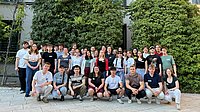
				   <img title="Group photo of the finalist teams" alt="Group photo of the finalist teams" src="https://www.tum.de/fileadmin/_processed_/9/c/csm_20260429_TUM_Sustainability_Day_AE-2682_cc99697c0b.jpg" width="200" height="112" />
            <a title="TUM team wins global competition" href="https://www.tum.de/en/news-and-events/all-news/press-releases/details/tum-team-comes-out-on-top-in-global-competition">
             TUM team wins global competition
            </a>
           <p>Droughts in some regions, floods in others, the threat of food shortages and the increasing frequency of extreme heatwaves: The challenges posed by climate change are enormous. They can only be overcome with new technologies, a clear focus on people&#039;s needs and a deep understanding of the different conditions in the various regions of the world.
The aim of the Global Sustainability Challenge is therefore to support young, talented people around the world in developing their own ideas for sustainable solutions. At the same time, the competition provides them with the entrepreneurial foundations they need to put their ideas into practice and develop them further.
The challenge was launched by the Stanford Doerr School of Sustainability. In addition to TUM, partners include Imperial College London, Hong Kong University of Science and Technology, IIT Bombay and Zhejiang University, among others.</p>
         </div>
				</content>
			</entry>
		
			<entry>
				<id>https://www.tum.de/en/news-42319.atom</id>
				<title>Shaping sustainability together</title>
				<author>
					<name>Anja Lapac</name>
					<email>anja.lapac@tum.de</email>
				</author>
        <published>2026-04-30T11:58:15+02:00</published>
        <updated>2026-05-06T08:26:47+02:00</updated>
				<link rel="alternate" type="text/html" href="https://www.tum.de/en/news-and-events/all-news/press-releases/details/shaping-sustainability-together"/>
				<summary>In times of global crises, sustainability sometimes falls out of the public spotlight. Yet it forms the basis for future life and is considered a central technological and transformation task. At this year&#039;s TUM Sustainability Day on the Garching campus, students, researchers, TUM employees and international partners showed how sustainability can be transferred from idea to practice through concrete solutions and concepts.</summary>
				<content type="xhtml">
				<div xmlns="http://www.w3.org/1999/xhtml">
				   <img title="TUM President Thomas F. Hofmann in conversation with exhibitors" alt="TUM President Thomas F. Hofmann in conversation with exhibitors" src="https://www.tum.de/fileadmin/_processed_/4/9/csm_20260429_TUM_Sustainability_Day_AE-1608_50bef443d4.jpg" width="200" height="112" />
            <a title="Shaping sustainability together" href="https://www.tum.de/en/news-and-events/all-news/press-releases/details/shaping-sustainability-together">
             Shaping sustainability together
            </a>
           <p>More than 7,000 interested people took part in panels and workshops or used the opportunity to exchange ideas at the stands and keynote speeches. In addition to the TUM community, more than 20 international partner institutions also contributed to making the global relevance of the topic visible.</p>
         </div>
				</content>
			</entry>
		
			<entry>
				<id>https://www.tum.de/en/news-42305.atom</id>
				<title>How can honeybees and wild bees coexist in cities?</title>
				<author>
					<name>Linda Schinnenburg</name>
					
				</author>
        <published>2026-04-29T08:00:00+02:00</published>
        <updated>2026-04-29T08:47:41+02:00</updated>
				<link rel="alternate" type="text/html" href="https://www.tum.de/en/news-and-events/all-news/press-releases/details/how-can-honeybees-and-wild-bees-coexist-in-cities"/>
				<summary>The rising popularity of urban beekeeping has raised concerns about honeybee well-being and the impact they might have on wild bee populations in cities. A collaborative study of beekeepers, political stakeholders and research institutions, including researchers from the Technical University of Munich (TUM) have developed the “Urban Bee Concept” which includes measures to foster co-existence between honeybees and wild bees in cities.</summary>
				<content type="xhtml">
				<div xmlns="http://www.w3.org/1999/xhtml">
				   <img title="Urban Bee Concept – How can honeybees and wild bees coexist in cities? How can honeybees and wild bees coexist in cities?" alt="Eine weiß gekleidete Person zieht einen Rahmen aus einem Bienenstock. Bienen sind am und um den Rahmen herum, im Rahmen befinden sich gefüllte Honigwaben." src="https://www.tum.de/fileadmin/_processed_/4/b/csm_260429_Urban_Bee_Concept_01_a6450febfb.jpg" width="200" height="113" />
            <a title="How can honeybees and wild bees coexist in cities?" href="https://www.tum.de/en/news-and-events/all-news/press-releases/details/how-can-honeybees-and-wild-bees-coexist-in-cities">
             How can honeybees and wild bees coexist in cities?
            </a>
           <p>Doing good for bees – that is the idea behind urban beekeeping. However, the rapidly increasing number of urban beekeepers in many cities is alarming to urban beekeeping associations. In Berlin, it has more than tripled from 2005 to 2022, with similar increases in cities such as Zurich, Paris, and Toronto. Since the hives only house honeybees, their population in urban areas has increased just as rapidly – raising concerns about their coexistence with wild bees in urban spaces. For example, regarding potential spillover of diseases or competition for floral resources when they are insufficiently available. Both topics are currently being researched in several cities.
Vulnerable wild bees
Many people are not aware that there are different types of bees. “In contrast to honeybees, wild bees often specialize in certain plants and habitats,” says Monika Egerer, Professor of Urban Productive Ecosystems at TUM. “In addition, they usually live alone and not in large colonies. As a result, their populations recover much more slowly after disturbances such as diseases or too little resources.”
New beehives bring entire colonies with high food requirements into an existing ecosystem, as the honeybees can collect large amounts of nectar and pollen in cities. This is particularly problematic for the wild bee populations as floral resources likely have not increased at the same pace as honeybee populations have or might even have decreased due to densification.
The competition for resources is exacerbated when the hives are subjected to high temperatures such as on rooftops, as it is often the case in cities with limited space. The resulting heat stress raises the demand for floral resources to maintain colony temperature. If the surrounding areas offer less of these resources, the competition is even more aggravated.
Promoting coexistence – the “Urban Bee Concept”
The recent study addresses these concerns and proposes the “Urban Bee Concept” with measures to enable the coexistence of wild and honeybees in urban areas:
 	Enhancing floral resources, paying attention to the nutrients they provide. 	Reducing hive density and prioritizing specific urban beekeeping actors. 	Promoting honeybee well-being and bee animal rights by banning hives in unsuitable locations. 	Estimating carrying capacities as accurately as possible. 	Controlling bee health and disease dynamics. 	Promote training, education, and codes of conduct via urban beekeeping associations. 
“It is crucial to work jointly here, with researchers, conservationists, governance and beekeepers” says Joan Casanelles Abella, who is part of the research team. Especially since the community of urban beekeepers is very heterogenous, ranging from hobbyists with few hives up to large companies with plenty of them, the stakeholders need to work together. The research team points out the great potential of the urban beekeeping associations in both the design and establishment of these measures.
“Many people engage in urban beekeeping because they want to help bees,” says Monika Egerer. “With more knowledge and exchange, we can ensure that not only honeybees but also wild bees benefit.”</p>
         </div>
				</content>
			</entry>
		
			<entry>
				<id>https://www.tum.de/en/news-42308.atom</id>
				<title>Rainforests can buffer rising CO2 in the short term — but this comes at a cost</title>
				<author>
					<name>-</name>
					
				</author>
        <published>2026-04-28T10:55:00+02:00</published>
        <updated>2026-04-28T12:03:18+02:00</updated>
				<link rel="alternate" type="text/html" href="https://www.tum.de/en/news-and-events/all-news/press-releases/details/rainforests-can-buffer-rising-co2-in-the-short-term-but-this-comes-at-a-cost"/>
				<summary>Tropical forests are among the world’s most important carbon sinks. A study by the Technical University of Munich (TUM), the University of Vienna, and Brazil’s National Institute for Amazonian Research suggests that even small understory trees can temporarily store more CO₂ as atmospheric CO₂ levels rise. However, their long-term capacity to sequester carbon may be constrained by nutrient limitations, potentially reducing this ability.</summary>
				<content type="xhtml">
				<div xmlns="http://www.w3.org/1999/xhtml">
				   <img title="Foto von Unterholz im Amazonas" alt="Foto von Unterholz im Amazonas" src="https://www.tum.de/fileadmin/_processed_/9/8/csm_iStock-1373156581_3MB_d6eeef3d29.jpg" width="200" height="112" />
            <a title="Rainforests can buffer rising CO2 in the short term — but this comes at a cost" href="https://www.tum.de/en/news-and-events/all-news/press-releases/details/rainforests-can-buffer-rising-co2-in-the-short-term-but-this-comes-at-a-cost">
             Rainforests can buffer rising CO2 in the short term — but this comes at a cost
            </a>
           <p>The Amazon forest is one of the tipping elements in the global water and climate system, storing and absorbing huge amounts of CO2. Still, it is not clear to which extent trees can increase growth with more CO2 in the atmosphere. “Around 60 percent of the Amazon forest grows on old and highly weathered soils, which are already quite depleted in mineral nutrients, such as phosphorus,” says Lucia Fuchslueger, researcher at CeMESS, University of Vienna, and co-lead-author of the new study.&amp;nbsp;
“Low levels of phosphorus could make it difficult for the forest to grow even more and make use of the extra CO2 in the atmosphere”, she adds. However, Amazonian trees have developed highly efficient internal nutrient cycles that could allow them to gain access to even more nutrients. For example, they are withdrawing nutrients from their leaves before they drop them. Also, rapid organic matter decomposition on the ground provides additional nutrients, but it is not clear if this system can get any more efficient. So far, there has been no experimental evidence from in situ forest experiments.&amp;nbsp;</p>
         </div>
				</content>
			</entry>
		
			<entry>
				<id>https://www.tum.de/en/news-42290.atom</id>
				<title>The power of the mind</title>
				<author>
					<name>Paul Hellmich</name>
					<email>paul.hellmich@tum.de</email>
				</author>
        <published>2026-04-27T10:00:00+02:00</published>
        <updated>2026-04-27T17:10:15+02:00</updated>
				<link rel="alternate" type="text/html" href="https://www.tum.de/en/news-and-events/all-news/press-releases/details/the-power-of-the-mind"/>
				<summary>Michael Mehringer is paralyzed from the neck down. Together with a team of neuroscientists, neurosurgeons, robotics experts, and AI researchers, he is working to gain more autonomy through a brain-computer interface.</summary>
				<content type="xhtml">
				<div xmlns="http://www.w3.org/1999/xhtml">
				   <img title="Michael Mehringer (center) with Prof. Simon Jacob (l.) and Prof. Bernhard Meyer" alt="Michael Mehringer (Mitte) mit Prof. Simon Jacob (l.) und Prof. Bernhard Meyer" src="https://www.tum.de/fileadmin/_processed_/2/2/csm_20251125_MIRMI_Brain_Computer_interface_AE-286_6c9f004a11.jpg" width="200" height="112" />
            <a title="The power of the mind" href="https://www.tum.de/en/news-and-events/all-news/press-releases/details/the-power-of-the-mind">
             The power of the mind
            </a>
           <p>The arm on the computer screen looks like something out of a video game. The hand, joints, and arm bones are built from orange polygons. When the animation starts, the arm extends. After a few seconds, everything returns to its starting position. Michael Mehringer watches the screen intently. “Excellent! And again,” says Melissa Zavaglia. The animation starts again. Mehringer remains focused.
The 26-year-old has been paralyzed from the neck down since he was in a serious motorcycle accident about ten years ago. He can only reproduce the animated arm’s movements mentally. “Still, after the sessions, I can always feel how much work I’ve done,” Mehringer says. “My body hasn’t been through movements like that in years.” The exercises with the animated arm are part of a research project aimed at providing new insights into how the brain works. Beyond that, the researchers want to enable him to control computers—and even a robotic arm—using the power of the mind.</p>
         </div>
				</content>
			</entry>
		
			<entry>
				<id>https://www.tum.de/en/news-42289.atom</id>
				<title>TUM team won the “Best International Team Award”</title>
				<author>
					<name>Andreas Schmitz</name>
					
				</author>
        <published>2026-04-24T10:00:00+02:00</published>
        <updated>2026-04-28T10:12:31+02:00</updated>
				<link rel="alternate" type="text/html" href="https://www.tum.de/en/news-and-events/all-news/press-releases/details/tum-roboter-gewinnt-best-international-team-award"/>
				<summary>At the half-marathon race for humanoid robots in Beijing, the team from the Technical University of Munich (TUM) won the prize for best international team. The robot, entered into the race by TUM Professor Gordon Cheng, completed the 21-kilometre course in 3 hours and 35 minutes. This made it the best team from outside China, finishing in 39th place overall. Around half of the 124 participants had to withdraw.</summary>
				<content type="xhtml">
				<div xmlns="http://www.w3.org/1999/xhtml">
				   <img title="Forscher des ERC-Projektes &quot;STROLL&quot; von Professor Gordon Cheng haben den Roboter Tienkung Ultra in Peking betreut. Im Bild (von links nach rechts): Dr. Julio Rogelio Guadarrama Olivera, Simon Armleder, Prof. Gordon Cheng, Xiangyu Fu" src="https://www.tum.de/fileadmin/_processed_/8/6/csm_NEU_IMG_0827_55701cbe7e.jpg" width="200" height="113" alt="" />
            <a title="TUM team won the “Best International Team Award”" href="https://www.tum.de/en/news-and-events/all-news/press-releases/details/tum-roboter-gewinnt-best-international-team-award">
             TUM team won the “Best International Team Award”
            </a>
           <p>Running fast, but without overheating the motors or wasting too much energy: that was the balance the three-person research team led by Prof. Gordon Cheng had to strike at the 2026 Beijing Half Marathon. Even during the test runs in the nights leading up to the competition, it became clear that a speed of two metres per second (7.2 km/h) would be best to avoid overworking the robust robot from China whilst still reaching the finish line safely. Unlike the eventual winner ‘Blitz’ and many more high-performance humanoid robots, for example, the robot of TUM is not cooled with water, but solely by the air flowing past it. “How to dissipate the heat – that is the key issue,” remarks TUM researcher Simon Armleder, who sees an advantage here in the custom-built Blitz.
The TUM team adapted the code on-site</p>
         </div>
				</content>
			</entry>
		
			<entry>
				<id>https://www.tum.de/en/news-42282.atom</id>
				<title>100 Years of Water Research at TUM</title>
				<author>
					<name>Ulrich Meyer</name>
					
				</author>
        <published>2026-04-23T10:28:37+02:00</published>
        <updated>2026-04-24T08:22:40+02:00</updated>
				<link rel="alternate" type="text/html" href="https://www.tum.de/en/news-and-events/all-news/press-releases/details/100-years-of-water-research-at-tum"/>
				<summary>For 100 years, the Versuchsanstalt Obernach of the Technical University of Munich (TUM) has been dedicated to water research. Founded by science pioneer Oskar von Miller, the test facility focuses on advancing hydropower and, increasingly, on questions related to climate impact research and prevention for people and nature.</summary>
				<content type="xhtml">
				<div xmlns="http://www.w3.org/1999/xhtml">
				   <img src="https://www.tum.de/fileadmin/_processed_/5/5/csm_Obernach_Luftbild_mit_Walchensee_-_TUM_ProLehre_dc70f09ea2.jpg" width="200" height="113" alt="" />
            <a title="100 Years of Water Research at TUM" href="https://www.tum.de/en/news-and-events/all-news/press-releases/details/100-years-of-water-research-at-tum">
             100 Years of Water Research at TUM
            </a>
           <p>The Versuchsanstalt plays an important role not only in international research, but also for hydropower operators in Germany and abroad, and – more important than ever – for public water management authorities, for example in the areas of river engineering, flood protection, and dams. It has an outdoor test site with large flow rates and even enables full-scale experiments. In addition, it offers large testing halls, workshops, and its own teaching laboratory for TUM students in civil and environmental engineering.</p>
         </div>
				</content>
			</entry>
		
			<entry>
				<id>https://www.tum.de/en/news-42252.atom</id>
				<title>“One of the best decisions I ever made as a student”</title>
				<author>
					<name>Undine Ziller</name>
					<email>undine.ziller@tum.de</email>
				</author>
        <published>2026-04-22T10:00:00+02:00</published>
        <updated>2026-04-22T12:21:33+02:00</updated>
				<link rel="alternate" type="text/html" href="https://www.tum.de/en/news-and-events/all-news/press-releases/details/one-of-the-best-decisions-i-ever-made-as-a-student"/>
				<summary>At European Union Week, students discover how valuable and enriching it is to be part of the European Union. Events are held at TUM and nine partner universities.</summary>
				<content type="xhtml">
				<div xmlns="http://www.w3.org/1999/xhtml">
				   <img title="Warschau" alt="View of Warsaw" src="https://www.tum.de/fileadmin/_processed_/9/a/csm_iStock-1414497553_4490477622.jpg" width="200" height="112" />
            <a title="“One of the best decisions I ever made as a student”" href="https://www.tum.de/en/news-and-events/all-news/press-releases/details/one-of-the-best-decisions-i-ever-made-as-a-student">
             “One of the best decisions I ever made as a student”
            </a>
           <p>For Joachim Henkel, Europe Day on May 9 is a very special occasion. The incumbent of the Schöller Chair of Technology and Innovation Management explains, “It reminds us of everything the EU Member States have worked together to achieve: an age of peace and democracy, of free trade and cross-border exchange.”
Yet Henkel is concerned that the natural Europe-wide collaboration in research and teaching may now be in jeopardy as public awareness of the importance of European values and institutions dwindles. He points out, “As a university, we enjoy enormous benefits from the advantages of European unity, from the Erasmus program to funding for research projects,” and urges, “We need to communicate this European mindset more effectively to our students.”
With this in mind, in 2017 the TUM School of Management established the European Union Week. Every year around May 9, talks and discussions on EU-related topics are held in Munich and at a total of nine European partner universities.</p>
         </div>
				</content>
			</entry>
		
			<entry>
				<id>https://www.tum.de/en/news-42261.atom</id>
				<title>Teaching with expertise and personality</title>
				<author>
					<name>Konstantin Götschel – TUM CST Communications</name>
					<email>konstantin.goetschel@tum.de</email>
				</author>
        <published>2026-04-20T15:30:00+02:00</published>
        <updated>2026-04-20T15:34:15+02:00</updated>
				<link rel="alternate" type="text/html" href="https://www.tum.de/en/news-and-events/all-news/press-releases/details/teaching-with-expertise-and-personality"/>
				<summary>The unity of research and teaching is what defines universities. And it is the combination of academic excellence, didactic skill, and personal commitment that defines good teaching. This is exemplified by TUM lecturers Alisa Machner and Georgia Samaras, who have now been honored with the Bavarian State Ministry of Science and the Arts’ Prize for Excellence in Teaching.</summary>
				<content type="xhtml">
				<div xmlns="http://www.w3.org/1999/xhtml">
				   <img title="Minister of State Markus Blume with the recipients of the Prize for Excellence in Teaching" src="https://www.tum.de/fileadmin/_processed_/7/c/csm_KOE01769-cAxel-Koenig-StMWK-17.-April-2026_red_165a882250.jpg" width="200" height="112" alt="" />
            <a title="Teaching with expertise and personality" href="https://www.tum.de/en/news-and-events/all-news/press-releases/details/teaching-with-expertise-and-personality">
             Teaching with expertise and personality
            </a>
           <p>“Good teaching is the heartbeat of science,” emphasized State Minister Markus Blume at the award ceremony in Augsburg. “Where teaching is delivered with commitment and passion, curiosity, courage, and vision emerge. Excellent teaching is the foundation of excellent research – one cannot thrive without the other.” Awarded annually by the Bavarian State Ministry of Science and the Arts, the prize is endowed with EUR 5,000 per recipient and recognizes lecturers who inspire students through didactic quality, an innovative spirit and personal dedication, supporting not only academic achievement but also personal development.</p>
         </div>
				</content>
			</entry>
		
			<entry>
				<id>https://www.tum.de/en/news-42251.atom</id>
				<title>Research on the storage and disposal of radioactive waste </title>
				<author>
					<name>Ulrich Meyer</name>
					
				</author>
        <published>2026-04-17T10:14:06+02:00</published>
        <updated>2026-04-17T11:03:28+02:00</updated>
				<link rel="alternate" type="text/html" href="https://www.tum.de/en/news-and-events/all-news/press-releases/details/research-on-the-storage-and-disposal-of-radioactive-waste"/>
				<summary>The federal state-owned Gesellschaft für Zwischenlagerung (BGZ) and the Technical University of Munich (TUM) will in the future conduct joint research on the safe interim storage and disposal of radioactive waste. A corresponding &quot;Joint Lab BGZ&quot; was launched on Thursday at TUM Campus Garching.</summary>
				<content type="xhtml">
				<div xmlns="http://www.w3.org/1999/xhtml">
				   <img src="https://www.tum.de/fileadmin/_processed_/8/d/csm_2026-04-17_PM_Kooperation_BGZ_TUM_1_f54ddf113a.jpg" width="200" height="150" alt="" />
            <a title="Research on the storage and disposal of radioactive waste " href="https://www.tum.de/en/news-and-events/all-news/press-releases/details/research-on-the-storage-and-disposal-of-radioactive-waste">
             Research on the storage and disposal of radioactive waste 
            </a>
           <p>BGZ operates interim facilities in Germany for the storage of nuclear fuels and radioactive waste from the reprocessing of irradiated fuel elements, including the sites at Ahaus and Gorleben, as well as several interim storage facilities at former nuclear power plants.
By the time the current storage licenses expire (between 2034 and 2047), no final repository for irradiated fuel elements and other heat-generating radioactive waste will be available and operational. BGZ therefore published a research program in 2022 to address questions relating to extended interim storage. The federally owned company has also been represented at the campus with its own research group since 2023. BGZ and TUM will now pool their resources, infrastructure, and expertise even more closely in a research cooperation and work on joint research projects.
TUM has decades of expertise in the field of nuclear technology, including operating the FRM II research neutron source at the Garching site. Extensive radiochemical laboratories are also located there, which already hold the required licenses for handling nuclear fuels. In addition, TUM conducts research and teaching on topics such as nuclear and reactor engineering, reactor physics, nuclear chemistry, materials, simulation, and data analysis. The BGZ research group will work together with TUM scientists on various research tasks.</p>
         </div>
				</content>
			</entry>
		
			<entry>
				<id>https://www.tum.de/en/news-42182.atom</id>
				<title>“We need to invest more in education”</title>
				<author>
					<name>Undine Ziller</name>
					<email>undine.ziller@tum.de</email>
				</author>
        <published>2026-04-16T10:40:00+02:00</published>
        <updated>2026-04-17T14:59:27+02:00</updated>
				<link rel="alternate" type="text/html" href="https://www.tum.de/en/news-and-events/all-news/press-releases/details/we-need-to-invest-more-in-education"/>
				<summary>Family-run Busch Vacuum Solutions has supported the TUM University Foundation since 2019. Today, Ayla Busch continues the commitment of her father, alumnus and company founder Dr.-Ing. Karl Busch.</summary>
				<content type="xhtml">
				<div xmlns="http://www.w3.org/1999/xhtml">
				   <img alt="Ayla Busch ist Mitinhaberin und Co-CEO von Busch Vacuum Solutions und Stiftungsrätin der TUM Universitätsstiftung. " src="https://www.tum.de/fileadmin/_processed_/3/9/csm_Ayla_Busch_klein_ff15e0a010.jpg" width="200" height="125" />
            <a title="“We need to invest more in education”" href="https://www.tum.de/en/news-and-events/all-news/press-releases/details/we-need-to-invest-more-in-education">
             “We need to invest more in education”
            </a>
           <p>“Huckepack” and “R5” are very far from household names, and yet millions of these products are in operation all over the world, in applications including vacuum packaging for foodstuffs, plastics processing, and MedTech. They are vacuum pumps designed and developed by engineer and entrepreneur Dr.-Ing. Karl Busch, who died in the summer of 2025.
“My father would often tell me how happy he had been in Munich and how proud and grateful he was for being able to study at TUM,” says his daughter Ayla Busch. Like her father before her, she is actively involved in the TUM University Foundation. She has served on the Foundation’s Advisory Board since 2025. The non-profit foundation has the mission of advancing TUM’s strategic development and providing fast, flexible assistance for talents and projects. Its financial resources are used to fund technology-intensive projects and student initiatives. The foundation supports fellowship programs for exceptional international postdoctoral researchers and the Deutschlandstipendium program for dedicated students. It also helps enable infrastructure projects, such as the TUMorrow Factory, a prototype workshop for students at the TUM Campus Garching.
With her brothers Sami and Kaya Busch, Ayla Busch helms the family company Busch Vacuum Solutions, based in Maulburg in Baden, Germany. The company manufactures and sells vacuum and overpressure technology and equipment, particularly for applications in the food industry and for semiconductor, solar cell, and battery manufacturing processes. Ayla Busch joined the family company in 1997, having studied Philosophy, Politics, and Economics (PPE) at the University of Oxford and Harvard University and gained an MBA. “A partnership of equals is very important to us,” she says, “Our parents and we siblings worked together as an equal team from the outset, which is rather unusual.”
Innovation and business acumen
The company was founded in 1963 by Karl and Ayhan Busch. “Our father was a brilliant inventor, whereas our mother contributed her strategic and commercial entrepreneurial talent,” recalls Ayla Busch.&amp;nbsp;The couple had met in the 1950s at an international student club. She was studying dentistry at Ludwig-Maximilians-Universität, while he was studying mechanical engineering at TUM. Karl Busch went on to gain a doctorate in engineering science. “He belonged to a generation that rolled up their sleeves as students to help rebuild buildings destroyed after the Second World War,” recounts Busch.
While still completing his doctorate, Karl Busch developed a modern, efficient vacuum pump known as the “Huckepack-Pumpe” (piggyback pump), which operates using two stacked stages and is used in areas such as the chemical industry. With this and other inventions including the R5 pump, Karl Busch placed his stamp on the vacuum technology industry; his inventions became global industry standards.
“My father achieved so much in his life,” says Ayla Busch. “He often stressed the excellence of the training he had received at TUM, where he learned much of what he needed as a developer and entrepreneur. In 2019 that gratitude spurred the family-business entrepreneur to make an endowment contribution to the TUM University Foundation’s endowment capital and Busch Vacuum Solutions became TUM Partner of Excellence.
A longstanding family commitment
The Busch family is always ready to roll up their sleeves and provide support and assistance. After the devastating earthquake in Turkey and northern Syria in 2023, they donated € 100,000 to the TUM University Foundation for an emergency fund set up at TUM for the purpose of supporting students from affected families. The corporate strategy likewise highlights the role of social engagement: “We fund projects at all our company locations that provide support for people there,” says Ayla Busch.</p>
         </div>
				</content>
			</entry>
		
			<entry>
				<id>https://www.tum.de/en/news-42236.atom</id>
				<title>Developing the world’s first open-source post-quantum-secure processor system</title>
				<author>
					<name>Rachel Melanie Leo + Ulrich Meyer</name>
					
				</author>
        <published>2026-04-14T11:13:34+02:00</published>
        <updated>2026-04-15T13:05:50+02:00</updated>
				<link rel="alternate" type="text/html" href="https://www.tum.de/en/news-and-events/all-news/press-releases/details/developing-the-worlds-first-open-source-post-quantum-secure-processor-system"/>
				<summary>Progress in building quantum computers is increasingly threatening the security of today’s digital encryption methods. To counter this, the new international consortium QUASAR-CREATE, based in Singapore and involving the Technical University of Munich (TUM), aims to develop the world’s first fully open-source post-quantum-secure processor system.</summary>
				<content type="xhtml">
				<div xmlns="http://www.w3.org/1999/xhtml">
				   <img src="https://www.tum.de/fileadmin/_processed_/3/2/csm_QUASAR-CREATE_45886d0616.jpg" width="200" height="133" alt="" />
            <a title="Developing the world’s first open-source post-quantum-secure processor system" href="https://www.tum.de/en/news-and-events/all-news/press-releases/details/developing-the-worlds-first-open-source-post-quantum-secure-processor-system">
             Developing the world’s first open-source post-quantum-secure processor system
            </a>
           <p>Specifically, the focus is on a Post-Quantum Cryptography (PQC) RISC-V processor system. What makes this special: the quantum-resistant security mechanisms are integrated directly at the hardware and system levels. Software-only solutions would not be sufficient to meet the high, future-proof requirements for long-term trustworthy technology, transparency, and resilience.
The three-and-a-half-year research program, funded by the National Research Foundation (NRF) Singapore, brings together the expertise of TUM, Nanyang Technological University (NTU) Singapore, Fraunhofer@NTU (FSR@NTU), and the National University of Singapore (NUS).
TUM’s Executive Vice President for Research and Innovation, Prof. Gerhard Kramer, emphasizes: “At a time of rapidly changing cyber and civil-society threats, we must ensure the resilience of critical systems as a shared priority for Germany and Singapore. Our world will continue to need robust and trustworthy digital systems in the future.”</p>
         </div>
				</content>
			</entry>
		
			<entry>
				<id>https://www.tum.de/en/news-42229.atom</id>
				<title>How artificial intelligence is changing health care</title>
				<author>
					<name>-</name>
					
				</author>
        <published>2026-04-14T10:00:00+02:00</published>
        <updated>2026-04-14T10:00:20+02:00</updated>
				<link rel="alternate" type="text/html" href="https://www.tum.de/en/news-and-events/all-news/press-releases/details/how-artificial-intelligence-is-changing-our-healthcare"/>
				<summary>The project “2036 – Healthy with AI?” explores how AI will shape health care in the future – from prevention and diagnosis to treatment. Its aim is to help the broader public understand the potential, limitations, and impact of AI applications. The project by M1 – Munich Medicine Alliance, of which TUM is a partner, is funded by the Federal Ministry of Research, Technology and Space (BMFTR) as part of Science Year 2026 – Medicine of the Future.</summary>
				<content type="xhtml">
				<div xmlns="http://www.w3.org/1999/xhtml">
				   <img title="Assistant robot Garmi" alt="Assistant robot Garmi" src="https://www.tum.de/fileadmin/_processed_/d/4/csm_260413_M1_Wissenschaftsjahr_Garmi_1840744_632c48eeb6.jpg" width="200" height="113" />
            <a title="How artificial intelligence is changing health care" href="https://www.tum.de/en/news-and-events/all-news/press-releases/details/how-artificial-intelligence-is-changing-our-healthcare">
             How artificial intelligence is changing health care
            </a>
           <p>The goal of the project is to create a digital platform that uses concrete examples to show how AI could change medicine over the next ten years.&amp;nbsp;Using five examples from different stages of patients’ lives, it will present a range of AI applications in medicine – possible examples include genetic analysis in childhood, imaging-based diagnostics, robotic surgery, wearables, and assistance systems in old age. It will highlight both the benefits and an alternative based on today’s non-AI therapies. In this “patient journey,” users will be able to choose between options and experience different scenarios.
The project is aimed at a broad public interested in health, especially adults aged 40 and older. The content will explicitly not be defined by the participating research institutions, but developed together with interested members of the public. In two workshops in April, dialogue groups will identify and prioritize relevant topics. Spots are still available for the workshop in Munich on April 23. Registration:&amp;nbsp;https://ey1t7ijo.sibpages.com</p>
         </div>
				</content>
			</entry>
		
			<entry>
				<id>https://www.tum.de/en/news-42207.atom</id>
				<title>Major hydrogen storage potential in Bavaria</title>
				<author>
					<name>Moritz Müller</name>
					
				</author>
        <published>2026-04-10T09:00:00+02:00</published>
        <updated>2026-04-10T09:06:08+02:00</updated>
				<link rel="alternate" type="text/html" href="https://www.tum.de/en/news-and-events/all-news/press-releases/details/great-hydrogen-storage-potential-in-bavaria"/>
				<summary>Geological formations in southern Bavaria offer a previously underestimated potential for storing large quantities of hydrogen. They could therefore be an alternative to salt caverns in northern Germany and thus contribute to a better geographical distribution of storage capacities. This is the conclusion of a study conducted by the Technical University of Munich (TUM) in cooperation with the Technical University of Leoben (MUL) on behalf of the Bavarian Ministry of Economic Affairs.</summary>
				<content type="xhtml">
				<div xmlns="http://www.w3.org/1999/xhtml">
				   <img title="Wasserstoffspeicherpotenzial in Bayern" alt="With local hydrogen storage facilities, industry can become cleaner, as is the case here in the Chemical Triangle of southeastern Bavaria. " src="https://www.tum.de/fileadmin/_processed_/2/4/csm_260410_Wasserstoffspeicherpotenzial_in_Bayern_0435b09425.jpg" width="200" height="113" />
            <a title="Major hydrogen storage potential in Bavaria" href="https://www.tum.de/en/news-and-events/all-news/press-releases/details/great-hydrogen-storage-potential-in-bavaria">
             Major hydrogen storage potential in Bavaria
            </a>
           <p>To make effective and sustainable use of renewable energy, it must be possible to store the energy generated. A key approach is conversion into hydrogen, which must then be stored in large volumes and made available in line with seasonal demand. Geological storage in suitable subsurface locations is particularly well suited to this purpose and can play a key role in the energy transition. The SpeicherCHeck study aims to find out whether there are potential geological formations in Bavaria that are suitable for safe storage. The focus is on former oil and gas reservoirs as well as active natural gas pore storage facilities. The interim report of the project, which runs until 2027, has now been published and presents initial findings.
According to the report, the existing natural gas pore storage facilities in the foothills of the Alps in Bavaria - such as those in Bierwang and Inzenham - are particularly well suited. Natural gas pore storage facilities are underground storage sites in natural, porous rock formations that have previously been used to store surplus natural gas and feed it back into the grid when needed. As a result, most of the required infrastructure is already in place at these locations. The researchers estimate the current storage potential across all sites examined to be between 12.6 and 25.2 terawatt hours (TWh). By comparison, the German National Hydrogen Council estimates the storage capacity of salt caverns in northern Germany at 33 TWh.
&quot;Our results show that southern Germany also has very good conditions for geological hydrogen storage,&quot; says Michael Drews, Professor of Geothermal Technologies at TUM. &quot;The pore storage facilities available here could therefore make a substantial contribution to diversifying the locations of necessary underground storage facilities and to ensuring energy supply security in a future hydrogen economy.&quot;
&quot;The participation of the Technical University of Leoben&amp;nbsp;in the project is extremely valuable in terms of cross-border efforts to further develop urgently needed storage capacities and also provides important basic knowledge for other possible applications of geological storage complexes,&quot; says Prof. David Misch, Head of the Chair of Energy Geosciences at the Technical University of Leoben.</p>
         </div>
				</content>
			</entry>
		
			<entry>
				<id>https://www.tum.de/en/news-42215.atom</id>
				<title>Democratic innovation through political theory</title>
				<author>
					<name>Klaus Becker</name>
					<email>klaus.becker@tum.de</email>
				</author>
        <published>2026-04-09T09:23:00+02:00</published>
        <updated>2026-04-09T09:27:49+02:00</updated>
				<link rel="alternate" type="text/html" href="https://www.tum.de/en/news-and-events/all-news/press-releases/details/democratic-innovation-through-political-theory"/>
				<summary>Manon Westphal&#039;s research focuses on highly topical political issues, such as polarization, oligarchy and citizen participation. In this episode of NewIn, she discusses why conflicts can be productive, why technology companies challenge democracy to innovate and why she works at the practice-oriented TUM Think Tank as a theorist.</summary>
				<content type="xhtml">
				<div xmlns="http://www.w3.org/1999/xhtml">
				   <img title="Prof. Manon Westphal" alt="Prof. Manon Westphal." src="https://www.tum.de/fileadmin/_processed_/7/8/csm_Westphal_Manon_-314_33e04fe019.jpg" width="200" height="112" />
            <a title="Democratic innovation through political theory" href="https://www.tum.de/en/news-and-events/all-news/press-releases/details/democratic-innovation-through-political-theory">
             Democratic innovation through political theory
            </a>
           <p></p>
         </div>
				</content>
			</entry>
		
			<entry>
				<id>https://www.tum.de/en/news-42183.atom</id>
				<title>TUM expands cooperation with Shanghai Jiao Tong University</title>
				<author>
					<name>Ulrich Meyer</name>
					
				</author>
        <published>2026-04-09T08:00:00+02:00</published>
        <updated>2026-04-09T08:46:32+02:00</updated>
				<link rel="alternate" type="text/html" href="https://www.tum.de/en/news-and-events/all-news/press-releases/details/tum-expands-cooperation-with-shanghai-jiao-tong-university"/>
				<summary>The Technical University of Munich (TUM) is expanding its collaboration with Shanghai Jiao Tong University (SJTU) as part of its excellence strategy TUM AGENDA 2030+. The focus areas include drone delivery services, high-performance materials and intelligent manufacturing technologies, as well as health science. On the occasion of SJTU&#039;s 130th anniversary celebrations, TUM President Prof. Thomas F. Hofmann signed a corresponding agreement during a visit to Shanghai.</summary>
				<content type="xhtml">
				<div xmlns="http://www.w3.org/1999/xhtml">
				   <img title="TUM President Thomas F. Hofmann (left) and Ding Kuiling, President of SJTU" alt="TUM President Thomas F. Hofmann (left) and Ding Kuiling, President of SJTU" src="https://www.tum.de/fileadmin/_processed_/b/9/csm_260409_Shanghai_Foto_an_der_SJTU_f2eba6d9a9.jpg" width="200" height="112" />
            <a title="TUM expands cooperation with Shanghai Jiao Tong University" href="https://www.tum.de/en/news-and-events/all-news/press-releases/details/tum-expands-cooperation-with-shanghai-jiao-tong-university">
             TUM expands cooperation with Shanghai Jiao Tong University
            </a>
           <p>TUM and SJTU have maintained a successful partnership since 1995, ranging from joint research initiatives to exchange programs for students and faculty.
In the past ten years alone, several hundred students from TUM and SJTU have visited each other&#039;s campuses. They benefited from exchange programs and joint workshops, gaining valuable international experience and intercultural competencies that will serve them throughout their entire professional careers. Today, SJTU is the most popular destination in China for TUM students.
Research cooperation between the two universities has also developed dynamically. Nearly 60 professors from SJTU and TUM have visited each other as part of long-term and short-term exchanges.
TUM President Thomas F. Hofmann emphasizes: &quot;The global challenges of our time can only be addressed together. Especially in times of growing geopolitical tensions, world-class universities bear a shared responsibility that goes beyond their competitive pursuit of excellence. They must remain inclusive spaces for encounter and keep their doors open - open to talent, open to ideas and perspectives. That is why TUM is strengthening its bridges to global partners like SJTU, to connect global societies and remain relevant and useful for the advancement of humanity.&quot;
SJTU will also participate in this year&#039;s TUM Sustainability Day. Several professorships from Shanghai will present their research in the fields of architecture, urban planning and sustainable development on April 29, 2026, on the TUM Campus Garching.</p>
         </div>
				</content>
			</entry>
		
			<entry>
				<id>https://www.tum.de/en/news-42194.atom</id>
				<title>Bringing the university into the heart of the city</title>
				<author>
					<name>Kolja Kröger</name>
					<email>engage@tum.de</email>
				</author>
        <published>2026-04-08T11:11:00+02:00</published>
        <updated>2026-04-22T17:25:29+02:00</updated>
				<link rel="alternate" type="text/html" href="https://www.tum.de/en/news-and-events/all-news/press-releases/details/bringing-the-university-into-the-heart-of-the-city"/>
				<summary>Theater, dance, and interactive games: New formats are making science
tangible far beyond lecture halls and labs.</summary>
				<content type="xhtml">
				<div xmlns="http://www.w3.org/1999/xhtml">
				   <img title="'Escape from Carbonia' ist ein Kommunikationsprojekt des Excellenzclusters  e-conversion und des TUM Sustainability Office der Technischen Universitaet Muenchen (TUM);: in dem interaktive Escape-Room-Spiel soll die Forschung an erneuerbaren Energien spiel" alt="Jugendliche lösen ein Rätsel im Escape Room &quot;Escape from Carbonia&quot; von TUM und e-conversion im Science Communication Lab des Deutschen Museums." src="https://www.tum.de/fileadmin/_processed_/0/0/csm_20251017_Escape_from_Carbonia_AE-183_4709b75ecd.jpg" width="200" height="112" />
            <a title="Bringing the university into the heart of the city" href="https://www.tum.de/en/news-and-events/all-news/press-releases/details/bringing-the-university-into-the-heart-of-the-city">
             Bringing the university into the heart of the city
            </a>
           <p>It was purely by chance that Smilla and her friends stumbled upon the escape room tucked just behind the entrance of the Deutsches Museum. On a visit to Munich with their parents, they now find themselves navigating one puzzle after another—each revealing something new about sustainable energy technologies. “It’s not that easy,” the school student says. Moments earlier, a marble run helped them select the&amp;nbsp;right semiconductor for artificial photosynthesis. Now they are scouring a periodic table poster, searching for the hidden code that unlocks the next challenge.
Like the hundreds of people who have played before them, they will solve it. The escape room is just one of the many ways in which TUM brings science into city life—not only here, at the Science Communication Lab of the Deutsches Museum, where researchers can test engagement activities directly with the public, but also at street festivals,&amp;nbsp;school programs, children’s lectures, and pub talks.</p>
         </div>
				</content>
			</entry>
		
			<entry>
				<id>https://www.tum.de/en/news-42199.atom</id>
				<title>“Better design instead of blanket bans”</title>
				<author>
					<name>Klaus Becker</name>
					<email>klaus.becker@tum.de</email>
				</author>
        <published>2026-04-07T08:28:00+02:00</published>
        <updated>2026-04-07T12:56:27+02:00</updated>
				<link rel="alternate" type="text/html" href="https://www.tum.de/en/news-and-events/all-news/press-releases/details/better-design-instead-of-blanket-bans"/>
				<summary>US courts have ruled against platform providers for failing to protect children, and the debate over age restrictions for social media has gained momentum. An international group of experts from academia, children’s rights organizations and non-profit institutions is convinced that bans would be the wrong approach. In the journal Science they advocate for new strategies for the digital safety of children and youths aged 13 and older.</summary>
				<content type="xhtml">
				<div xmlns="http://www.w3.org/1999/xhtml">
				   <img title="How can children use digital media in an autonomous but safe way? " alt="A girl with a smartphone" src="https://www.tum.de/fileadmin/_processed_/0/4/csm_260407_Child_Safety_246a802497.jpg" width="200" height="112" />
            <a title="“Better design instead of blanket bans”" href="https://www.tum.de/en/news-and-events/all-news/press-releases/details/better-design-instead-of-blanket-bans">
             “Better design instead of blanket bans”
            </a>
           <p>Prof. Sandra Cortesi and Prof. Urs Gasser from the Technical University of Munich (TUM) explain when artificial intelligence could intervene on smartphones, what role peer groups can play and why children should be involved in shaping their digital education.
In the US, Meta and Google were ordered to pay substantial fines just a few days ago for failing to adequately protect children and youths on their social media and video platforms, respectively. What significance do these rulings hold in light of your working group’s findings?
Urs Gasser: These rulings could mark a turning point because they underscore that child safety in the digital world is not simply a matter of harmful content, but also a matter of platform design. The courts have examined how platforms are built, what kinds of risks their features generate and whether companies can be held responsible when those risks are foreseeable and insufficiently addressed. These questions strike at the heart of our working group’s recommendations: designing digital spaces to ensure safety, agency and well-being of children and youths from the outset. In the context of the cases heard in the US, this means excluding features that can be addictive and providing protection against abuse by adults.
Several countries have banned social media for children under a certain age or are planning to do so. Why are you opposed to a ban?
Urs Gasser: Our argument is not against regulation. Legal requirements are indispensable. However, we believe that policymakers should do more than just establish red lines. Rather, they should require providers to design their platforms and products in a child-friendly manner. That is more demanding than a blanket ban, but also more promising. After all, what we really want is for children and youths to be able to learn how to use media autonomously and in a way that has a positive impact on them.</p>
         </div>
				</content>
			</entry>
		
			<entry>
				<id>https://www.tum.de/en/news-42191.atom</id>
				<title>Proof for theory of visual perception</title>
				<author>
					<name>Ulrich Meyer</name>
					
				</author>
        <published>2026-04-02T08:00:00+02:00</published>
        <updated>2026-04-07T16:55:14+02:00</updated>
				<link rel="alternate" type="text/html" href="https://www.tum.de/en/news-and-events/all-news/press-releases/details/proof-for-theory-of-visual-perception"/>
				<summary>A scientific dispute spanning six decades about fundamental mechanisms of visual perception in mammals has now been settled. Researchers at TUM have succeeded in observing the visual information flow from neuron to neuron. Their findings confirm the validity of the 1981 Nobel Prize-winning model by David Hubel and Torsten Wiesel, which had remained controversial in some aspects.</summary>
				<content type="xhtml">
				<div xmlns="http://www.w3.org/1999/xhtml">
				   <img src="https://www.tum.de/fileadmin/_processed_/9/1/csm_20260331_MH_Neuroscience_Prof_Konnerth_AE-web176_0cc19ba63f.jpg" width="200" height="133" alt="" />
            <a title="Proof for theory of visual perception" href="https://www.tum.de/en/news-and-events/all-news/press-releases/details/proof-for-theory-of-visual-perception">
             Proof for theory of visual perception
            </a>
           <p>Already in the 1960s, Hubel and Wiesel proposed a model according to which visual perception is the result of orderly, stepwise computations in the brain – with specialized neurons in the cortex responding selectively to specific features, such as edges or the orientations of moving objects. While widely celebrated, important aspects of the theory remained an issue of debate: does this feature selectivity already originate in the thalamus, or does it emerge later in the cortex? The new study addresses this question directly by analyzing signal transmission at individual synapses between the thalamus and the visual cortex - something that had not previously been possible.
The research team, led by Prof. Arthur Konnerth, Dr. Yang Chen, and PhD student Marinus Kloos at the Institute of Neuroscience at the TUM School of Medicine and Health and the Munich Cluster for Systems Neurology (SyNergy), developed a high-resolution imaging approach to measure synaptic activity in the intact brain. Their findings directly confirm core predictions of the Hubel and Wiesel model. The new research results were published in the prestigious journal Science.
“Our results highlight how remarkably accurate and forward-looking Hubel and Wiesel’s insights were,” says Prof. Konnerth. “Modern neuroscience – and even artificial neural networks – continue to build on their principles. Learning from biological systems remains a powerful driver of technological innovation.”</p>
         </div>
				</content>
			</entry>
		
			<entry>
				<id>https://www.tum.de/en/news-42188.atom</id>
				<title>A look inside the School of Medicine and Health</title>
				<author>
					<name>-</name>
					
				</author>
        <published>2026-04-01T13:13:00+02:00</published>
        <updated>2026-04-29T15:10:05+02:00</updated>
				<link rel="alternate" type="text/html" href="https://www.tum.de/en/news-and-events/podcasts/we-are-tum#c171860"/>
				<summary>In this episode of &quot;We are TUM&quot;, we take a closer look at the TUM School of Medicine and Health, which was founded in 2023 as part of our university’s structural reform. Founding Dean Stephanie E. Combs shares insights into how the School was established and how it is developing. We are also joined by Orkan Okan and doctoral researcher Helena Engel. Orkan Okan explains the role of prevention and health literacy in society and healthcare, while Helena Engel offers insights into her work at the interface between science and elite sport.</summary>
				<content type="xhtml">
				<div xmlns="http://www.w3.org/1999/xhtml">
				   <img src="https://www.tum.de/fileadmin/_processed_/7/7/csm_Prof-Combs_69a9a1ad41.jpg" width="200" height="113" alt="" />
            <a title="A look inside the School of Medicine and Health" href="https://www.tum.de/en/news-and-events/podcasts/we-are-tum#c171860">
             A look inside the School of Medicine and Health
            </a>
           <p></p>
         </div>
				</content>
			</entry>
		
			<entry>
				<id>https://www.tum.de/en/news-42147.atom</id>
				<title>Teaching robots to harvest asparagus</title>
				<author>
					<name>Linda Schinnenburg</name>
					<email>linda.schinnenburg@tum.de</email>
				</author>
        <published>2026-03-31T16:36:00+02:00</published>
        <updated>2026-04-23T11:18:57+02:00</updated>
				<link rel="alternate" type="text/html" href="https://www.tum.de/en/news-and-events/all-news/press-releases/details/teaching-robots-to-harvest-asparagus"/>
				<summary>Researchers from the Technical University of Munich (TUM) are developing a harvesting robot for asparagus. They programmed a prototype that detects and localizes ripe green asparagus, moving at a commercially attractive speed. Further testing is planned to develop the harvest ability of the robot.</summary>
				<content type="xhtml">
				<div xmlns="http://www.w3.org/1999/xhtml">
				   <img title="Close-up of green asparagus sprouting from the soil." alt="Close-up of green asparagus sprouting from the soil." src="https://www.tum.de/fileadmin/_processed_/a/1/csm_Spargel_mit_Robotern_ernten-istockphoto_w-ings_2af14af6d3.jpg" width="200" height="112" />
            <a title="Teaching robots to harvest asparagus" href="https://www.tum.de/en/news-and-events/all-news/press-releases/details/teaching-robots-to-harvest-asparagus">
             Teaching robots to harvest asparagus
            </a>
           <p>Asparagus is one of the most labor-intensive crops on the market. Especially the harvest is very demanding for precision – the terrain is uneven, and the stalks are thin and of varying length. These challenges inhibit automation, leading to currently available harvesting robots being too slow and inefficient.
Researchers at TUM have developed a robot prototype that can maneuver quickly across an asparagus field and identify and locate ripe green asparagus.</p>
         </div>
				</content>
			</entry>
		
			<entry>
				<id>https://www.tum.de/en/news-42175.atom</id>
				<title>Making perovskite solar cells weather-resistant </title>
				<author>
					<name>Dr. Caroline Zörlein</name>
					
				</author>
        <published>2026-03-27T08:21:00+01:00</published>
        <updated>2026-03-27T10:04:14+01:00</updated>
				<link rel="alternate" type="text/html" href="https://www.tum.de/en/news-and-events/all-news/press-releases/details/making-perovskite-solar-cells-weather-resistant"/>
				<summary>Perovskite solar cells are widely seen as the next big leap in photovoltaics. These devices use a special class of crystalline materials that convert sunlight into electricity with exceptional efficiency. However, their sensitivity to temperature swings has slowed their path to our rooftops. Researchers at the Technical University of Munich (TUM) and the Cluster of Excellence e-conversion have now identified why these promising materials lose their performance – and how they can be stabilized. </summary>
				<content type="xhtml">
				<div xmlns="http://www.w3.org/1999/xhtml">
				   <img src="https://www.tum.de/fileadmin/_processed_/f/0/csm_Perowskite_Kun_Sun_cac398e9cb.jpg" width="198" height="150" alt="" />
            <a title="Making perovskite solar cells weather-resistant " href="https://www.tum.de/en/news-and-events/all-news/press-releases/details/making-perovskite-solar-cells-weather-resistant">
             Making perovskite solar cells weather-resistant 
            </a>
           <p>Perovskite solar cells are among the most promising technologies for making solar power cheaper and more efficient. Working with partners from the Karlsruhe Institute of Technology (KIT), DESY (Deutsches Elektronen-Synchroton), and the KTH Royal Institute of Technology in Stockholm, the team uncovered the microscopic mechanisms behind the deterioration of the material through temperature swings and developed a strategy to prevent it. Their approach focuses on stabilizing the fragile crystal structure with specially designed molecular “anchors”.</p>
         </div>
				</content>
			</entry>
		
			<entry>
				<id>https://www.tum.de/en/news-42173.atom</id>
				<title>E-bike crashes especially dangerous for older men</title>
				<author>
					<name>Paul Hellmich</name>
					<email>paul.hellmich@tum.de</email>
				</author>
        <published>2026-03-26T09:30:00+01:00</published>
        <updated>2026-04-07T10:05:33+02:00</updated>
				<link rel="alternate" type="text/html" href="https://www.tum.de/en/news-and-events/all-news/press-releases/details/e-bike-crashes-especially-dangerous-for-older-men"/>
				<summary>Since 2023, more e-bikes have been sold in Germany than conventional bicycles. But the number of crashes has been rising just as sharply. Doctors at The Technical University of Munich’s TUM University Hospital analyzed patterns in e-bike crashes and found that older men face a particularly high risk of serious injury. The data also revealed clear patterns in the underlying risk factors.</summary>
				<content type="xhtml">
				<div xmlns="http://www.w3.org/1999/xhtml">
				   <img title="Two elderly people riding electric bikes" alt="Two elderly people riding electric bikes" src="https://www.tum.de/fileadmin/_processed_/7/2/csm_260326_E-Bikes_iStock-1170037828_e217a08356.jpg" width="200" height="112" />
            <a title="E-bike crashes especially dangerous for older men" href="https://www.tum.de/en/news-and-events/all-news/press-releases/details/e-bike-crashes-especially-dangerous-for-older-men">
             E-bike crashes especially dangerous for older men
            </a>
           <p>When riding a bicycle becomes more physically demanding, bikes with electric pedal assistance open up new possibilities. “E-bikes help people with heart and circulatory problems in particular stay active despite the limitations they face in everyday life. This is a proven and effective form of prevention, which we as doctors naturally support,” says adjunct teaching professor Dr. Dr. Michael Zyskowski, a senior physician in the Department of Trauma Surgery at TUM University Hospital. But for Zyskowski, the growing number of e-bike crashes is a cause for concern.
For the current study, he and his team took a close look at e-bike crash cases treated by the hospital’s trauma surgery department between 2017 and 2023. In total, 103 injured e-bike riders were treated. Nearly half of them were seen in 2023 alone, the final year of the study period – a 50 percent increase over the previous year. “We are continuing to see this trend,” says Zyskowski. “We are now seeing significantly more e-bike crashes throughout the year.”
More than a third of the patients treated after an e-bike crash had to be admitted to the hospital. Ten percent were treated in the intensive care unit, almost all of them with severe brain injuries. These patients, almost all men, had an average age of 77. None of them had been wearing a helmet.</p>
         </div>
				</content>
			</entry>
		
			<entry>
				<id>https://www.tum.de/en/news-42171.atom</id>
				<title>TUM among the top 20 in engineering and natural sciences</title>
				<author>
					<name>Klaus Becker</name>
					<email>klaus.becker@tum.de</email>
				</author>
        <published>2026-03-25T11:35:52+01:00</published>
        <updated>2026-03-25T12:13:52+01:00</updated>
				<link rel="alternate" type="text/html" href="https://www.tum.de/en/news-and-events/all-news/press-releases/details/tum-among-the-top-20-in-engineering-and-natural-sciences"/>
				<summary>TUM has once again been ranked among the top 20 universities in the QS World University Rankings by Subject, both in engineering (16th) and in natural sciences (19th). In the rankings for five individual subjects, it places among the top 25. In eight other subjects, it ranks in the top 50 universities.</summary>
				<content type="xhtml">
				<div xmlns="http://www.w3.org/1999/xhtml">
				   <img title="The QS rankings assess how often scientific studies are cited." alt="Researchers in a lab." src="https://www.tum.de/fileadmin/_processed_/6/5/csm_260325_QS_Subject_Rankings_2f2cfde5fb.jpg" width="200" height="112" />
            <a title="TUM among the top 20 in engineering and natural sciences" href="https://www.tum.de/en/news-and-events/all-news/press-releases/details/tum-among-the-top-20-in-engineering-and-natural-sciences">
             TUM among the top 20 in engineering and natural sciences
            </a>
           <p>The British university service provider QS Quacquarelli Symonds compiles its university rankings through surveys of academics and companies. It collects data on the number of citations of published papers as an indicator of the quality of research and also takes into account the international research networks of the surveyed institutions. These indicators are weighted according to the prevailing culture in the various subject areas.
In the latest edition, TUM reaffirmed its place among the top 20 universities worldwide in the broad fields of engineering &amp;amp; technology (ranked 16th) and natural sciences (ranked 19th). It thus remains the number one in Germany.
In the following individual subjects, TUM placed among the top 25 universities worldwide:
 	Electrical &amp;amp; Electronic Engineering: 19 	(1st in Germany) 	Mechanical, Aeronautical and Manufacturing Engineering: 19 	(1st in Germany) 	Architecture / Built environment: 25 	(2nd in Germany) 	Chemistry: 25 	(1st in Germany) 	Statistics &amp;amp; Operational Research: 25 	(1st in Germany) 
TUM is among the top 50 in the following subjects:
 	Computer Science &amp;amp; Information Systems: 26 	(1st in Germany) 	Data Science &amp;amp; Artificial Intelligence: 26 	(1st in Germany) 	Physics &amp;amp; Astronomy: 27 	(1st in Germany) 	Materials Science: 31 	(3rd in Germany) 	Civil &amp;amp; Structural Engineering: 37 	(1st in Germany) 	Agriculture &amp;amp; Forestry: 43 	(3rd in Germany) 	Chemical Engineering: 45 	(3rd in Germany) 	Mathematics: 50 	(2nd in Germany) 
In the latest QS World University Rankings, which show overall ratings for universities including further indicators, TUM is ranked 22nd making it the best university in the EU.
The excellent research and teaching at TUM is also reflected in other subject rankings. In the most recent THE World University Rankings by Subject, it placed 15th worldwide in computer science, 19th in physical sciences as well as in engineering, 29th in business and economics, 31st in education, 35th in life sciences and 54th in medicine and health.
In agricultural sciences, remote sensing, medical technology, ecology and robotic science, TUM ranks among the top 25 universities in the Global Ranking of Academic Subjects (Shanghai Rankings).</p>
         </div>
				</content>
			</entry>
		
			<entry>
				<id>https://www.tum.de/en/news-42137.atom</id>
				<title>Nanorobots train stem cells</title>
				<author>
					<name>Andreas Schmitz</name>
					<email>andreas.schmitz@tum.de</email>
				</author>
        <published>2026-03-24T08:00:00+01:00</published>
        <updated>2026-03-24T14:19:13+01:00</updated>
				<link rel="alternate" type="text/html" href="https://www.tum.de/en/news-and-events/all-news/press-releases/details/nanoroboter-trainieren-stammzellen"/>
				<summary>Researchers at TUM are using nanorobots to reliably and precisely transform stem cells into bone cells. Berna Özkale Edelmann and Chen Wang explain to Moritz Neuß from ZDF Moma Future how this works.</summary>
				<content type="xhtml">
				<div xmlns="http://www.w3.org/1999/xhtml">
				   <img title="TUM in den Medien: Nanoroboter von Berna Özkale Edelmann" src="https://www.tum.de/fileadmin/_processed_/9/b/csm_TUM_in_den_Medien_Screenshot_2026-03-17_164135_447789d454.jpg" width="200" height="113" alt="" />
            <a title="Nanorobots train stem cells" href="https://www.tum.de/en/news-and-events/all-news/press-releases/details/nanoroboter-trainieren-stammzellen">
             Nanorobots train stem cells
            </a>
           <p>Prof. Berna Özkale Edelmann’s nanorobots consist of tiny gold rods and plastic chains. Several million of them are contained in a gel cushion measuring just 60 micrometers, together with a few human stem cells. Powered and controlled by laser light, the robots, which look like tiny balls, mechanically stimulate the cells by exerting pressure. “We heat the gel locally and use our system to precisely determine the forces with which the nanorobots press on the cell – thereby stimulating it,” explains the professor of nano- and microrobotics at TUM. This mechanical stimulation triggers biochemical processes in the cell. Ion channels change their properties, and proteins are activated, including one that is particularly important for bone formation.
Link to the article:&amp;nbsp;moma future: Roboter trainieren Stammzellen</p>
         </div>
				</content>
			</entry>
		
			<entry>
				<id>https://www.tum.de/en/news-42033.atom</id>
				<title>Resource efficiency in space</title>
				<author>
					<name>Andreas Schmidt</name>
					<email>a.schmidt@tum.de</email>
				</author>
        <published>2026-03-23T11:21:00+01:00</published>
        <updated>2026-03-24T09:24:49+01:00</updated>
				<link rel="alternate" type="text/html" href="https://www.tum.de/en/news-and-events/all-news/press-releases/details/resource-efficiency-in-space"/>
				<summary>From lower-emission propulsion systems and servicing robots to photobioreactors for autonomous life support, researchers at TUM are developing technologies to make spaceflight more sustainable. They aim to balance growth with responsibility and ensure the long-term use of the orbit.</summary>
				<content type="xhtml">
				<div xmlns="http://www.w3.org/1999/xhtml">
				   <img title="View of the Earth from the International Space Station (ISS)" src="https://www.tum.de/fileadmin/_processed_/2/6/csm_2603Nachhaltige_Raumfahr_Titel_ffd913c8b3.jpg" width="200" height="112" alt="" />
            <a title="Resource efficiency in space" href="https://www.tum.de/en/news-and-events/all-news/press-releases/details/resource-efficiency-in-space">
             Resource efficiency in space
            </a>
           <p>In the south of Munich, aerospace has a long tradition. Established companies and emerging start-ups develop satellites, build launch vehicles, and test new propulsion systems here. Within this environment, Europe’s largest campus dedicated to aerospace and geodesy is now taking shape. Its centerpiece—a teaching building designed for around 2,500 students—opened in fall 2025.
Along with the TUM Venture Lab Aerospace / Defense, which is located directly on campus, the German Aerospace Center (DLR)&amp;nbsp;in Oberpfaffenhofen,&amp;nbsp; and other research institutions, a new ecosystem is emerging in the greater Munich area. This ecosystem enables new technologies to efficiently find their way into applications. The focus is increasingly on combining technical innovation with responsibility for Earth and orbit.
“Today, space is a key element of Europe’s strategic sovereignty,” says Prof. Chiara Manfletti, who heads the TUM Campus in Ottobrunn-Taufkrichen. “Individual member states—Germany in particular—have announced major investments. We must ensure that this growth is sustainable. Our orbit is a finite environment, and if we want to use it long term, we need rules and responsibility.”&amp;nbsp;</p>
         </div>
				</content>
			</entry>
		
	
</feed>