TUM Entrepreneurs ofExcellence
As a sign of appreciation for successful founders at the Technical University of Munich, President Thomas F. Hofmann awards the honorary title of Entrepreneur of Excellence to an outstanding founder at TUM during the Dies Academicus ceremony to honor significant and committed entrepreneurs who serve as role models. By accepting the title, the Entrepreneur of Excellence participates in the university's start-up activities and supports future generations of founders with his or her valuable wealth of experience.
Entrepreneur of Excellence 2026: Felix Fischer, Maximilian Hauck, Dr.-Ing. Stephan Herrmann, Luis Poblotzki, Jeremias Weinrich
The Technical University of Munich honors Felix Fischer, Maximilian Hauck, Dr.-Ing. Stephan Herrmann, Luis Poblotzki, and Jeremias Weinrich, founders of Reverion, as TUM Entrepreneurs of Excellence 2026 for their outstanding entrepreneurial achievements. Founded in 2022 as a spin-off from the TUM ecosystem, Reverion's reversible solid oxide fuel cell systems are revolutionizing conventional combined heat and power plants by achieving up to 80% efficiency, operating emission-free and converting excess renewable electricity into methane or hydrogen for climate-positive, sustainable energy, while capturing CO₂ to reduce greenhouse gas emissions.
All five founders are TUM alumni, with Dr. Stephan Herrmann having completed a doctorate in energy systems at TUM. Building on their expertise at the intersection of engineering, physics, and entrepreneurship, they have turned Reverion into a fast-growing company that has attracted renowned investors and received the TUM Presidential Entrepreneurship Award in 2024—proof of its rapid rise as a key player in the decarbonization of the energy sector through research-driven innovation.
As committed players in Munich's vibrant startup scene and pioneers of sustainable energy solutions, Fischer, Hauck, Herrmann, Poblotzki, and Weinrich inspire the TUM community as strong and accessible role models and vividly demonstrate the real impact of translating academic research into global climate action. During their one-year term as Entrepreneurs of Excellence, they will contribute to the TUM startup ecosystem through various activities and events, inspire new talent, and pass on valuable insights to aspiring founders.

The Technical University of Munich honors Dr. Pedro Gómez, Dr. Maria Laparidou, and Dr. Miguel Molina Romero, founders of Orbem, as TUM Entrepreneurs of Excellence 2025 for their outstanding entrepreneurial achievements. Founded in 2018, their company uses AI-powered imaging, specifically accelerated magnetic resonance imaging (MRI), to non-destructively scan, classify, and sort food, seeds, and biological samples, thereby promoting sustainable innovation.
All three founders are TUM alumni with doctorates and have developed their expertise at the interface of technology and entrepreneurship. Orbem's main product, “The Genus,” an advanced MRI system, is used in the food processing (poultry, nuts) and seed industries. It prevents the waste of approximately 10 billion unfertilized eggs annually, enough to provide 28 million people with one egg a day for a year, and reduces energy consumption per viable plant in the seed industry by up to 90%. Supported by TUM Venture Labs and UnternehmerTUM, Orbem is now a global leader in AI-powered inspection technology.
As committed players in Munich's startup scene, Gómez, Laparidou, and Molina Romero inspire the TUM community by showing how research can be translated into effective businesses. During their one-year term as Entrepreneurs of Excellence, they will enrich TUM startup initiatives through workshops, guest lectures, and participation in the TUM IDEAward, sharing their experiences with aspiring founders.
Als engagierte Akteure der Münchner Startup-Szene inspirieren Gómez, Laparidou und Molina Romero die TUM-Gemeinschaft, indem sie zeigen, wie Forschung in wirkungsvolle Unternehmen umgesetzt werden kann. Während ihrer einjährigen Amtszeit als Entrepreneurs of Excellence werden sie TUM-Gründungsinitiativen durch Workshops, Gastvorträge oder die Teilnahme am TUM IDEAward bereichern und ihre Erfahrungen mit angehenden Gründer:innen teilen.
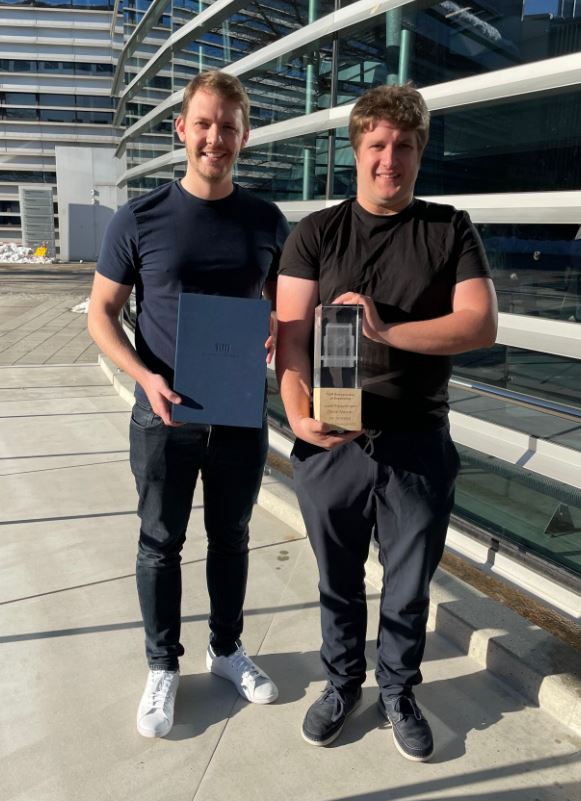
The Technical University of Munich honors Daniel Metzler and Josef Fleischmann, founders of Isar Aerospace, as TUM Entrepreneurs of Excellence 2024 for their outstanding entrepreneurial achievements. Founded in 2018, their company is revolutionizing the New Space industry with customized microlaunchers for small and medium-sized satellites that enable cost-effective access to orbit.
Both TUM alumni—Daniel Metzler with a master's degree in aerospace engineering (2019) and Josef Fleischmann with a master's degree in mechanical engineering (2015)—developed the first prototypes of engine components in the WARR student research group and at TUM MakerSpace. Supported by the Xpreneurs incubator at UnternehmerTUM and venture capital investments, Isar Aerospace grew rapidly and now employs over 350 people in Ottobrunn. Metzler also advises the European Space Agency (ESA), underscoring the company's innovative strength.
Metzler and Fleischmann remain closely connected to their alma mater by recruiting talent from TUM and inspiring young entrepreneurs. As Entrepreneurs of Excellence, they will actively participate in TUM start-up activities, for example through guest lectures, mentoring, or participation in the TUM IDEAward, thereby further strengthening the university's start-up ecosystem. Their pioneering work makes them role models for TUM students and scientists.
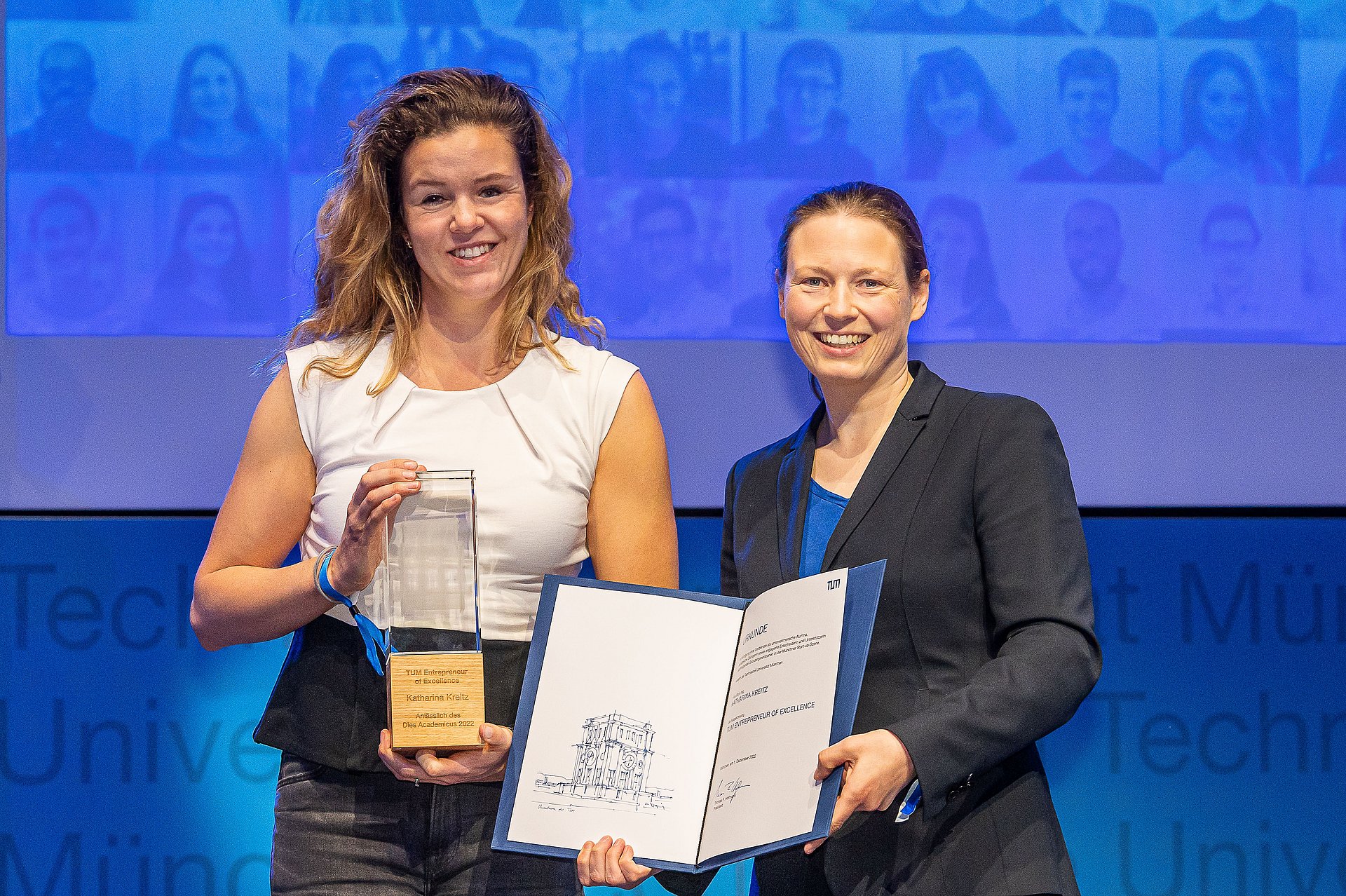
Entrepreneurial talent often becomes apparent during one's studies, as was the case with this year's TUM Entrepreneur of Excellence, Katharina Kreitz.
Her company vectoflow, founded in 2015, manufactures innovative, customer-specific flow measurement technology for a wide range of applications and is now the global market leader in its segment.
The idea for the company was born during her studies, when the aspiring engineer worked in industry (e.g., NASA, Airbus, BMW) and at the university (TUM Mechanical Engineering, specializing in aeronautics, gas dynamics, and astronautics). Dissatisfied with the existing probes and measurement options, Katharina Kreitz and her colleague Christian Haigermoser decided to develop customized, smaller, more precise, and more reliable measuring probes.
Using delicate 3D printing, the first prototype was soon created, which attracted a lot of attention early on. Katharina Kreitz, who quickly acquired the necessary business management knowledge by studying for an MBA on the side, brought Florian Wehner into the team as the third co-founder.
With the support of TUM Start-up Consulting and UnternehmerTUM, the team continued to develop its start-up project and soon received the EXIST start-up grant. It was then only a short step to founding vectoflow. Vectoflow now operates worldwide and has customers in over 70 countries. Vectoflow products are used wherever something flows, be it water, air, gas, or oil. The areas of application are wide-ranging: on Formula 1 cars, in engines, on drones and wind turbines, and many more.
Katharina Kreitz turned down tempting offers from industry to start her own company. Even as the head of her own company, she remains an excellent engineer with heart and soul, whose enthusiasm for her field and entrepreneurial spirit make her a role model for young scientists and entrepreneurs at TUM.
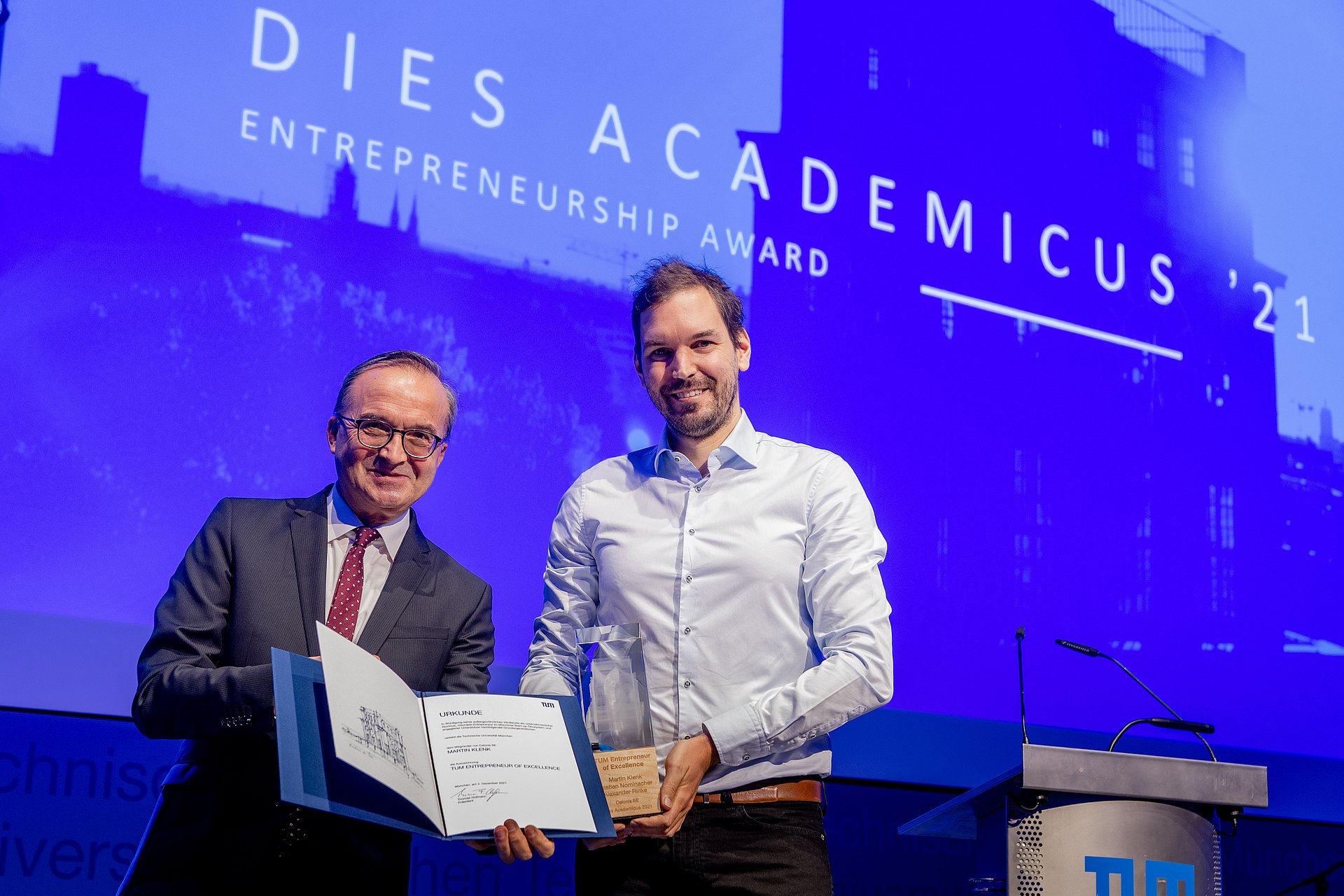
The honorary title of Entrepreneur of Excellence was awarded to three outstanding founders in 2022: TUM alumni Martin Klenk, Bastian Nominacher, and Alexander Rinke not only jointly led their start-up to become the world-class company Celonis SE. They also earned the recognition for their exemplary commitment to young professionals at the Technical University of Munich.
While still students, the highly complementary trio (computer science, finance/business informatics, and mathematics) came across the idea of process mining and workflow mining while searching for a solution to their study project in the TUM library. Together, they developed artificial intelligence-based process mining software that enables companies to analyze all their digital business processes and make them more efficient.
The success story began with the spin-off of their start-up Celonis in 2011: by 2015, Celonis was already the fastest-growing technology company in Germany, and a year later, the Munich-based company established a branch in New York. In 2018, the company was valued at US$1 billion, earning it unicorn status. In 2019, German President Frank-Walter Steinmeier presented the German Future Prize to the company's founders. And since mid-2021, the software company Celonis SE has been the first German decacorn, with a company valuation of over US$10 billion.
With their research-based development work and entrepreneurial spirit, the three TUM founders Martin Klenk, Bastian Nominacher, and Alexander Rinke have built Celonis into a globally successful company. In addition, they have remained closely connected to their alma mater and are not only role models for diligence and ambition, but also encourage students and scientists to turn their ideas into successes. (The company name Celonis is derived from the Greek god Zelos, meaning “zeal” and “striving.”)
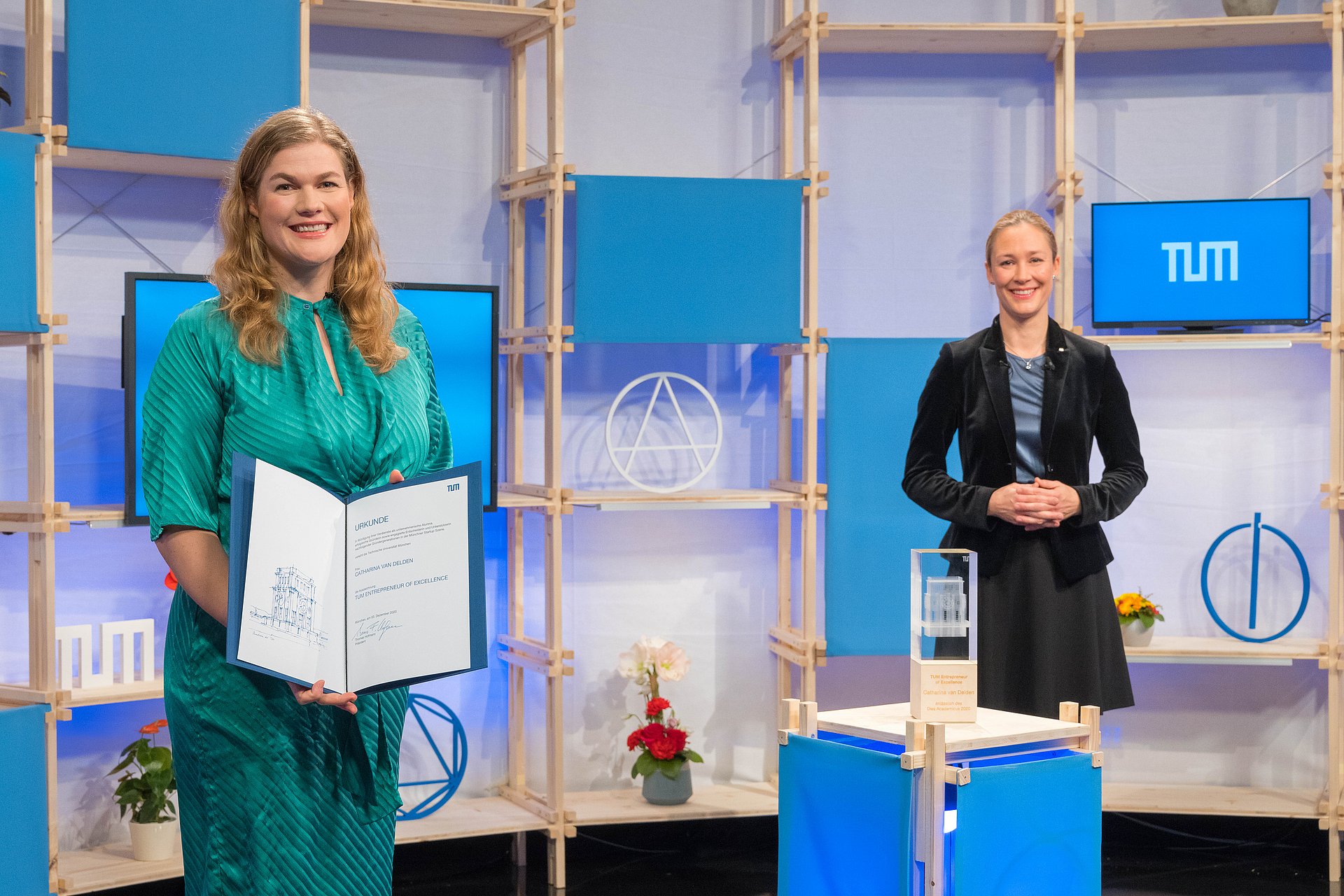
With Catharina van Delden, the Technical University of Munich honors another outstanding founder and committed spokesperson for the startup scene in Munich with the “Entrepreneur of Excellence” award.
With their company innosabi, Catharina van Delden and her co-founders develop and distribute unique software for agile innovation processes. Data, people, and initiatives are networked to accelerate the innovation process in companies and make innovation marketable.
Catharina van Delden completed her bachelor's degree in business administration at TUM in 2008 and her Executive MBA in Innovation and Business Creation in 2010. The idea for her successful startup innosabi was born during her bachelor's studies. The seed for today's company was a so-called crowd economy startup. The ‘unserAller’ community, founded in 2010 as a group within a well-known social media platform, brought together users who collaborated on the development of new products. Today, innosabi has more than 50 employees, generates several million euros in revenue, and sells its innovation software solution to well-known corporations.
Catharina van Delden's outstanding achievements extend beyond her company. She is committed to supporting young entrepreneurs and addressing issues related to digital transformation. Among other things, she has advised the German Federal Ministry for Economic Affairs and Energy on the topic of the “young digital economy,” advocates for the interests of young companies as a member of the executive committee of the bitkom association, and enjoys giving guest lectures at the Technical University of Munich.
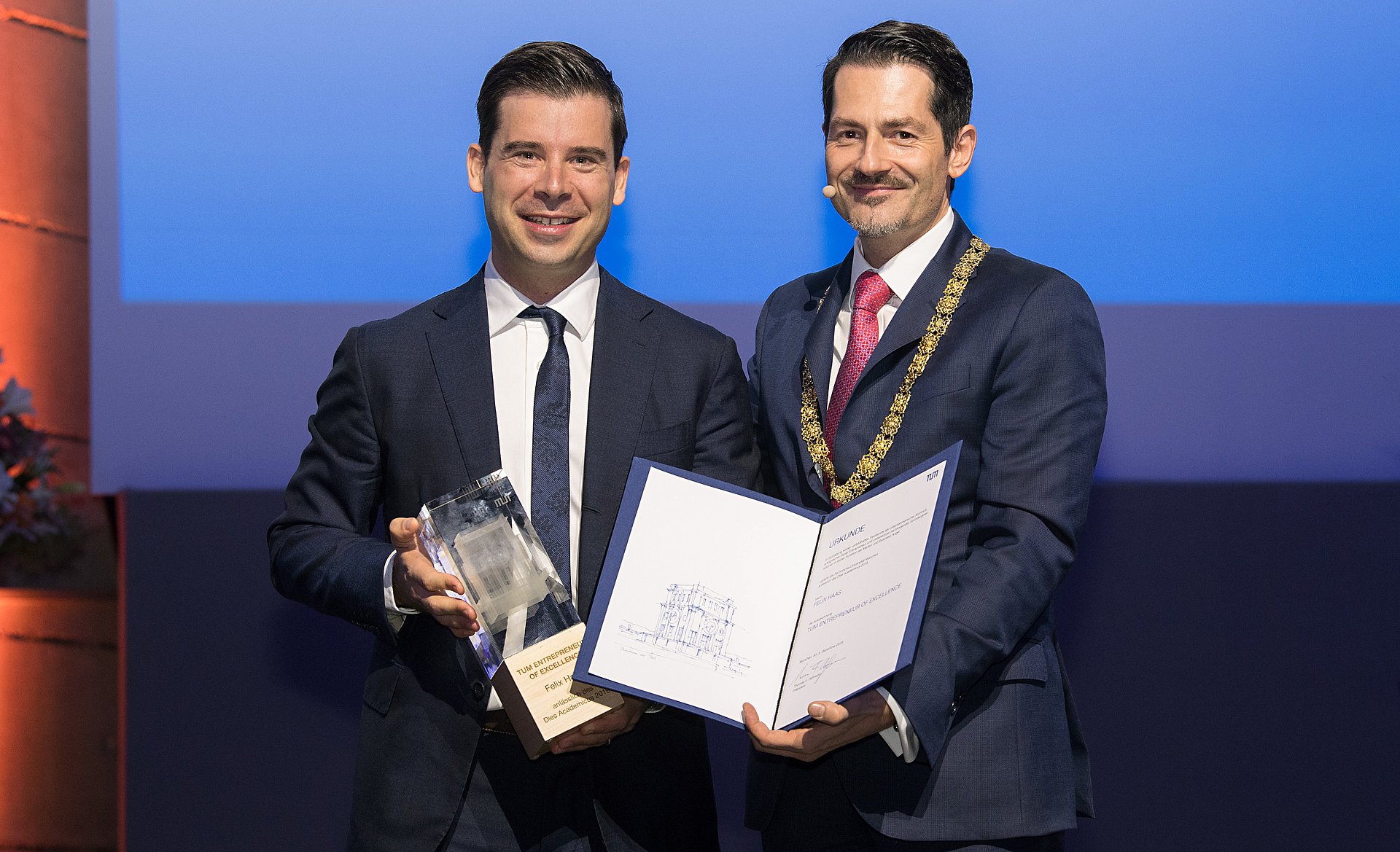
The TUM Entrepreneur of Excellence for 2020 is Felix Haas!
The Technical University of Munich considers successful serial entrepreneur and investor Felix Haas to be an entrepreneur of outstanding excellence. This dedicated entrepreneur is characterized by his courage to try new things and his belief in innovation as a driver of the German economy. After studying electrical engineering at TUM, he founded two start-ups: his event platform Amiando, which was named a Global Technology Pioneer by the World Economic Forum, and his venture capital firm Felix Haas Investments, through which he has provided financial support to more than 50 technology start-ups over the years. In 2013, Felix Haas once again demonstrated his entrepreneurial spirit of innovation with the founding of IDnow in the field of eID services. His commitment to the German start-up scene, especially in Munich, is also reflected in his work as co-host of the Bits & Pretzels start-up conference. As a TUM alumnus, Felix Haas is a true role model for future generations of founders with his entrepreneurial achievements.
Voxeljet has been active in the development and manufacture of 3D printing systems since 1999. The company now employs 100 people.
After studying mechanical engineering at the Technical University of Munich, Ingo Ederer completed his university career with a doctorate in the field of piezo dosing of liquids. He founded voxeljet in 1999. The high-tech company specializes in the tool-free and automatic production of casting molds from sand or plastic parts according to customer specifications. One of the company's technological highlights was the development of one of the world's largest commercially available 3D printing systems for the tool-free production of molds and models based on CAD data. These systems are successfully used by customers such as BMW AG and Daimler AG. In July 2010, voxeljet was awarded the title “TOP 100” as one of the 100 most innovative medium-sized companies. In order to secure its innovative strength for the future, the company continuously invests in research and development as well as in highly trained employees. The high-tech company celebrated a successful debut on the New York Stock Exchange (NYSE) in October.
The Comet Group has been offering full-service technical documentation and software development services since 1987.
After studying computer science at TUM and enjoying a successful career in the private sector, Sissi Closs founded Comet Computer GmbH in 1987 and Comet Communication GmbH in 1998. Today, the Comet Group is one of the most renowned providers in the field of technical documentation and information development in the German-speaking world. Sissi Closs and her companies became known in particular for the corporate culture they have practiced since their founding in 1987. “Family-friendly working conditions, flexible working time models, and management positions for part-time employees are part of our corporate culture,” explains Sissi Closs. These models appeal to women, who make up 60 percent of the workforce. As early as 1994, Comet received the Bavarian State Government's 1st prize for equal opportunities in the workplace and has been awarded the Total E-Quality rating several times. In 2001, Sissi Closs received the Bavarian State Medal for Social Services in recognition of her social commitment. The Bavarian Minister for Family and Women's Affairs awarded Comet the “Bayern-SIEgER 2011” prize, and COMPUTERWOCHE magazine voted Prof. Sissi Closs into the top 100 most influential ITC makers of 2011, who are driving and advancing the IT scene in Germany with their commitment and visionary ideas.
AeroLas is engaged in the customer-specific development and production of air bearings and air-bearing drive systems and is recognized worldwide as a technology leader in this field. Founded in 1997, the company employs 16 people.
During his time as a research assistant at TUM, Michael Muth developed the patented air bearing technology at Professor Heinzl's Chair of Precision Engineering and Microtechnology, based on years of research. First prize among 2,100 participants in the “StartUp'97” start-up competition provided the necessary venture capital to turn the engineer into an entrepreneur. Michael Muth founded AeroLas in 1997, and shortly after commencing operations in March 1998, AeroLas received its first major orders, including the development of a nano-precision drive for a semiconductor mask measuring device from Leica Microsystems. AeroLas has now established itself internationally with innovative products. Global players such as Samsung, LG, Zeiss, Infineon, Siemens, Bosch, KLA Tencor, Giesecke & Devrient, Wacker, Cymer, Pfizer, and EV Group rely on the technology and expertise of the Munich-based high-tech company.
Huber SE was dedicated to the development and manufacture of water treatment machinery and equipment. In 1967, Hans Georg Huber took over the family business, which had been in existence since 1834. He employed 900 people.
Hans Georg Huber was Chairman of the Supervisory Board of Huber SE, a traditional company that has been in existence for 175 years. After studying process engineering at the Technical University of Munich, he took over the management of the family business together with his brother Karl-Josef. In the following decades, the brothers expanded Hans Huber GmbH into a global company in the fields of water treatment, wastewater treatment, and sludge treatment. Hans Huber never lost sight of the importance of collaboration with the scientific community, but rather integrated it into his business activities: “This gave my company important impetus in research and development, which was then implemented in the markets.” For example, ideas for new approaches to wastewater treatment were developed in collaboration with the Technical University of Munich, which ultimately led to Hans Huber being awarded the German Environmental Prize, worth 500,000 euros, in 2006. The establishment of the Hans Huber Technology Foundation and the awarding of the Huber Technology Prize in May 2005 also demonstrate the importance Hans Huber attaches to research. Hans Huber's life's work has been recognized with numerous honors. Among other things, he was awarded the Federal Cross of Merit on Ribbon, the Bavarian State Medal, the Bavarian Order of Merit, and the Environmental Medal of the Free State of Bavaria. Hans Huber passed away on March 15, 2014, in Berching.
Bionade was founded in 1995 with the aim of developing and producing an alcohol-free organic lemonade through the fermentation of natural raw materials. The company has 150 employees.
Peter Kowalsky studied brewing engineering at TUM in Weihenstephan and is now a successful entrepreneur. His story has everything that makes a good entrepreneurial story: it is full of passion, setbacks, fun, hard work, and success. The idea for the “people's and cult drink Bionade” was born 20 years ago to ensure the long-term survival of the family-owned brewery in the Rhön region. It took ten years to develop the innovative product, which turns fruit juice into lemonade through fermentation. In 2005, Bionade finally made its breakthrough in one of the toughest food markets in the world. Kowalsky's recipe for success is: 1. never give up and 2. give it your all. Because only “if you put something in at the front, something will come out at the back.”
SFC Energy has been dedicated to the development and manufacture of fuel cells for mobile and off-grid power supply since 2000. The company employs 100 people.
Dr. Manfred Stefener is the founder and shareholder of SFC Energy AG. The company is the market leader for mobile and off-grid energy supply based on fuel cell technology. SFC fuel cells supply electrical energy all over the world, from Japan to Antarctica, for motorhomes, sailing yachts, vacation cabins, off-grid systems such as traffic monitoring systems, observation stations, measuring and early warning devices, light electric vehicles, portable applications, and much more. And the number of applications is constantly growing. As one of Germany's technology pioneers, SFC has been honored with numerous innovation and industry awards. Most recently, TUM alumnus Manfred Stefener received the title “Technology Pioneer” in the “Energy” category. SFC AG is the only German company to receive this award for its innovative developments and products.
ACTANO was founded in 1989 and develops project management software for planning and executing highly complex projects. The company employs 100 people.
“As a university graduate with no professional experience, I was something of an oddity,” says Rupert Stuffer when talking about the founding of ACTANO GmbH. “Back then, the three of us stumbled into founding the company quite naively and got ourselves worked up about it.” While still working on his doctorate in mechanical engineering at TUM, Rupert Stuffer founded ACTANO GmbH, where he is now the managing director. The company employs 100 people and has developed project management software that improves the planning and implementation of highly complex projects. Currently, more than 100,000 users in over 100 companies worldwide from the discrete manufacturing industry work with ACTANO products. In 2006, ACTANO was included in the list of “Entrepreneurs for Growth,” Europe's 500 fastest-growing companies. In 2006 and 2007, the company was awarded innovation prizes.
By transferring innovative concepts from academia to industrial practice, ACTANO has repeatedly succeeded in gaining competitive advantages over much larger competitors and establishing itself as an innovation leader in the project management software market segment.
BrainLAB was founded in 1989 and offers systems for image-guided surgery and radiation therapy. The company employs 950 people.
Stefan Vilsmeier, also known as the “Bavarian Bill Gates,” founded his company at the age of 21 while studying computer science at the Technical University of Munich. He earned the start-up capital of 150,000 marks himself with a specialist book on the construction of 3D objects. From the outset, the Bavarian entrepreneur focused on internationalization and built up a global network of distributors. In 1996, he presented his first device that enabled the precise treatment of tumors. BrainLAB is now one of the market leaders in the field of computer-assisted surgery and has revolutionized cancer treatment. The company has 16 branches worldwide and employs 950 people. Stefan Vilsmeier has received numerous awards for his outstanding role as an entrepreneur, including the “World Entrepreneur of the Year 2002” award from Ernst & Young and the “Bavarian Order of Merit” from the Free State of Bavaria.
WILEX was founded in 1997 and is dedicated to the development of drugs for targeted treatment with few side effects, as well as diagnostics for the highly specific detection of various types of cancer based on antibodies and low-molecular-weight active substances. The company employs 118 people.
Prof. Olaf Wilhelm is co-founder and, since 2001, CEO of WILEX AG, Munich. The company was founded in 1997 by doctors and cancer researchers at the Technical University of Munich and was the winner of the first Munich Business Plan Competition in 1996/97. After an initial round of financing, WILEX began operations in 1998 and, following three further rounds of financing, has been listed on the stock exchange since 2006. In 2003, WILEX received the first “Biotechnology Clinical Partnership Award” from the US Department of Defense's breast cancer research program for the uPA program, which was also the founding idea. WILEX now has a broad portfolio of product candidates across all phases of clinical development. The strategic acquisitions of Oncogene Science (via WILEX Inc.) and Heidelberg Pharma AG have expanded the business model: in addition to product development, WILEX now also works in the areas of in vitro diagnostic tests, preclinical contract research, and ADC technology.