Medicine and health
Our goal is to sustainably improve health and quality of life for people of all ages and extend their healthy lifespan. Through new technologies, we improve prevention, diagnosis, and treatment.

At TUM, we combine medical research with approaches from the natural sciences, life sciences, and engineering, and ensure that innovations in prevention, diagnostics, and therapy are quickly translated into modern patient care. Together with our TUM Klinikum, we are committed to advancing innovation in healthcare and offer students and researchers an inspiring learning and working environment.
Latest news in medicine and health


TUM science glossary
Source: TUM Corporate Communications Center / Prof. Matthias Hebrok, TUM School of Medicine and Health / TUM Center for Organoid Systems, Prof. Björn Schuller, TUM School of Medicine and Health and TUM School of Computation, Information and Technology, 2026
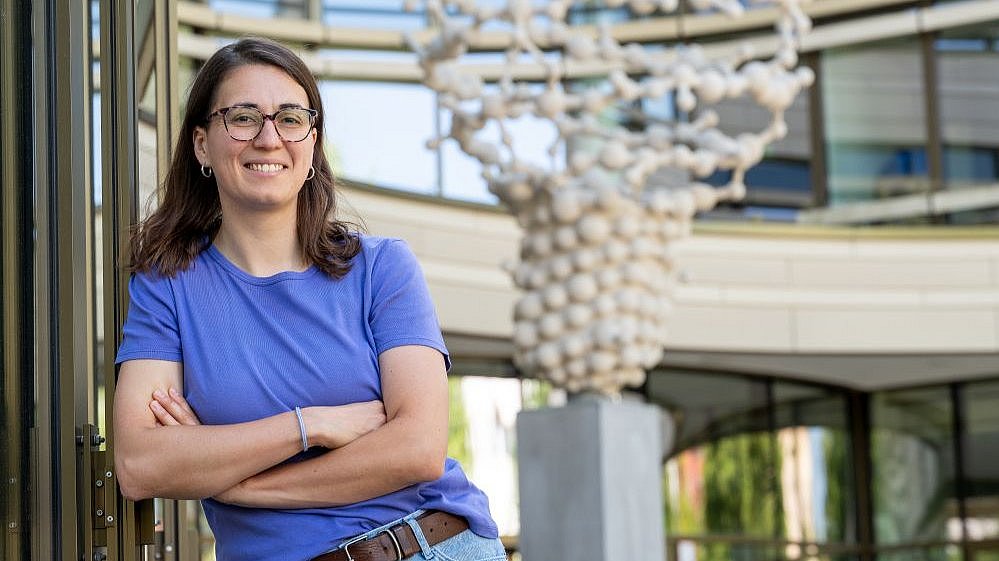
AI in medicine: Vasiliki Sideri-Lampretsa
In search of invisible patterns
In her doctoral thesis, Greek researcher Vasiliki Sideri-Lampretsa prepares clinical data from lung and brain imaging for AI-based analysis. Artificial intelligence can help identify disease-related changes in medical images. Vasiliki is a researcher in the group of Daniel Rückert, Alexander von Humboldt Professor for AI in Healthcare and Medicine. He develops safe and reliable AI solutions in medicine.
Research and innovation
Our scientists are researching the medical challenges of today and tomorrow. The combination of basic research, clinical studies, and technology development creates ideal conditions for interdisciplinary approaches to better understand diseases, detect them earlier, and treat them in a more personalized way. At TUM Klinikum, new findings can be quickly tested in everyday clinical practice—in close collaboration with physicians and clinical staff—and put to use for the benefit of patients.
What are TUM's main areas of research in the field of medicine?
- We are shaping the future of medicine through AI, biomedical engineering, novel prevention strategies, personalized therapies, and state-of-the-art imaging technologies.
- Our research focuses on a wide range of fields, from immunology and infectious disease biology to cardiovascular and cancer research, as well as neurology.
- In doing so, researchers investigate the causes of viral infections and diseases such as cancer, multiple sclerosis, Alzheimer’s, and stroke.
Medical, preventive, and health care facilities

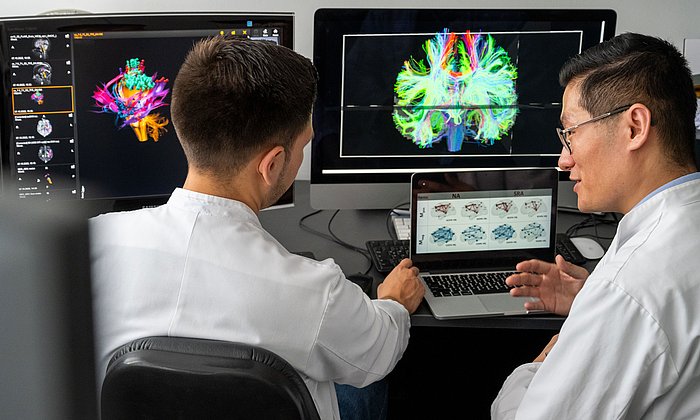
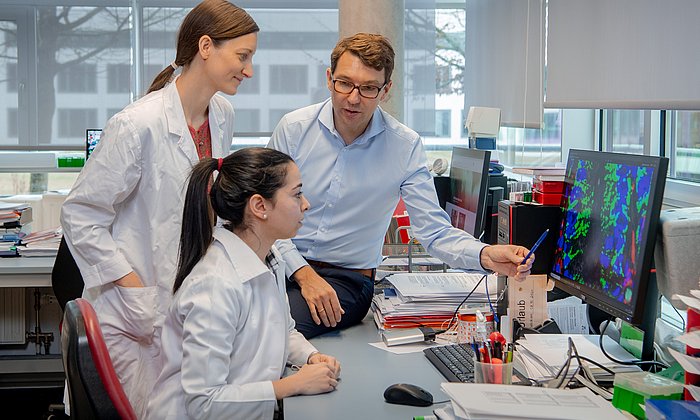
New centers for medical research
By establishing new hubs of cutting-edge research, we are strategically expanding the infrastructure for medical research and promoting interdisciplinary collaboration:
- TUM Center for Structural and Functional Connectomics – CSFC (under development)
- Center for Digital Medicine and Health (ZDMG) (under development)
- Center for Multiple Sclerosis and Neuroscience (under development)
Programs for early-career researchers
We support talented and motivated researchers at the beginning of their careers in medical and clinical research:
Medical research projects
- Cluster of Excellence „BioSysteM“
- Cluster of Excellence „NUCLEATE“
- Cluster of Excellence „SyNergy“
- CRC 1371: Microbiome Signatures - Functional Relevance in the Digestive Tract
- TRR 267: Non-coding RNA in the cardiovascular system
- TRR 338: LETSIMMUN - Lymphocyte Engineering for Therapeutic Synthetic Immunity
- TRR 387: Functionalizing the Ubiqutin-system against cancer – UbiQancer
-
RTG 2668: Immune Master Switches in Allergies and Autoimmune Diseases
- BMFTR Clusters4Future „CNAMT“ (in German only)
- TUM Innovation Network „Neurotech“
- TUM Innovation Network „NextGenDrugs“
- TUM Innovation Network „eXprt“
EU funding: ERC Grants, EU Projects, EITs
- ADRIP, ERC Starting Grant, Dr. med. Sonja Wörmann
- AI-PIONEER, ERC Starting Grant, PD Dr. Jan Peeken
- CITE, ERC Starting Grant, Prof. Dr. Nicole Strittmatter
- EcIMPACT, ERC Starting Grant, Prof. Dr. Michael Laxy
- EscapeX, ERC Starting Grant, Dr. Daniel Andergassen
- HEROINE, ERC Starting Grant, Dr. Melanie Schirmer
- MATRICARD, ERC Starting Grant, PD Dr.med. Thorsten Kessler (DHM)
- MONSil-AD, ERC Starting Grant, Dr. Benedikt Zott
-
NTasePro, ERC Starting Grant, Prof. Dr. Carina Baer de Oliveira Mann
- PicoBody, ERC Starting Grant, Prof. Dr. Hristo Svilenov
- uStemGel, ERC Starting Grant, Prof. Dr. Berna Özkale Edelmann
-
EvoGutHealth, ERC Consolidator Grant, Prof. Dr. Barbara Stecher-Letsch
- GRACE, ERC Consolidator Grant, Prof. Dr. Nina H. Uhlenhaut
- iBAck-epic, ERC Consolidator Grant, Prof. Dr. med. Jan Kirschke
- LongTx, ERC Consolidator Grant, Prof. Dr. Lars Mägdefessel
- breakingBAC, ERC Advanced Grant, Prof. Dr. Stephan A. Sieber
- BREATHE, ERC Advanced Grant, Prof. Dr. Wolfgang Wall
- Cor-Edit-P, ERC Advanced Grant, Prof. Christian Kupatt-Jeremias
- EPICURE, ERC Advanced Grant, Prof. Dr. Alessandra Moretti
- GENESHUTTLE, ERC Advanced Grant, Prof. Dr. Hendrik Dietz
- NETWORK, ERC Advanced Grant, Prof. Dr. Mikael Simons
- SmartX, ERC Synergy Grant, Prof. Dr. Franz Pfeiffer
- Human Brain Project
- BEACON-HD (Prof. Dr. Nikkil Sudharsanan)
- EU-CONVERSION (Prof. Dr. Christian Pfleiderer)
- NIRFUS (Prof. Dr. Vasilis Ntziachristos)
- OPTOMICS (Prof. Dr. Vasilis Ntziachristos)
- QUENCH (Prof. Dr. Dominik Bucher)
- TWIN-X (Prof. Dr. Marcus Makowski)
- Vax2Muc (Prof. Dr. Markus Gerhard)
- Participation in „EIT Food“
- Overview of research projects at TUM