Press releases

Season's Greetings
Happy Holidays and a Happy New Year
We would like to wish all of our university's students, staff, alumni, and friends happy holidays and a wonderful start to the new year. Thank you for accompanying us through a successful year 2025. We wish you and your families a healthy and happy 2026.
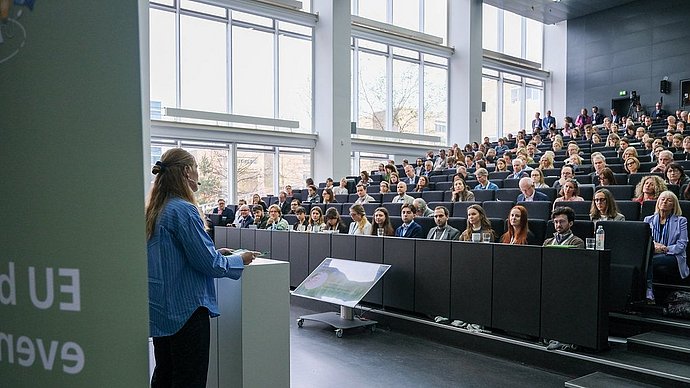
TUM students selected as EU Bioeconomy Youth Ambassadors
“Stand up for what you believe in!”
As EU Bioeconomy Youth Ambassadors, Ivana Suver and Katina Staleva represent young perspectives across Europe. Their goal: to help drive the green transition of the economy and society. In this interview, the two TUM students talk about what motivates them, how their network works – and why real change can only happen when young voices are part of the decision-making process.

NewIn: Sabina Leonelli
“Every researcher is faced with philosophical questions”
Sabina Leonelli is Professor of Philosophy and History of Science and Technology and heads the Public Science Lab. In the new episode of “NewIn,” she explains why looking back at history can be helpful for science and technology development, how she wants to conduct research together with non-academics, and how the perception of philosophers in Germany differs from that in other countries.
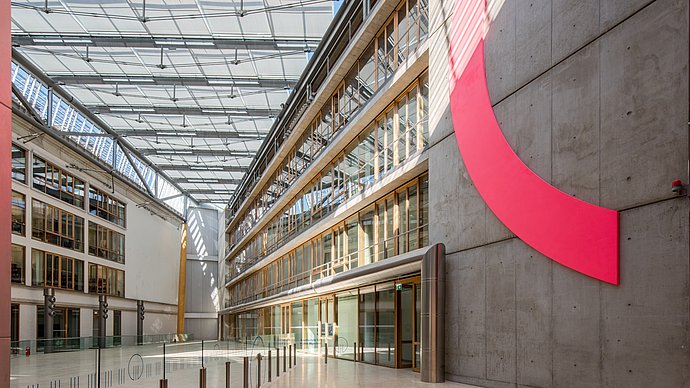
Five “Change! Fellowships” for TUM researchers
Research with civil society
How can the German justice system be digitized without compromising its fundamental values? How can people in Vietnam secure their income through biochar production while contributing to climate protection? Five researchers from the TUM School of Social Sciences and Technology will receive Change! Fellowships from the Volkswagen Foundation for projects aimed at societal change. This program stands out because it allows for close collaboration with partners from civil society and the public sector.

Research into converting to low-enriched uranium is progressing
Important fuel test for FRM II successful
An important step has been taken in the conversion of the Heinz Maier-Leibnitz Research Neutron Source (FRM II) at the Technical University of Munich (TUM) to low-enriched nuclear fuel: two fuel plates made of a monolithic uranium-molybdenum alloy have been successfully irradiated. This marks the first time a manufacturing process for new fuels with low-enriched uranium has been tested under realistic irradiation conditions.

Participation in the TUM Industry Engagement Program
Tata Consultancy Services becomes a partner of TUM
Tata Consultancy Services (TCS), a global leader in IT services, consulting, and business solutions, has become a new member of the Technical University of Munich’s (TUM) Industry Engagement Program (IEP). The partnership aims to promote innovation and next-generation talent. IEP is a platform to identify common interests between researchers and companies and tap into promising fields of innovation, while offering companies direct access to the TUM ecosystem, which is unique in Europe.
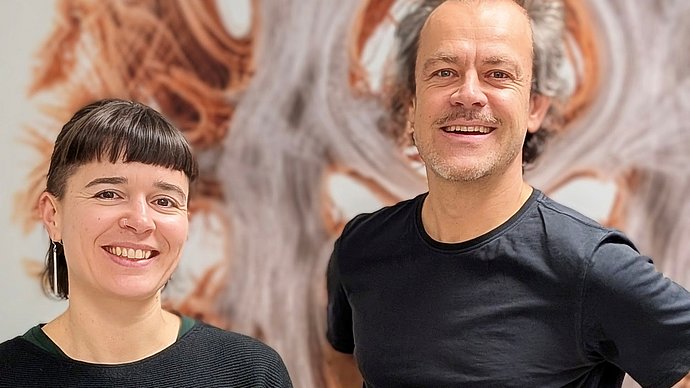
Why blood flow is not a reliable indicator of the brain's energy requirements
40 percent of MRI signals do not correspond to actual brain activity
For almost three decades, functional magnetic resonance imaging (fMRI) has been one of the main tools in brain research. Yet a new study published in the renowned journal Nature Neuroscience fundamentally challenges the way fMRI data have so far been interpreted with regard to neuronal activity. According to the findings, there is no generally valid coupling between the oxygen content measured by MRI and neuronal activity.

Direct analysis of urine delivers antibiotic resistance results up to 24 hours earlier
New method accelerates resistance testing in urinary tract infections
Researchers at the Technical University of Munich (TUM) have developed a method for diagnosing urinary tract infections that significantly accelerates antibiotic resistance testing in urine. Because the procedure does not require labor-intensive pre-cultivation of bacteria – as is standard practice – results on antibiotic effectiveness are available one day earlier. Conventional laboratory analyses require two to three days. The new approach provides the foundation for a home-use rapid test.

Media tip: Nano
Fermentation: Between Tradition and the Lab
Fermented foods are trending, but fermentation can be much more than kombucha, kimchi, and yogurt. In the documentary “Fermenting – Power for a Healthy Gut”, Marius Henkel, Professor of Cellular Agriculture at the TUM School of Life Sciences, provides insights into precision fermentation and its potentials.

PIAAC study: skills strongly depend on social background
Adults in Germany are good at solving problems
Adults in Germany are better than the international average at coping with problems in new and complex situations. However, this adaptive problem-solving skill depends more heavily on sociodemographic characteristics than in other countries. This is shown by a new evaluation of the latest PIAAC study, in which adults in around 30 countries were tested.