Press releases
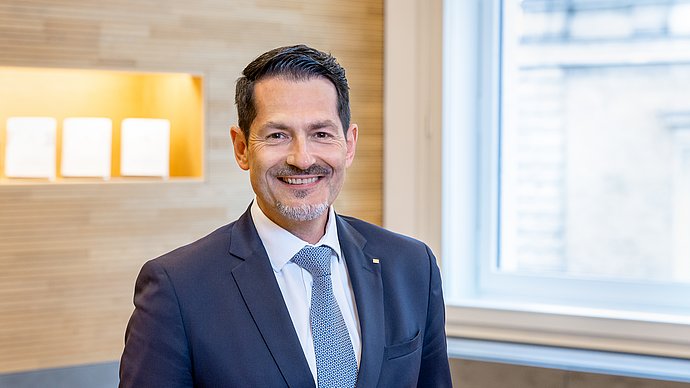
TUM President elected head of the Bavarian University Conference
Thomas F. Hofmann is the new Chairman of the University of Bavaria
The President of the Technical University of Munich (TUM), Prof. Thomas F. Hofmann, was elected as the new Chairman of the Board of the University of Bavaria e.V. The University of Bavaria represents the common interests of 13 universities in the Free State of Bavaria vis-à-vis politics and society.
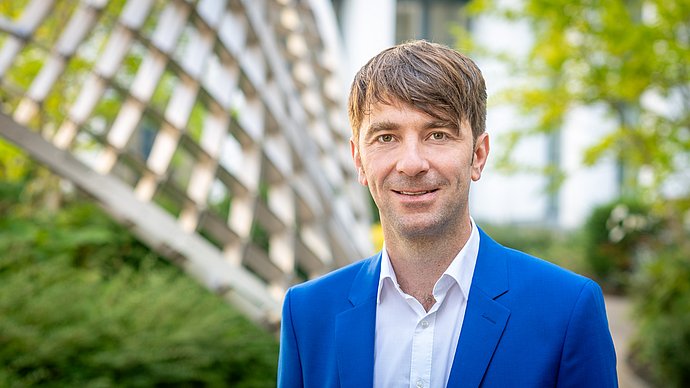
NewIn: Stefan Guldin
New approaches to future nutrition
Stefan Guldin is the new Professor of Complex Soft Matter at the TUM School of Life Sciences and Scientific Co-Director of the Proteins4Singapore project. His research is located at the point where materials science and life sciences meet.
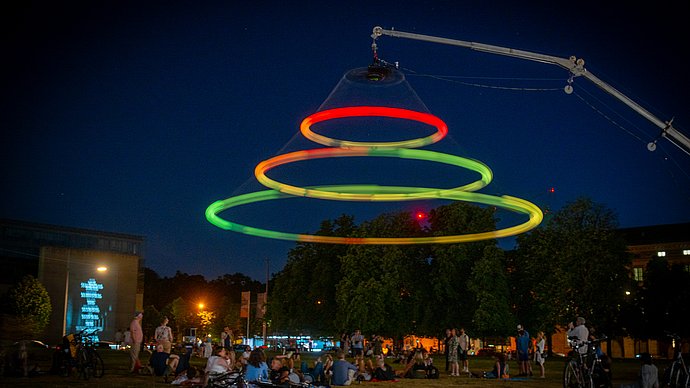
Looking back on the Kunstareal Festival 2025
Science and arts in motion at the Kunstareal
TUM is located right in the heart of Munich's Kunstareal, one of Europe's most important arts and culture destinations. The 2025 edition of the Kunstareal Festival thus saw TUM researchers, students and staff join in with creative ideas and projects, making science, technology and social questions feel tangible in a new way.
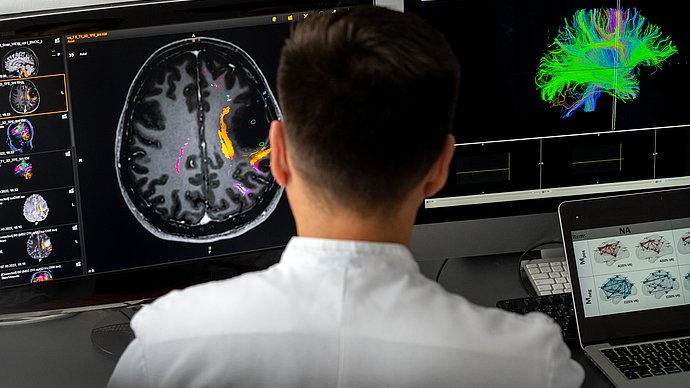
TUM Center for Structural and Functional Connectomics
New center for brain research on the Garching campus
A new connectomics research center will be established on the TUM campus in Garching, which will focus on the comprehensive mapping and analysis of all neuronal connections in the brain. At the Center for Structural and Functional Connectomics (CSFC) at the Technical University of Munich (TUM), researchers from various disciplines will collaborate in such areas as state-of-the-art imaging technologies. The Joint Science Conference (GWK) has approved funding of around 69 million euros.
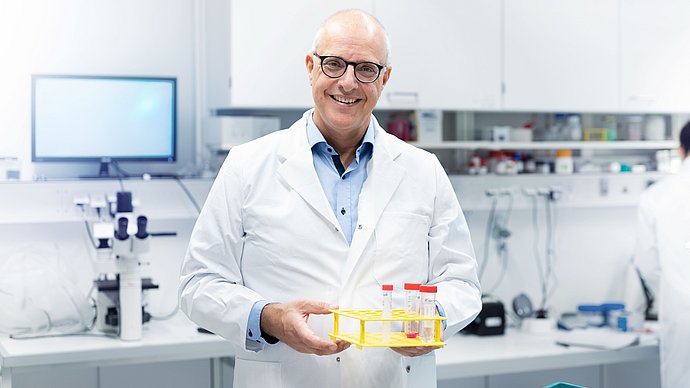
Heinz Nixdorf Foundation supports organoid research at TUM
Andreas Bausch is the new Nixdorf Professor
Biophysicist and organoid researcher Andreas Bausch is taking over the Heinz Nixdorf Foundation Professorship at the Technical University of Munich (TUM). This comes with over 2.3 million euros in research funding. In addition, the equipment for a research laboratory in TUM's future Center for Organoid Systems (COS) will be financed.

TUM Trust Center
Platform for digital seals and signatures
The new TUM Trust Center enables administrative processes to be handled digitally and in a legally secure manner. It is already in use in some areas of the university administration and is now available to all employees and students.
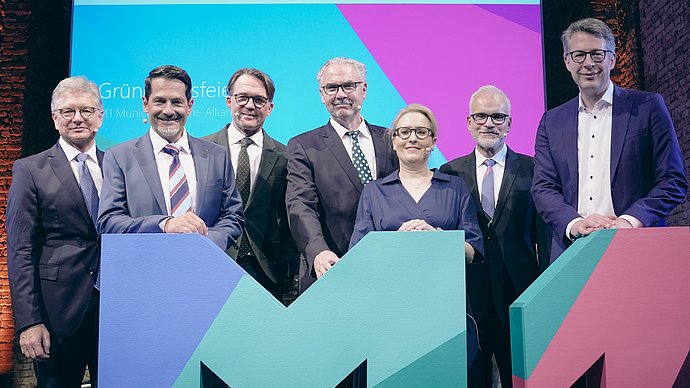
Ceremony marking the founding of the M1 Munich Medicine Alliance
"We are making Munich an innovation hub for the future of medicine"
Munich's two universities of excellence, the Technical University of Munich (TUM) and LMU, together with their university hospitals, want to work with Helmholtz Munich to strengthen Munich's international reputation as a center for medicine. At a ceremony marking the founding of the "M1 – Munich Medicine Alliance," politicians, scientists, and medical practitioners emphasized its enormous potential.
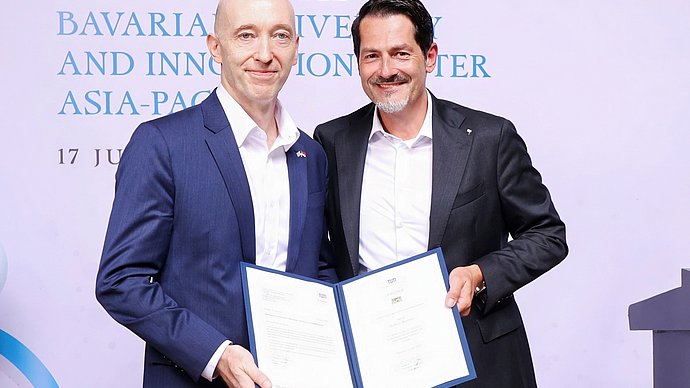
First Vice President for Strategic Activities in Asia-Pacific
Dr. Markus Wächter appointed as new Vice President of TUM Asia
Dr. Markus Wächter, long-time managing director of the TUM Asia Campus in Singapore, has been given expanded responsibilities. He has been appointed Vice President TUM Asia by the Executive Board of the Technical University of Munich (TUM). Based in Singapore, he will be responsible for the strategic development of the TUM network in the Asia-Pacific region.
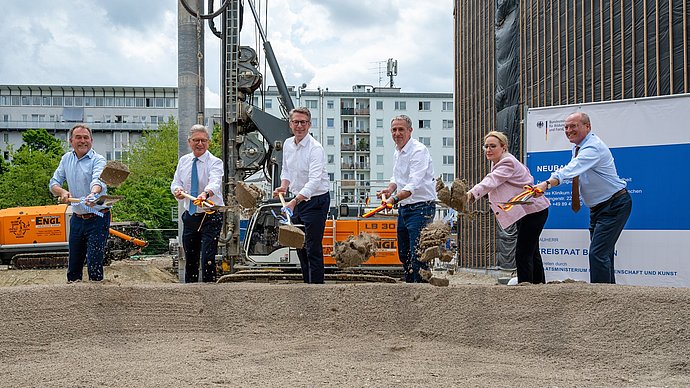
New infrastructure for pioneering research at the TUM University Hospital
Construction begins on new Center for Digital Medicine and Health
Construction has officially begun on the new Center for Digital Medicine and Health (ZDMG) at the Technical University of Munich (TUM), marked by a symbolic groundbreaking ceremony. The interdisciplinary center, which will bring together medical research, artificial intelligence, and data science under one roof, is being built on the campus of the TUM University Hospital Rechts der Isar.
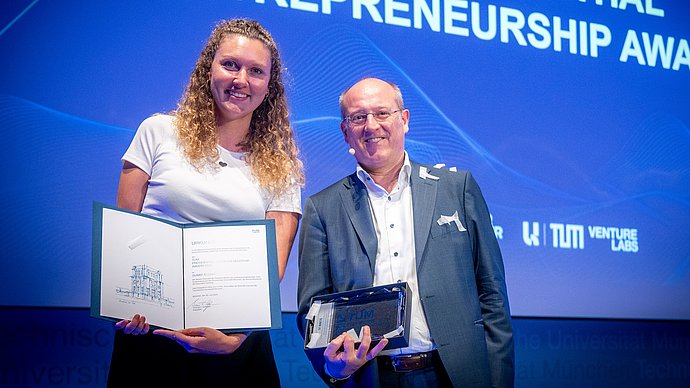
Entrepreneurship Day brings together Munich ecosystem
Presidential Award goes to AI start-up
For the development of an AI tool that translates complex texts into plain language, the start-up SUMM AI has received the TUM Presidential Entrepreneurship Award. The other finalists for this year’s award were KEWAZO, with a robot for the construction industry, and Phlair, with a new technology for CO2 capture.