All News

The latest from studies, research and campus life.

Filter by categories (multiple selection possible):

Sustainability

We are committed to the sustainable transformation of society - scientifically, economically, environmentally and socially. Learn more about our sustainability strategy.
Sustainability goals

6/8/2026
Reading time: 2 Min.

Research funding for the electrified construction site

Construction work without diesel emissions and vehicle noise

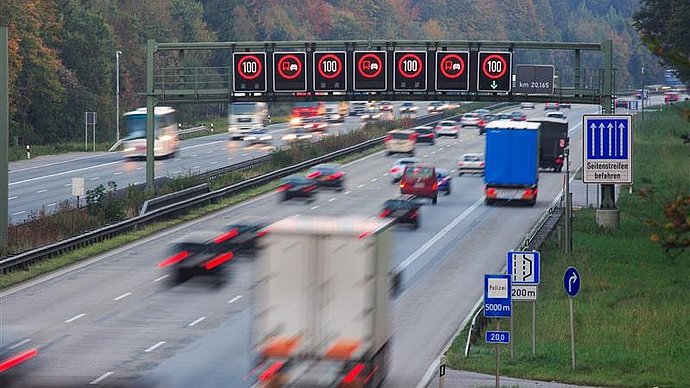
Construction sites are still characterized by noisy, polluting diesel engines. While battery-electric machines and vehicles are becoming increasingly available on the market, the major breakthrough toward locally emission-free and energy-efficient construction sites has so far been hindered primarily by the interaction of equipment and operational processes. The new research consortium ForBat@Bau, which has now commenced its work, aims to solve this challenging problem.

Research Sustainability Energy
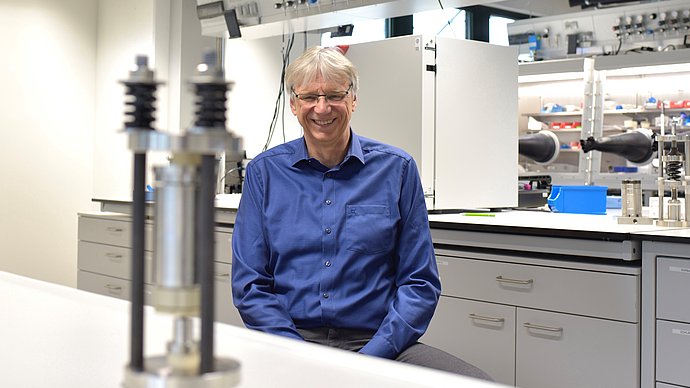
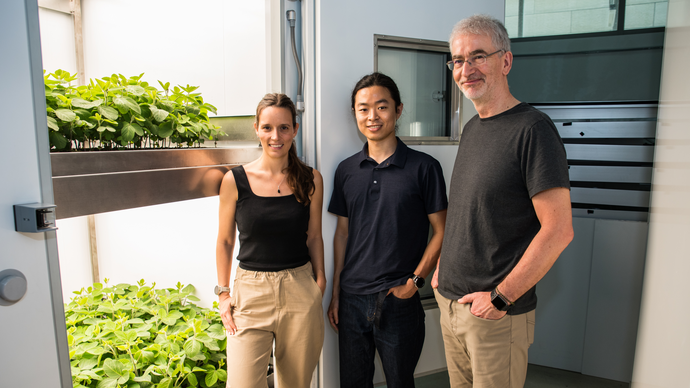
Victor Christian Kaharso in the lab. He is examining the cowpea at various stages of germination.
5/21/2026
Reading time: 4 Min.

Career in science: Victor Christian Kaharso

The cowpea as a new source of protein

Feeding a growing global population with healthy, safe, and affordable food is one of the key challenges of the future. Plant-based proteins can play an important role in addressing this challenge, as they offer alternatives to animal protein. Cowpea is a protein-rich legume with great potential. Doctoral candidate Victor Christian Kaharso from Indonesia is investigating how cowpea can be used as a valuable food ingredient.

Research Sustainability Community
Coastal megacities such as Jakarta are particularly affected by land subsidence and the simultaneous rise in sea level.
5/18/2026
Reading time: 4 Min.

Weight of cities and declining groundwater levels worsen climate change impacts

Sea levels rising dramatically in some areas due to land subsidence

Densely populated coastal regions in many parts of the world are particularly vulnerable to flooding. The sinking of land masses exacerbates the impacts of rising sea levels in these areas. This is shown by researchers from the Technical University of Munich (TUM) and Tulane University.

Research Sustainability
Prof. Stefan Gold
5/15/2026
Reading time: 4 Min.

NewIn: Stefan Gold

The hidden cost of production

More and more, faster and faster, ever more interconnected – this way of producing goods comes at a high social cost. In a new episode of NewIn, management scholar Stefan Gold talks about how companies can make their supply chains more sustainable and put fair working conditions into practice.

Teaching Research Sustainability Community
Vehicles stacked on top of each other in a scrapyard
5/13/2026
Reading time: 3 Min.

Closed-Loop-Recycling

Improving plastics recycling from end-of-life vehicles

Each year, four to six million cars are scrapped in the EU—resulting in the loss of ressources. The EU End-of-Life Vehicles Regulation is intended to ensure that these materials are recovered and reused in new vehicles in the future. Researchers at the TUM have now analyzed a process developed within the Car2Car research project that enables plastics to remain within the recycling loop. The study shows potential climate benefits as well as the possibility of meeting upcoming EU requirements.

Research Sustainability Mobility
Group photo of the finalist teams
4/30/2026
Reading time: 3 Min.

Global Sustainability Challenge

TUM team wins global competition

A solar-powered cooling system for remote regions and a concept for predicting bark beetle infestation: these start-up concepts for food security and the protection of forests were each awarded first prize in their category at the Global Sustainability Challenge. They were selected from a field of more than 3,500 participants representing 91 countries. The final took place as part of the TUM Sustainability Day.

Entrepreneurship Sustainability Community
TUM President Thomas F. Hofmann in conversation with exhibitors
4/30/2026
Reading time: 5 Min.

TUM Sustainability Day 2026

Shaping sustainability together

In times of global crises, sustainability sometimes falls out of the public spotlight. Yet it forms the basis for future life and is considered a central technological and transformation task. At this year's TUM Sustainability Day on the Garching campus, students, researchers, TUM employees and international partners showed how sustainability can be transferred from idea to practice through concrete solutions and concepts.

President Entrepreneurship Sustainability Community
Eine weiß gekleidete Person zieht einen Rahmen aus einem Bienenstock. Bienen sind am und um den Rahmen herum, im Rahmen befinden sich gefüllte Honigwaben.
4/29/2026
Reading time: 3 Min.

The „Urban Bee Concept“

How can honeybees and wild bees coexist in cities?

The rising popularity of urban beekeeping has raised concerns about honeybee well-being and the impact they might have on wild bee populations in cities. A collaborative study of beekeepers, political stakeholders and research institutions, including researchers from the Technical University of Munich (TUM) have developed the “Urban Bee Concept” which includes measures to foster co-existence between honeybees and wild bees in cities.

Research Sustainability
Foto von Unterholz im Amazonas
4/28/2026
Reading time: 3 Min.

Study highlights climate role of Amazon understory trees

Rainforests can buffer rising CO2 in the short term — but this comes at a cost

Tropical forests are among the world’s most important carbon sinks. A study by the Technical University of Munich (TUM), the University of Vienna, and Brazil’s National Institute for Amazonian Research suggests that even small understory trees can temporarily store more CO₂ as atmospheric CO₂ levels rise. However, their long-term capacity to sequester carbon may be constrained by nutrient limitations, potentially reducing this ability.

Research Sustainability
With local hydrogen storage facilities, industry can become cleaner, as is the case here in the Chemical Triangle of southeastern Bavaria.
4/10/2026
Reading time: 3 Min.

Study shows alternatives to salt caverns in northern Germany

Major hydrogen storage potential in Bavaria

Geological formations in southern Bavaria offer a previously underestimated potential for storing large quantities of hydrogen. They could therefore be an alternative to salt caverns in northern Germany and thus contribute to a better geographical distribution of storage capacities. This is the conclusion of a study conducted by the Technical University of Munich (TUM) in cooperation with the Technical University of Leoben (MUL) on behalf of the Bavarian Ministry of Economic Affairs.

Research Sustainability Energy
Loader

Contact

Corporate Communications Center
Public Relations Team
Arcisstraße 21
80333 Munich
Tel. 089/289-22778
Fax 089/289-23388
pressespam prevention@tum.de

Team

HSTS